
Last updated September 22, 2026
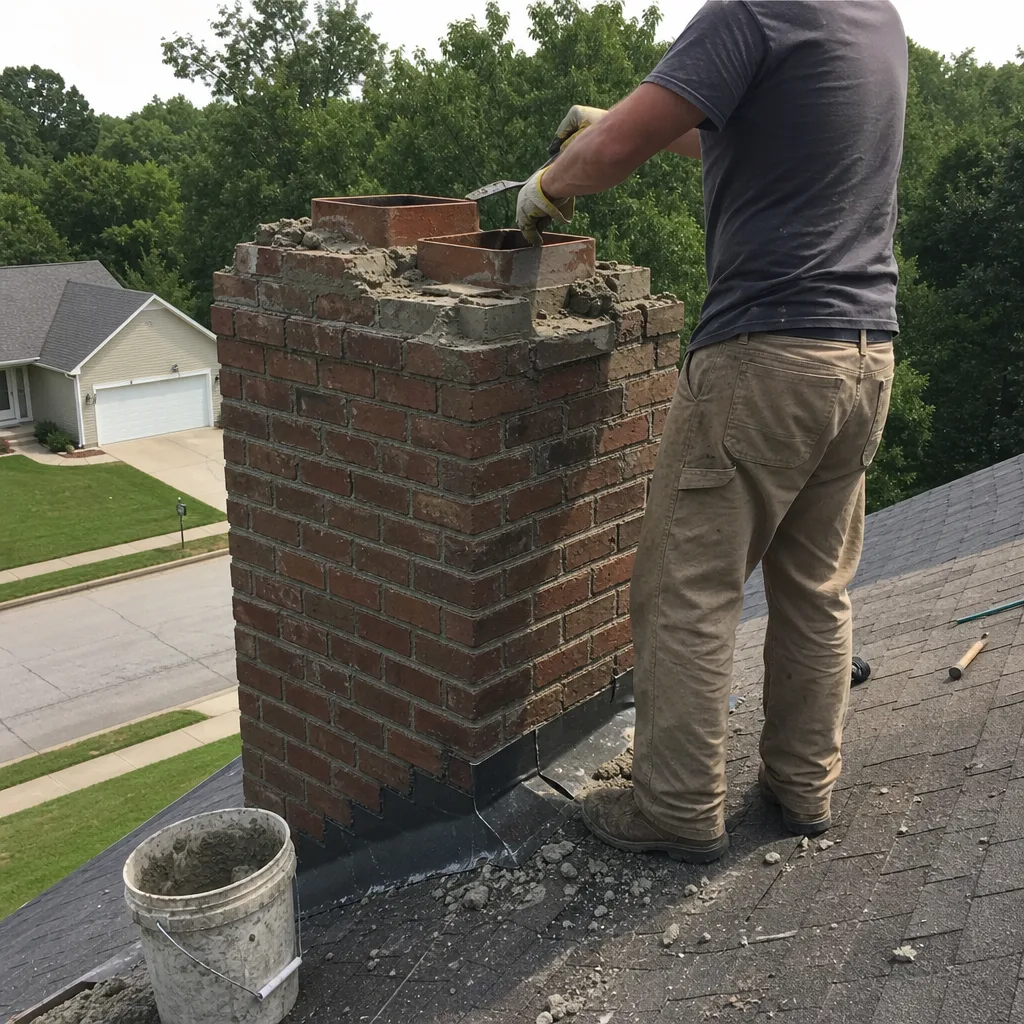
Level 1 sweep and inspection to the NFPA 211 annual standard - flue, crown, cap, and flashing checked and photographed
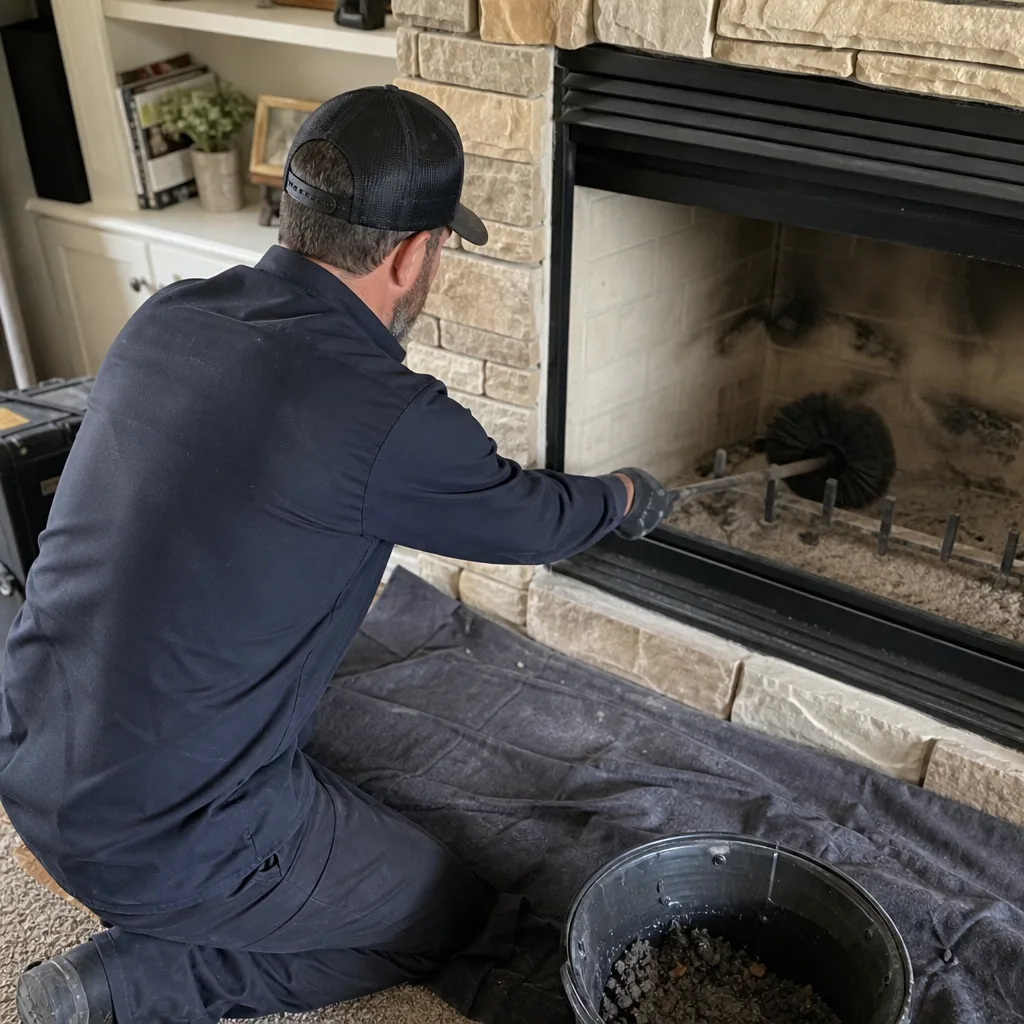
Chimney sweep logs do not sweep chimneys. They loosen some creosote - which then falls where a brush and vacuum still have to collect it.
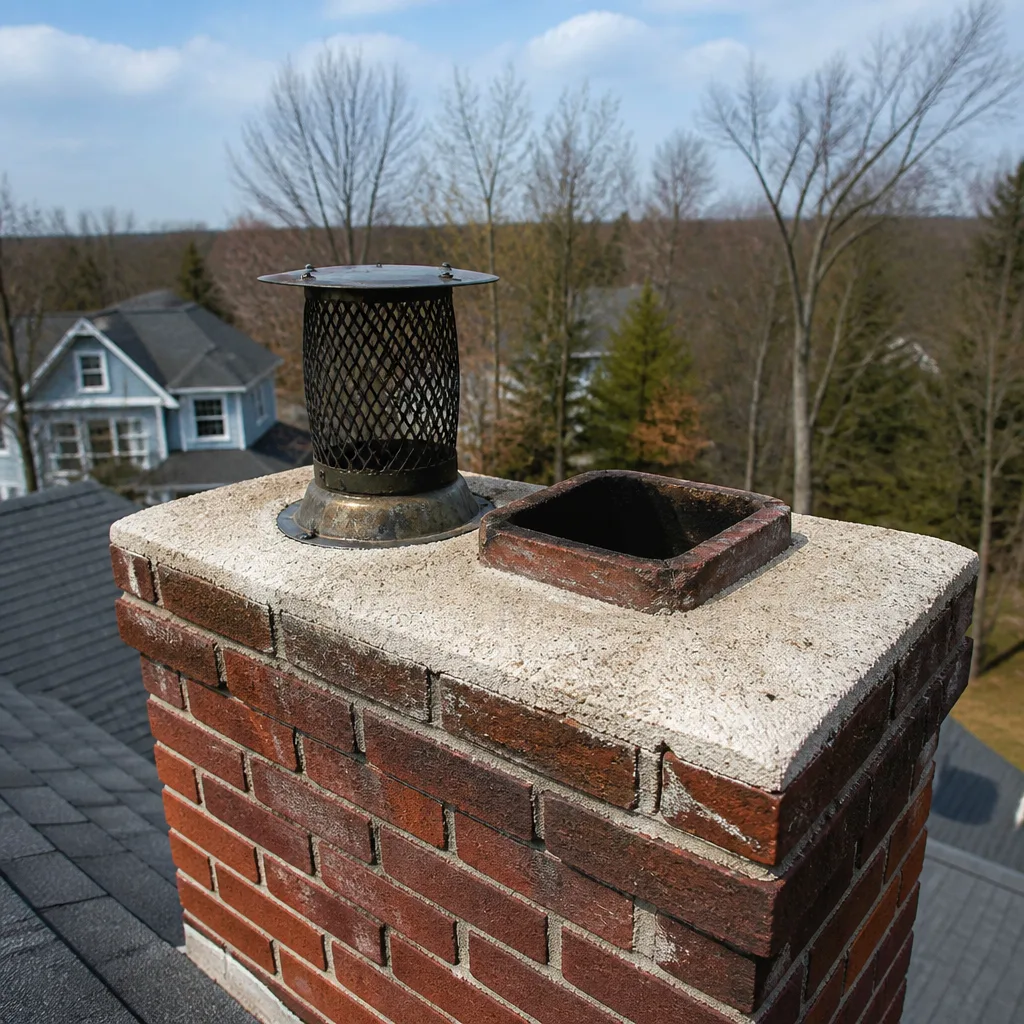
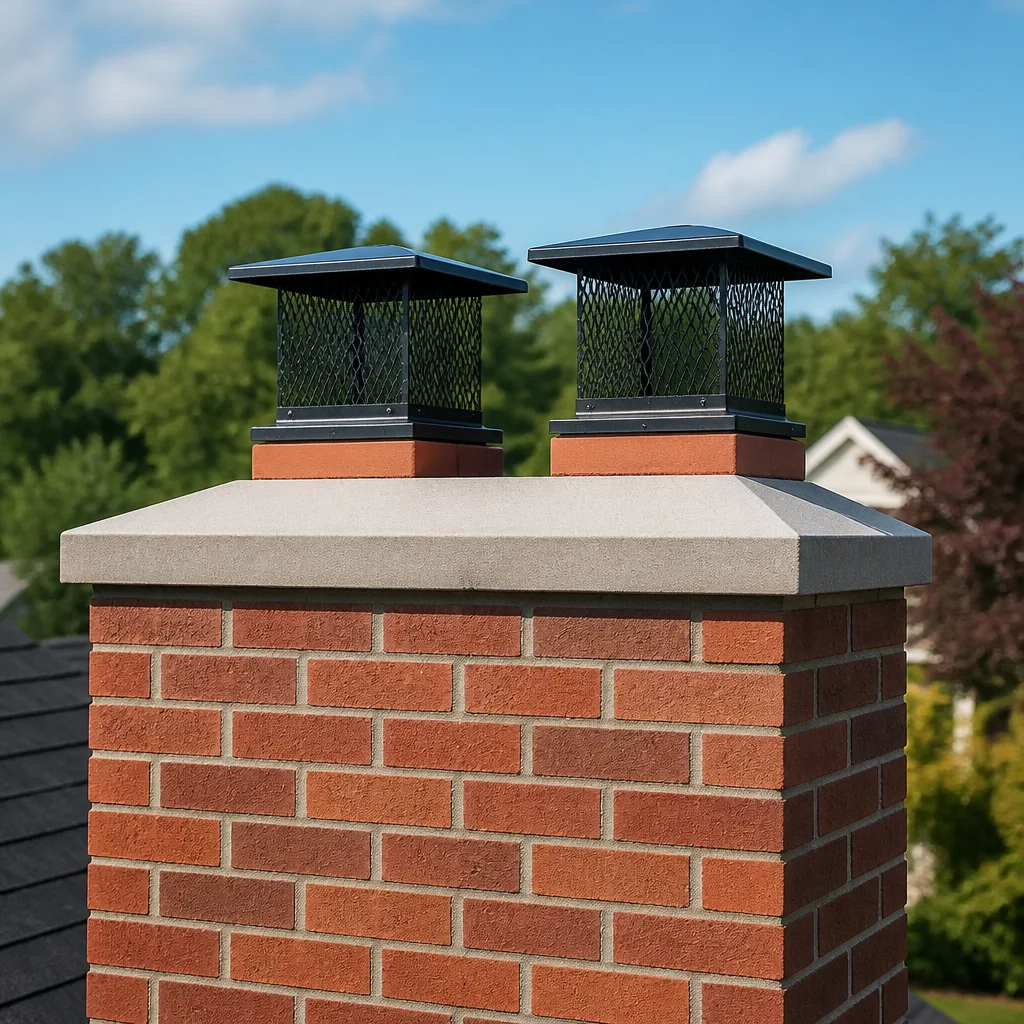
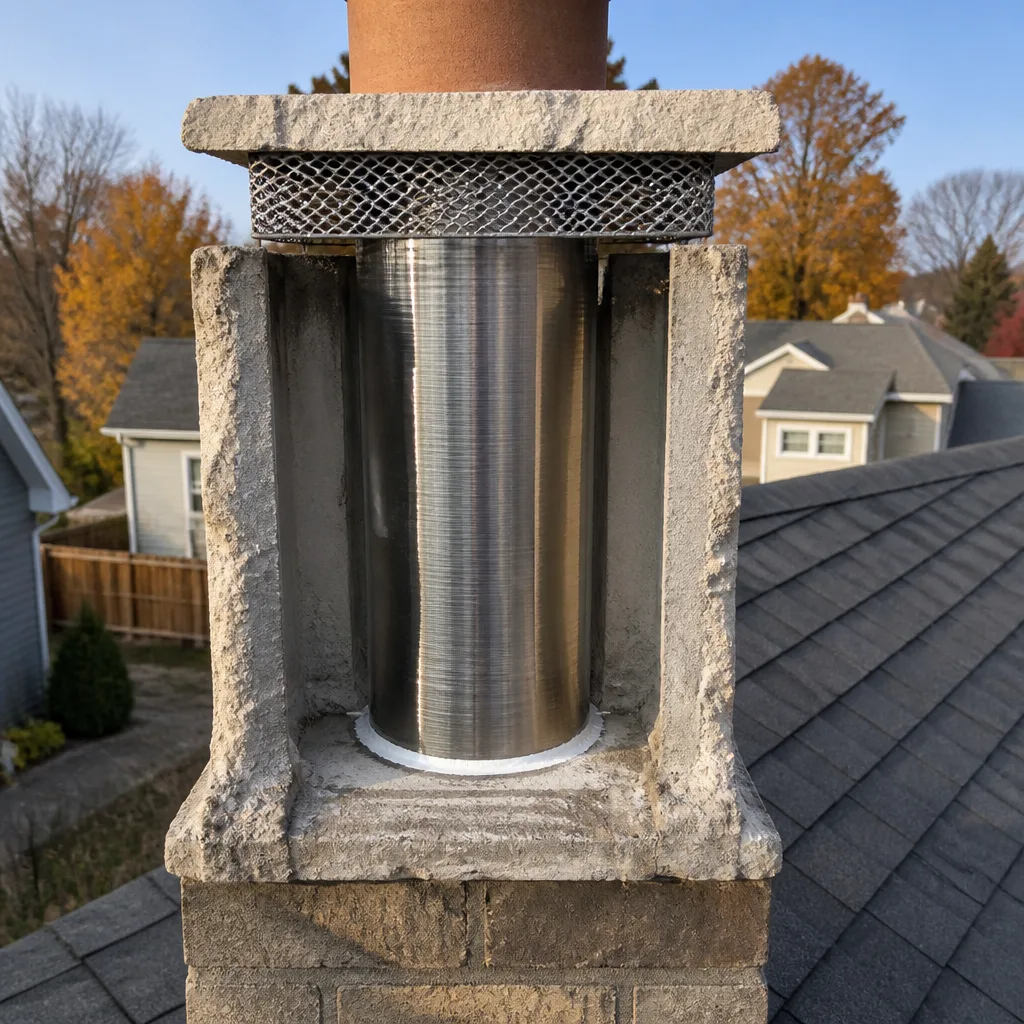
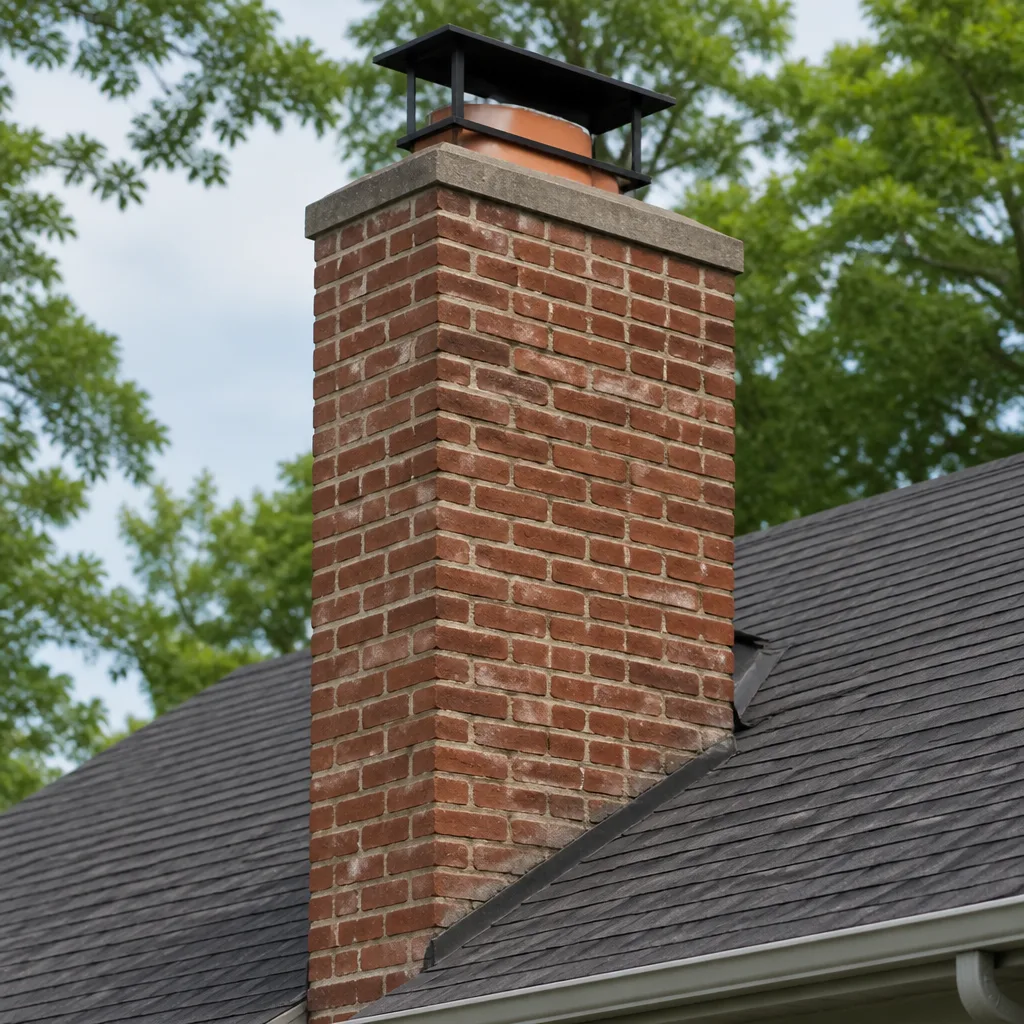
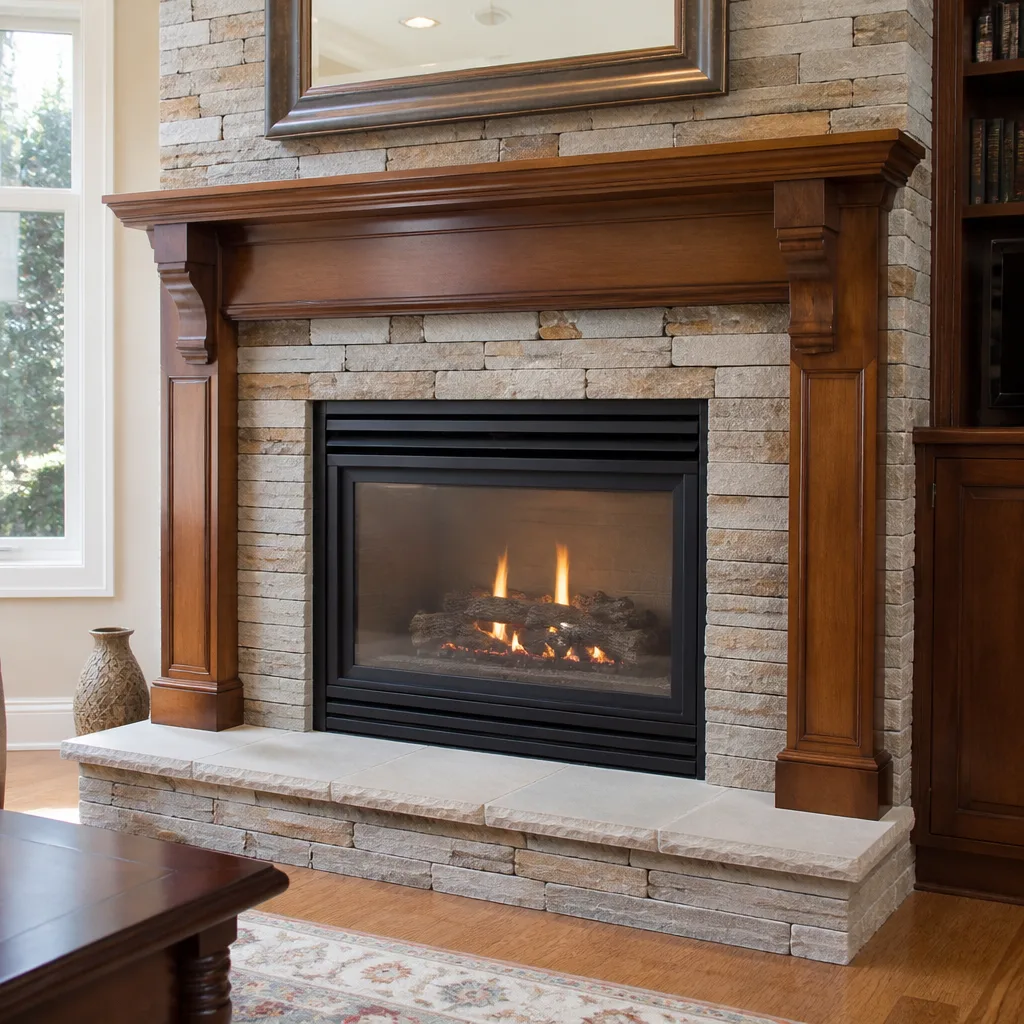
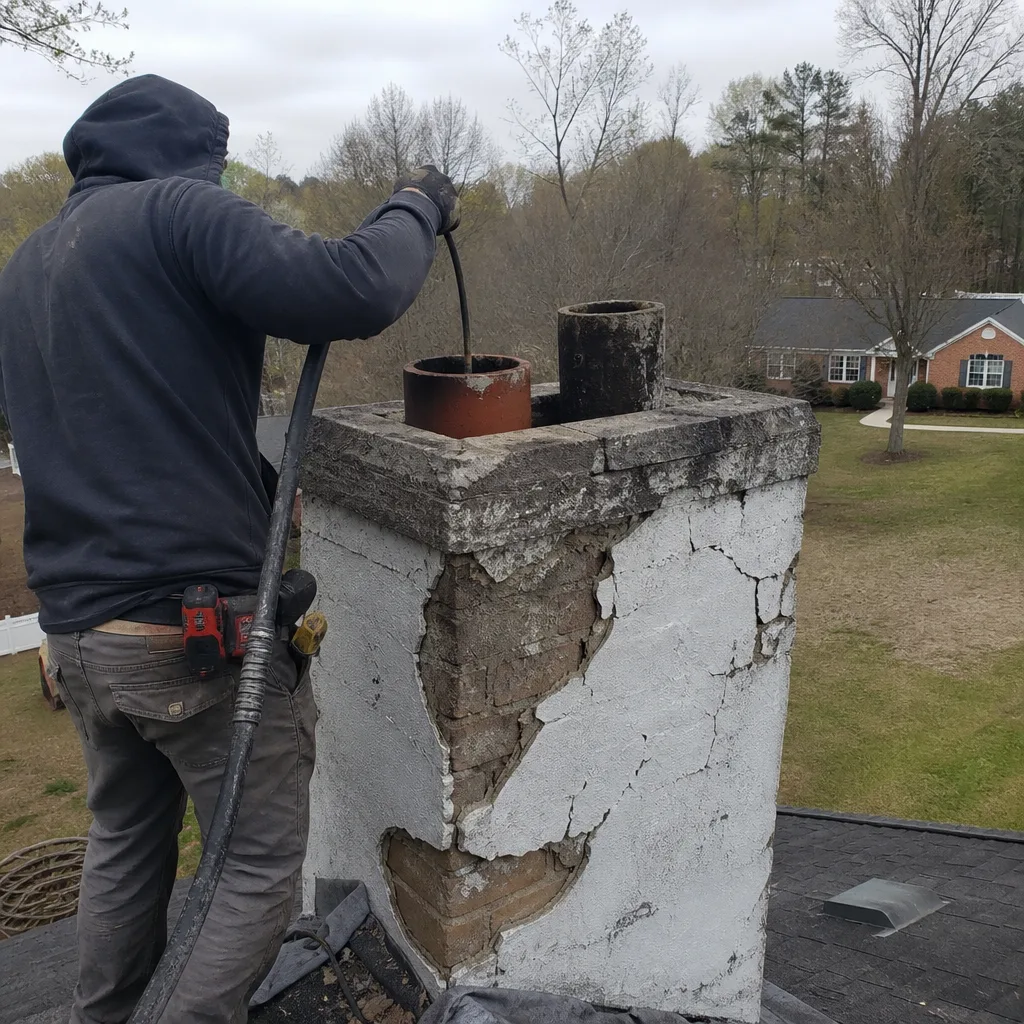 Before
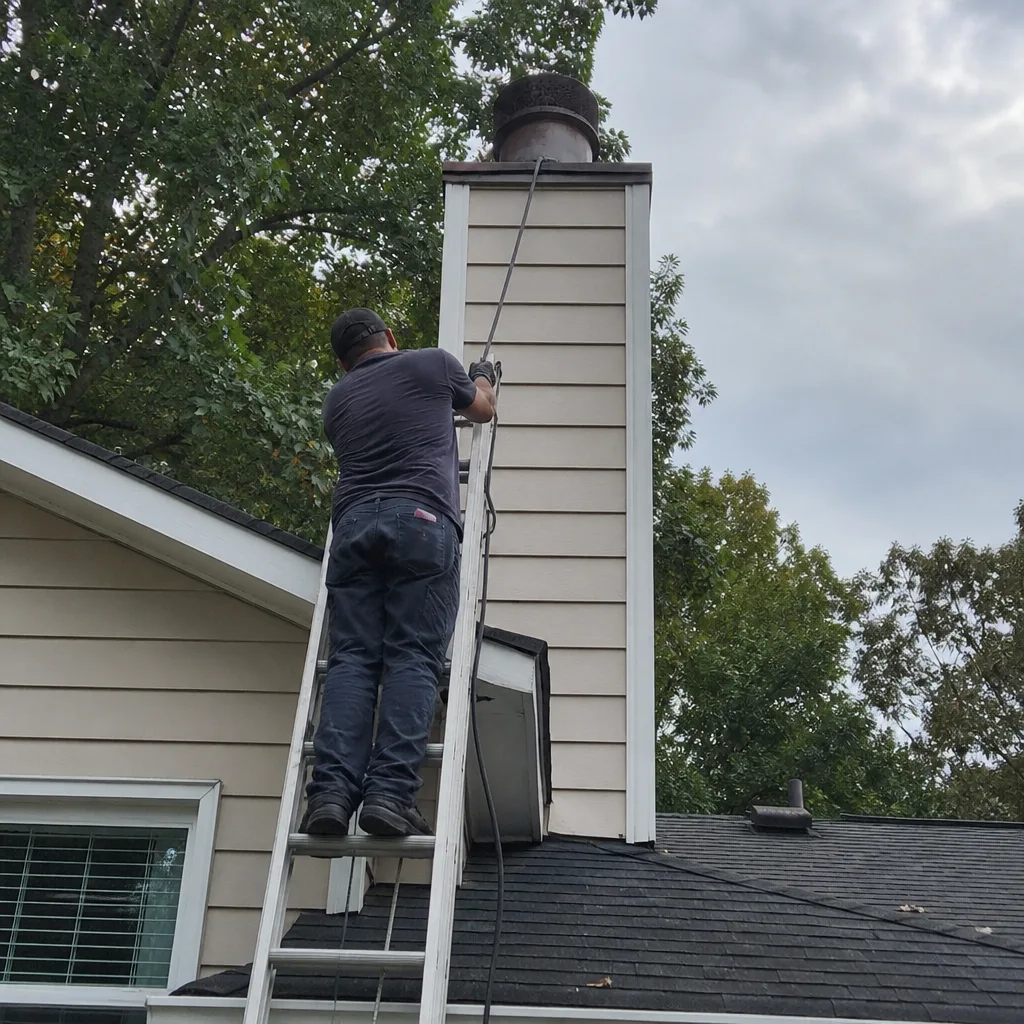 After
After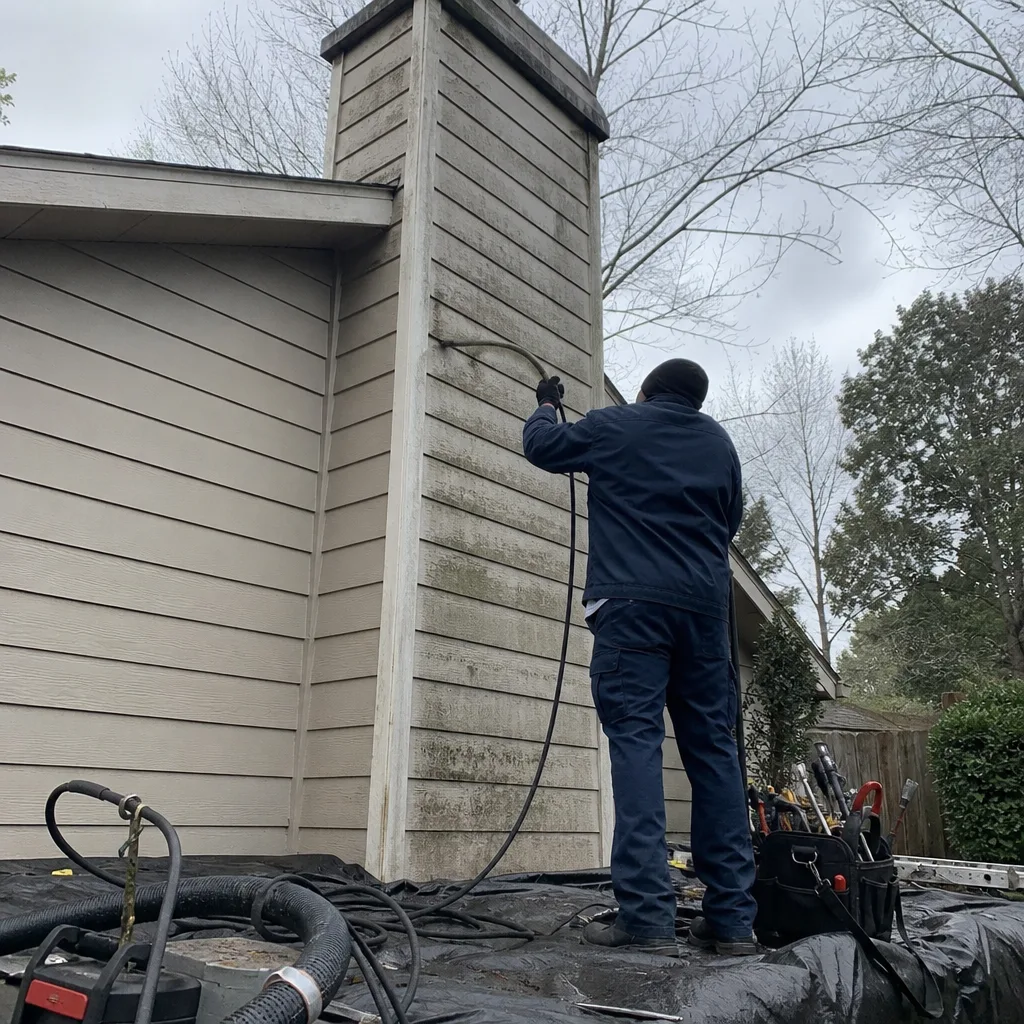 Before
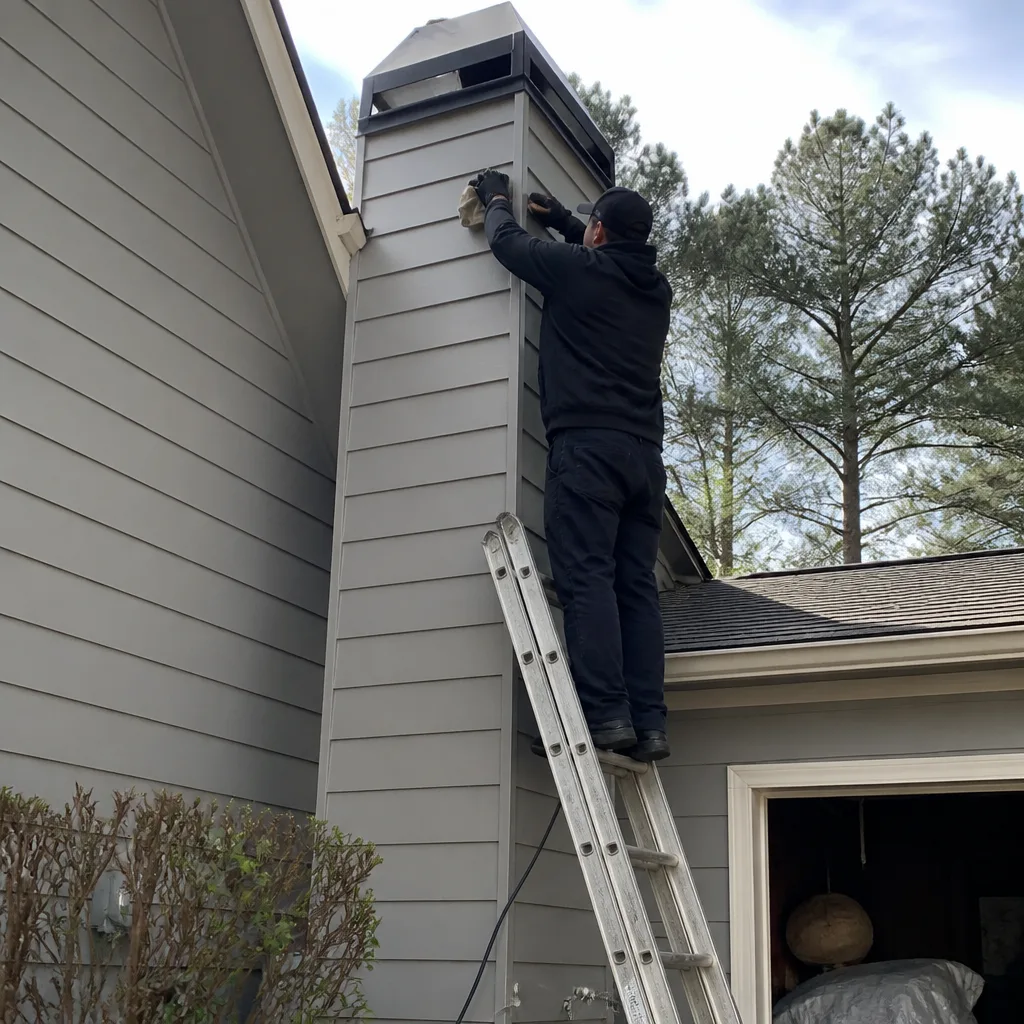 After
After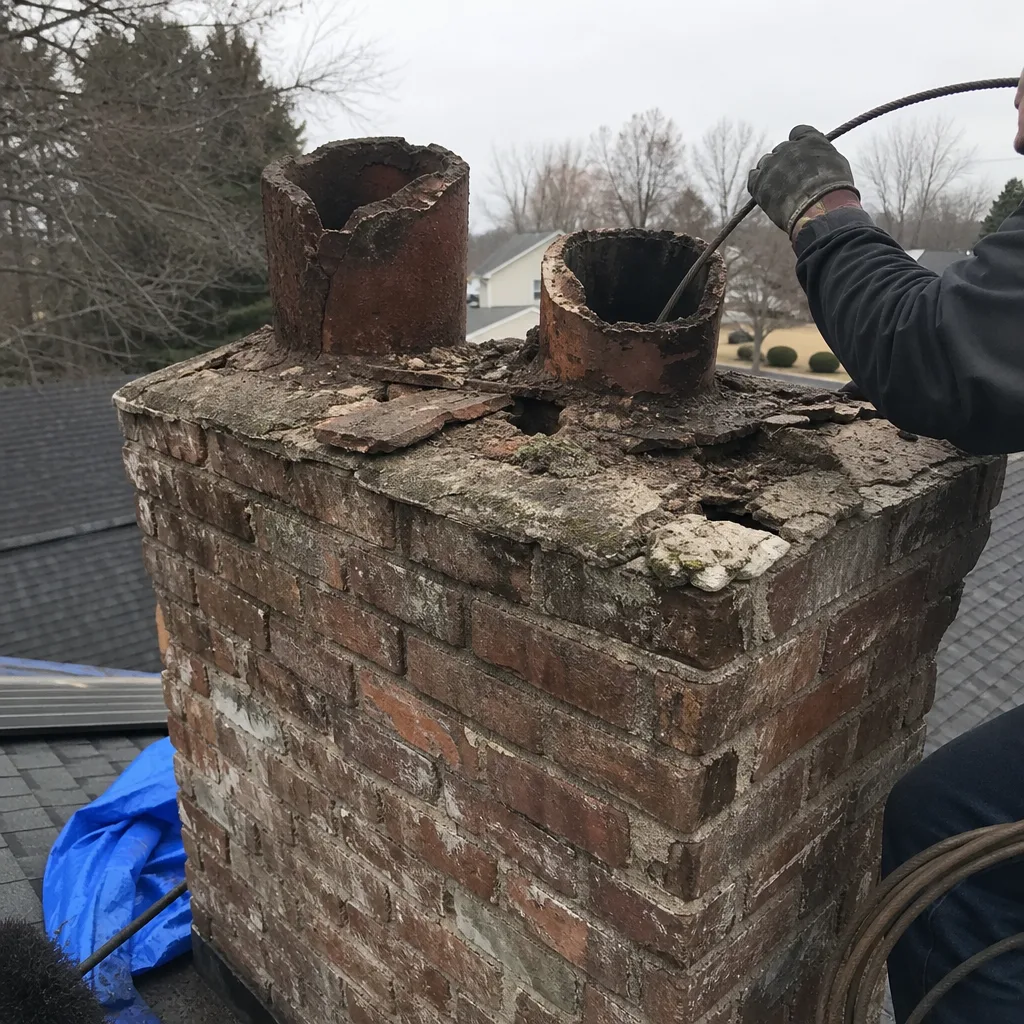 Before
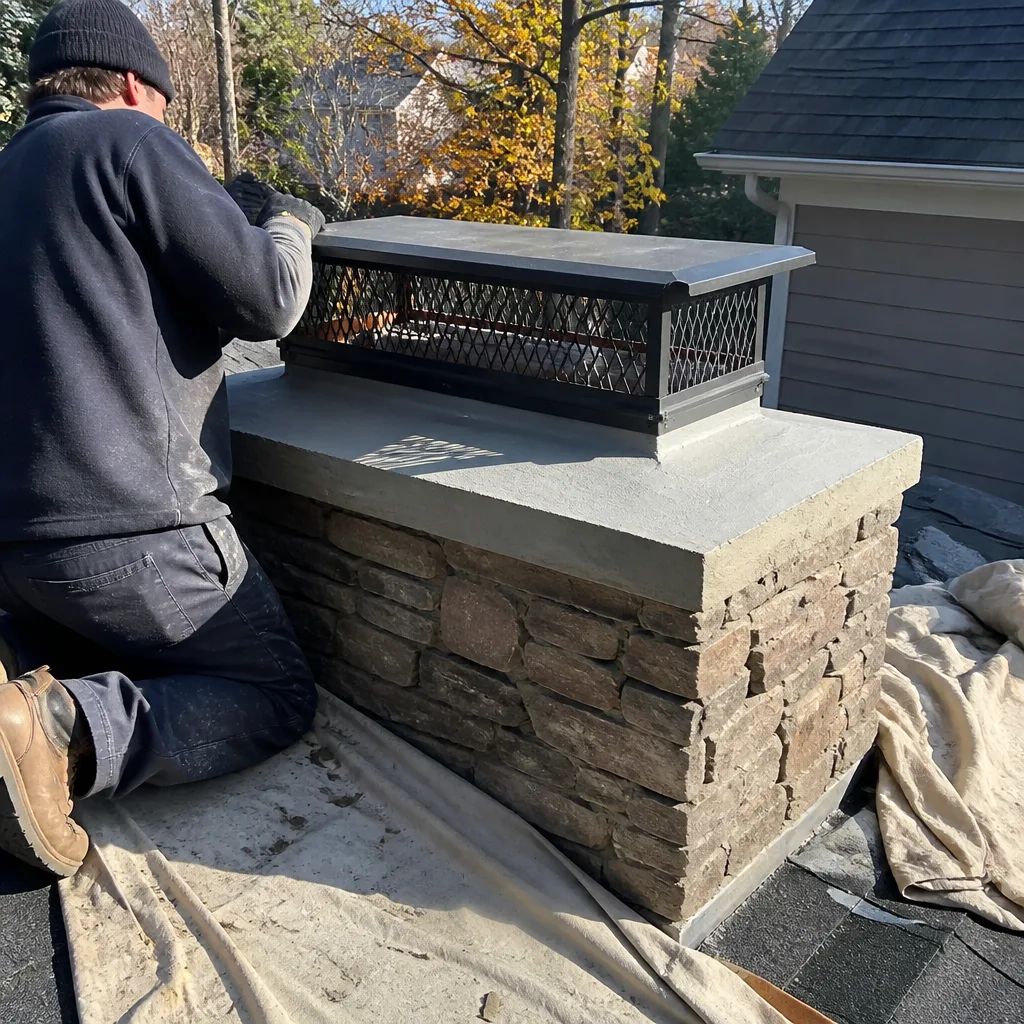 After
AfterChimney Cleaning Warning Signs: A Kennesaw Homeowner’s Reference Guide
A white stain on your exterior brick isn’t cosmetic, it’s efflorescence, which means water has already moved through the masonry and deposited mineral salts on its way out. By the time that stain is visible, moisture has been inside your flue for weeks, quietly degrading mortar joints and corroding metal components. In Kennesaw, where spring storms drop 50+ inches of rain annually and summer humidity stays above 70 percent, water intrusion is the most common cause of chimney failure we document during Chimney Cleaning & Sweep in Kennesaw visits. This guide pairs every warning sign you can observe with its specific cause, how fast it progresses, and whether you need to stop using the fireplace immediately or can schedule a routine inspection.
Quick Answer
The seven critical chimney warning signs visible from inside your home are: smoke backing into the room, persistent tar-like odors, white or green staining on exterior brick, rust flakes in the firebox, cracked or missing mortar in the firebox walls, pieces of tile or clay in the ash, and a damper that sticks or won’t fully close. Each indicates a distinct failure mode with different urgency levels, smoke backdraft and rust require immediate professional evaluation, while surface staining and minor mortar wear can typically wait for a scheduled Level 2 inspection. For a deeper look at all seven signs and how to address them, see our Complete Guide to Chimney Cleaning in Kennesaw.
Table of Contents
- The Seven Warning Signs You Can See From Your Firebox
- Draft Problem or Liner Problem? How to Tell the Difference
- The Smell Timeline: What Odors Mean in Different Seasons
- Why Kennesaw’s Red Clay Soil Threatens Your Chimney Foundation
- Which Warning Signs Void Your Homeowner’s Insurance
- How Often Kennesaw Homes Actually Need Sweeping
- What a Level 2 Inspection Actually Documents
 Before
 After
AfterThe Seven Warning Signs You Can See From Your Firebox
You don’t need a ladder or special equipment to catch most chimney problems early. These seven signs are visible from the firebox opening or the hearth area, and each points to a specific mechanical or structural issue.
1. Smoke Entering the Room During Use
Cause: Restricted airflow, either from a blocked flue, damaged liner, or negative pressure in your home.
Urgency: Immediate shutdown. Do not use the fireplace until inspected.
Smoke backdraft is the most dangerous symptom on this list because it means combustion gases, including carbon monoxide, are entering your living space. The cause could be a bird nest in the flue, a collapsed clay tile liner, or a modern HVAC system creating negative pressure that overpowers natural draft. In Kennesaw’s older neighborhoods like Legacy Park and McCollum Airport vicinity, we’ve found that 1980s-era chimneys with original clay tile liners are particularly prone to liner collapse after freeze-thaw cycles. The Level Two Chimney Kennesaw home page shows examples of liner failures we’ve documented.
Distinguishing draft failure from liner failure matters for both safety and cost. A draft problem, damper stuck open, cap missing, chimney too short for the roofline, typically runs $180-$450 to resolve. A liner replacement with a stainless steel system from DuraFlex or Olympia Chimney runs $2,800-$5,500 depending on flue height and diameter. You can’t tell which you have without a camera inspection.
2. Persistent Tar-Like or Asphalt Odors
Cause: Class III glazed creosote buildup, the most combustible form.
Urgency: Schedule within 2-4 weeks; discontinue wood burning until swept.
Class III creosote, sometimes called “third-degree” creosote, forms when wood burns at low temperatures with restricted airflow, common with closed glass doors or dampers set too low. It looks like black tar dripping down flue walls and smells sharply chemical, especially when humidity rises. Kennesaw’s humid subtropical climate accelerates the off-gassing, so homeowners here often notice the odor before visible buildup appears. We’ve documented cases in Town Center area homes where Class III creosote reached 1/4-inch thickness in a single burning season due to improper wood storage and restricted combustion air.
This is not a DIY removal situation. If you’re weighing options, our DIY vs Professional Chimney Cleaning guide for Kennesaw homeowners explains why Class III creosote requires mechanical rotary cleaning or chemical treatment with products like HeatShield’s creosote modifier, followed by a controlled burn-off. Standard wire brushing won’t touch it.
3. White, Green, or Dark Staining on Exterior Brick
Cause: Efflorescence (white, mineral salts), algae (green, persistent moisture), or soot wash (dark, from leaking flue gases).
Urgency: Schedule within 4-6 weeks for evaluation; safe to use if no smoke backdraft.
White efflorescence indicates water migration through porous brick, dissolving soluble salts and depositing them on the surface as it evaporates. Green staining means moisture has been present long enough to support biological growth, typically at the chimney base where foundation moisture wicks upward. Dark streaking near the top suggests flue gas leakage through cracked mortar joints, often visible after rain when condensation carries soot particles outward.
In Kennesaw’s Barrett Parkway corridor, we’ve tracked a pattern: homes built 1995-2005 with brick-veneer chimneys on slab foundations show efflorescence at twice the rate of full-masonry chimneys on crawl spaces. The thermal bridging at the slab edge creates condensation points that don’t exist in traditional construction.
4. Rust Flakes or Orange Staining in the Firebox
Cause: Water infiltration reaching metal components: damper frame, smoke shelf, or factory-built chimney chase cover.
Urgency: Schedule within 1-2 weeks; inspect for water damage to adjacent framing.
Rust means water has found a path to metal. The damper frame is usually first, followed by the smoke shelf (the flat area behind the damper where debris collects). In prefabricated metal chimneys, rust at the firebox top indicates chase cover failure, a common issue after the 10-15 year mark. We’ve replaced chase covers on homes in Kennesaw’s Legacy Park neighborhood where the original galvanized steel covers failed at 12 years, well before homeowners expected problems.
The hidden concern is what you can’t see: water traveling down the flue can rot ceiling joists, damage wallboard, and create mold conditions in wall cavities. A Level 2 camera inspection includes the smoke chamber and first few feet of flue, where this damage often starts.
5. Cracked, Spalled, or Missing Firebox Mortar
Cause: Thermal cycling, water damage, or refractory mortar failure in factory-built units.
Urgency: Moderate; schedule within 3-4 weeks, but discontinue use if cracks penetrate to outer shell.
Firebox mortar joints are sacrificial, they’re designed to absorb thermal expansion and be repointed periodically. But when cracks widen past 1/8 inch or bricks begin spalling (surface flaking from freeze-thaw or moisture), heat can reach combustible framing. Factory-built fireplaces with refractory panels are especially critical: a cracked panel must be replaced, not repaired, per manufacturer requirements. We source replacement panels through Gelco and Famco’s distributor network to maintain UL listing compliance.
Kennesaw’s temperature swings, 20°F winter lows to summer highs near 90°F, create more thermal cycling than coastal Georgia, accelerating mortar fatigue in fireplaces used regularly.
6. Pieces of Clay, Tile, or Concrete in the Ash
Cause: Deteriorating clay tile liner, spalling flue walls, or chimney crown debris falling down the flue.
Urgency: Immediate inspection needed; liner debris indicates active structural failure.
Clay tile liners in chimneys built before 1990 are typically 30-50 years into their service life. When tiles crack from thermal shock or settle from foundation movement, pieces break free and fall to the firebox floor or smoke shelf. This is never normal. Even small fragments indicate that the liner’s structural integrity is compromised, and a compromised liner cannot contain a chimney fire or prevent flue gas leakage into wall cavities.
We’ve documented this in Kennesaw’s older homes near downtown and Cherokee Street, where 1960s-70s construction with original liners is now at end-of-life. A stainless steel liner from DuraFlex or Olympia Chimney, properly sized and insulated per NFPA 211, is the standard replacement.
7. Damper That Sticks, Won’t Close, or Has Visible Gaps
Cause: Rust, creosote buildup on the frame, warped blade from overfire, or mechanical failure.
Urgency: Schedule within 2-3 weeks; an open damper wastes significant conditioned air year-round.
A damper that won’t fully seal costs you money every day, not just burning season. In Kennesaw’s climate, an open throat damper leaks as much conditioned air as a 6-inch hole in your wall. But the safety issue matters more: a damper stuck open during a chimney fire provides direct oxygen supply, while one stuck closed forces smoke into the room. We inspect damper operation, frame condition, and seal integrity on every sweep, and document findings with photos under Clause 4 of the Haven Standard.
Draft Problem or Liner Problem? How to Tell the Difference
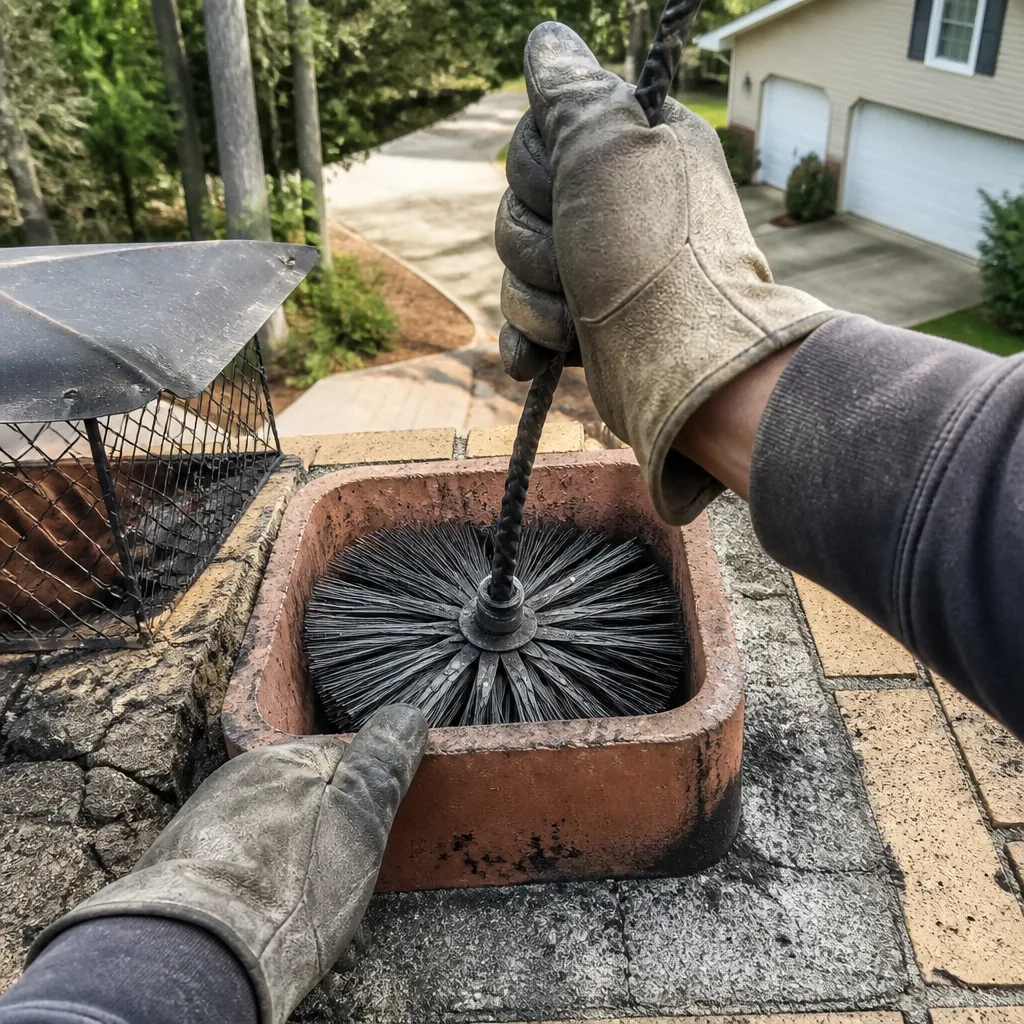
Smoke in the room doesn’t automatically mean you need a $4,000 liner replacement. Here’s how to distinguish the two failure modes before the technician arrives, and explore more guides & resources on chimney maintenance.
| Symptom Pattern | Draft Problem | Liner Problem |
|---|---|---|
| Smoke enters room immediately on lighting | Likely: cold flue, closed/stuck damper, or negative house pressure | Unlikely: liner cracks don’t affect initial draft |
| Smoke enters after 10-20 minutes of normal burning | Unlikely: draft issues are immediate or consistent | Likely: expanding crack or partial blockage opening under heat |
| Smoke worse on windy days | Likely: inadequate chimney height or cap design | Possible but not diagnostic |
| Smoke from one fireplace but not another | Likely: individual flue blockage or damper issue | Possible: but check shared flue configuration first |
| Visible debris in firebox after non-use period | Unlikely | Likely: liner spalling or crown deterioration |
| Odor without visible smoke | Possible: downdraft carrying creosote smell | Likely: flue gas leakage through liner cracks |
The definitive test is a Level 2 camera inspection. We run a high-resolution camera the full length of the flue, documenting every joint, every crack, every mortar gap. The video record becomes part of your home’s maintenance file, transferable to future owners and referenced by your insurance carrier if questions arise.
In Kennesaw’s newer construction, particularly homes built 2015-2022 in communities like Legacy at Zac Gordon Park and Barrett Walk, we’ve found an unexpected pattern: factory-built metal chimneys with improper termination heights causing chronic downdraft. The builder spec’d the minimum code height, but adjacent two-story homes and mature tree lines create micro-pressure zones the original design didn’t account for. A chimney cap with integrated wind directional exhaust, sourced through our Famco supply line, often resolves this without liner work.
The Smell Timeline: What Odors Mean in Different Seasons
Chimney odors aren’t random. The type, intensity, and season of an odor tells us exactly what’s happening inside your flue.
Summer: Sharp, Chemical, or Asphalt Smell
Hot, humid air enters the flue, activates creosote deposits, and carries the smell down through the damper. The stronger the smell on humid August afternoons, the heavier the creosote load. In Kennesaw, where July humidity routinely hits 85 percent, we get calls weekly from homeowners who think something died in their chimney. It’s almost always Class II or III creosote off-gassing. A sweep eliminates the source; deodorizing treatments without sweeping are temporary cover-ups.
Early Fall: Musty, Earthy, or “Cave-Like” Smell
Water intrusion. Rain has entered through a cracked crown, deteriorated flashing, or missing cap, and the resulting moisture has supported mold or mildew growth in the smoke chamber or on the smoke shelf. The smell intensifies as temperatures drop and relative humidity rises in the flue. We document water staining patterns with the camera and trace the entry point, crown cracks are visible from the roof, flashing gaps show at the chimney-roof intersection, and cap absence is obvious.
Winter Burning Season: Sour, Acrid Smoke Smell During Use
Incomplete combustion, usually from green or unseasoned wood, a restricted damper, or a flue too cold to establish proper draft. The smell clings to curtains and upholstery because it’s carrying unburned hydrocarbons and particulate matter. In Kennesaw, where many homeowners burn oak from local tree services, moisture content is the variable. Wood at 25 percent moisture or higher, common with “seasoned” wood cut 6 months ago, produces this signature acrid profile.
Spring: Rotting or Fecal Odor
Animal intrusion. Chimney swifts, raccoons, squirrels, and occasionally snakes use chimneys as nesting sites when caps are missing or have large mesh. The smell peaks as temperatures warm and biological activity increases. We remove animals humanely when possible, install proper caps with appropriate mesh sizing, and document the flue condition after removal. A nest partially blocking the flue is a fire and CO hazard; we camera-verify complete clearance before declaring the system safe.
Year-Round: Metallic or “Hot Electrical” Smell
Overheating metal components in a factory-built fireplace, or a stainless liner installed without proper insulation clearance. This is an immediate shutdown situation. The smell indicates metal temperatures exceeding design limits, with potential for surrounding combustible ignition. We’ve encountered this in Kennesaw homes where DIY liner kits were installed with incorrect clearances to wood framing, a violation of both manufacturer specs and NFPA 211.
Why Kennesaw’s Red Clay Soil Threatens Your Chimney Foundation
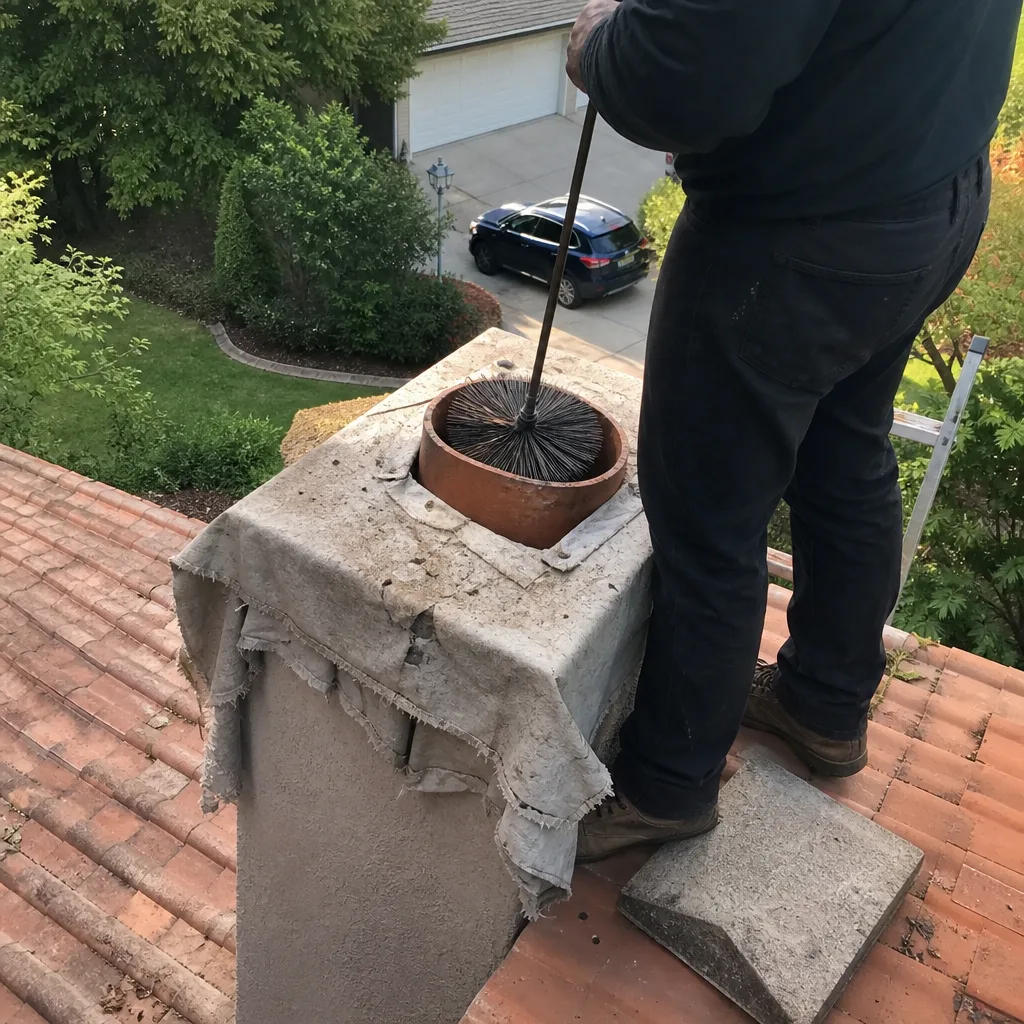
This is the warning sign almost no national guide mentions, and it’s particularly relevant to Kennesaw homeowners.
Cobb County sits on the Georgia Piedmont’s characteristic ultisol soil: highly weathered, iron-oxide-rich red clay with high shrink-swell potential. When dry, this soil contracts and creates voids around foundation elements. When saturated, it expands with significant force. A chimney foundation, typically a shallow footing or slab extension, experiences differential movement that the main house foundation may not.
What to look for at the chimney base:
- A gap between the chimney brick and the house siding or trim that widens seasonally
- Interior drywall cracks radiating from the chimney breast on the room side, especially after extended drought followed by heavy rain
- The chimney appearing to lean, even slightly, relative to the roof ridge line
- Cracks in the chimney crown that align with corners or edges, suggesting torsional stress
Inside, check where the chimney passes through living spaces. Separation between the chimney surround and ceiling, or a fireplace face that no longer sits flush with the wall, indicates foundation movement has stressed the structure. This isn’t cosmetic. A shifted chimney can crack the flue liner, separate gas appliance vent connectors, or open gaps in the firebox where heat reaches combustibles.
In our Kennesaw service area, we’ve documented foundation-related chimney damage most frequently in:
- Homes on Kennesaw Mountain’s slopes, where cut-and-fill grading created variable soil compaction
- Properties near Noonday Creek and its tributaries, where seasonal water table changes amplify soil movement
- 1980s-90s construction with monolithic slab foundations and exterior chimney columns, the most movement-sensitive configuration
A Level 2 inspection includes evaluation of the chimney’s structural relationship to the building. When we find movement indicators, we document them with measurements and photos, and recommend structural evaluation if displacement exceeds 1/4 inch or shows active progression. Stabilization options range from helical pier underpinning to complete rebuild with proper foundation isolation, depending on severity.
Which Warning Signs Void Your Homeowner’s Insurance
Chimney fires generate more insurance disputes than any other residential fire origin. Carriers have become specific about what they will and won’t cover, and the determining factor is often documentation of prior warning signs.
Here’s what standard HO-3 and HO-5 policies in Georgia typically exclude when chimney-related fire or smoke damage occurs:
- Known creosote buildup without documented sweeping. If you knew or should have known about heavy creosote, most policies invoke maintenance exclusion. “Should have known” is interpreted as any visible tar-like residue, odor complaints, or previous slow-burning fires. We provide dated, photo-documented sweep records that satisfy carrier requirements under Clause 4 of the Haven Standard.
- Cracked or missing liner with continued use. A liner documented as damaged, whether by previous inspection or visible debris in the firebox, creates a coverage gap if the chimney is used before repair. Carriers treat this as intentional use of a known-defective appliance.
- Water damage from uncorrected crown or flashing failure. Gradual damage from water intrusion is almost always excluded under the “water damage over time” clause. Sudden damage from a storm event is covered, but only if maintenance records show the chimney was in good condition before the storm.
- DIY repairs or unpermitted modifications. Any work not performed by a licensed contractor, or performed without required permits, voids coverage for resulting damage. This includes homeowner-installed caps, DIY liner kits, and unpermitted fireplace inserts.
- Use during known draft failure. If smoke backdraft was previously experienced and the fireplace was used again without professional evaluation, carriers may deny claims for smoke damage to interior finishes.
The protection is documentation. A Level 2 inspection from Level Two Chimney Kennesaw creates a dated, photo-verified record of flue condition, liner integrity, and clearance compliance. If conditions require repair before safe use, that recommendation is documented in writing. If the system is cleared for use, that clearance is documented too. Either way, you have evidence that satisfies post-loss investigation.
We also provide free second opinions on any competitor’s written estimate, a service that has helped Kennesaw homeowners avoid unnecessary liner replacements and identify coverage-critical documentation gaps.
How Often Kennesaw Homes Actually Need Sweeping
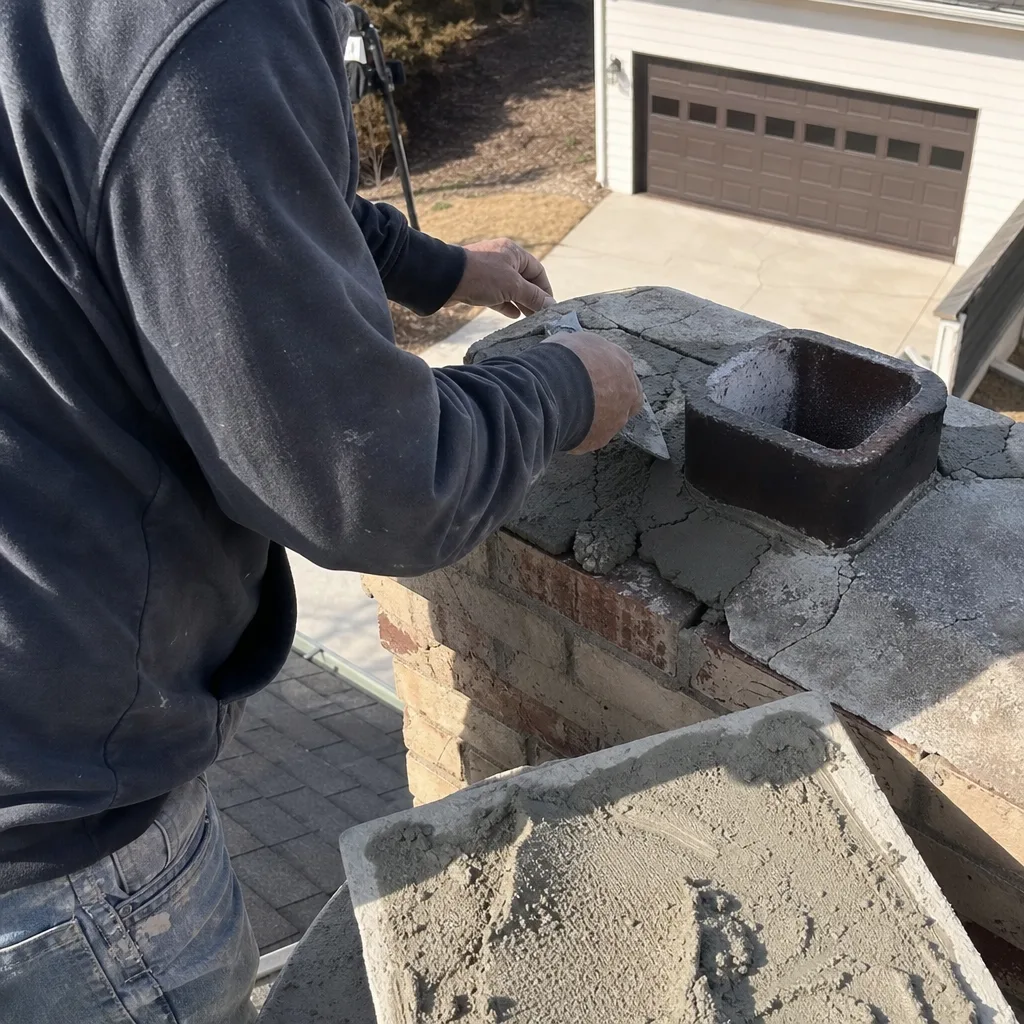
The NFPA 211 standard says “annually,” but the actual interval depends on use patterns, fuel type, and system configuration. Here’s how we adjust for Kennesaw’s specific conditions.
| Usage Pattern | Sweep Interval | Kennesaw-Specific Factor |
|---|---|---|
| Primary heat source, wood-burning, 4+ months/year | Annually, mid-September before first fire | Humid off-season promotes creosote activation; early sweep prevents odor complaints |
| Occasional ambiance fires, 1-2x weekly Dec-Feb | Every 2-3 years with annual inspection | Low-temperature burns common in mild winters create more Class II creosote than hot burns |
| Gas log set in masonry fireplace | Inspection annually; sweep every 3-5 years | Debris from deteriorating chimney cap, animal intrusion still possible; vented gas produces minimal creosote |
| Pellet stove | Per manufacturer, typically annually | Fly ash accumulation in venting; Kennesaw’s hard water can accelerate ash concrete formation in burn pots |
| Factory-built fireplace, any fuel | Inspection annually; sweep per use | Metal components fatigue faster in humid climates; chase cap and termination inspection critical |
The inspection-sweep distinction matters. An annual Level 2 inspection with camera documentation may show no sweep is needed, saving you money and documenting system condition for insurance. We don’t sell sweeps to systems that don’t need them, our written price before work starts applies to inspections too, and sometimes the inspection is the only service required.
For Kennesaw’s specific neighborhoods: homes in the Kennesaw Mountain corridor at higher elevation experience more wind-driven rain and freeze-thaw cycles, justifying more frequent cap and crown inspection. Homes in the Town Center area with mature tree canopy see more leaf debris and animal activity. We adjust recommendations based on these factors, not a generic calendar.
What a Level 2 Inspection Actually Documents
Most “inspections” in this industry are a flashlight glance from the firebox and a verbal summary. A Level 2 inspection under NFPA 211, which we’ve performed as standard practice since 2009, is fundamentally different.
Here’s what happens, and what you receive:
- Exterior evaluation: Crown condition, cap presence and type, flashing integrity, brick and mortar condition, chimney lean or settlement indicators. We photograph every elevation.
- Interior firebox and smoke chamber: Firebox wall condition, mortar joint integrity, refractory panel condition (factory-built), damper operation and seal, smoke chamber shape and parging condition. Photos of all findings.
- Camera scan of full flue length: High-resolution video documentation of every clay tile joint, every liner seam, every mortar gap, every creosote deposit. The camera shows what no flashlight can: the condition 20 feet up, behind offsets, in the transition to the smoke chamber.
- Clearance verification: Combustible clearances to framing, proper connector installation for gas appliances, proper insert installation and surround.
- Written report with findings, recommendations, and priced options: Not a vague “needs work” summary, but specific conditions found, priority ranking, and exact pricing for each recommended service. This is Haven Standard Clause 1: have it in writing before anyone starts.
The documented photo record, Clause 4 of the Haven Standard, becomes your property’s maintenance history. We archive it indefinitely. When you sell your Kennesaw home, the record transfers to the new owner. When your insurance carrier asks for evidence of maintenance, it’s producible. When a question arises about whether a condition was pre-existing, the dated documentation answers it.
We’ve completed more than 38,000 inspections and cleanings since 2009, every one with this documentation standard. The practice predated insurer requirements and became the model for what carriers now request after chimney-related claims.
Materials we specify for repairs, DuraFlex and Olympia Chimney for stainless liners, HeatShield for crown and smoke chamber restoration, Gelco and Famco for caps and chase covers, are sourced through Haven’s buying network. This isn’t about brand loyalty; it’s about specification-grade products with traceable manufacturing, proper UL listings, and warranty support that budget alternatives don’t provide.
Common Mistakes to Avoid
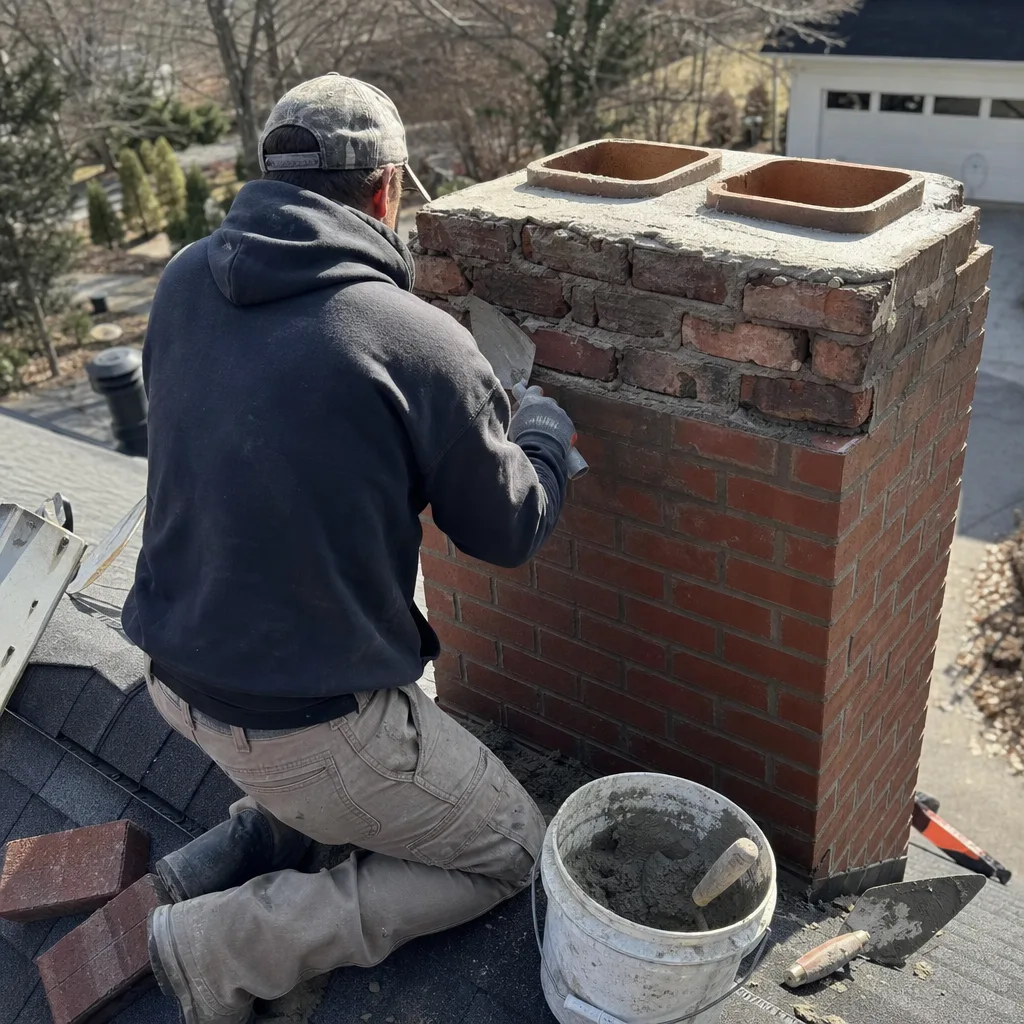
- Assuming a gas fireplace needs no chimney maintenance. Vented gas fireplaces still require flue inspection for debris, animal intrusion, and vent connector integrity. The chimney doesn’t know what fuel you’re burning if the cap is missing and a squirrel has nested in the flue.
- Using chimney cleaning logs as a substitute for sweeping. These products may reduce light soot but do not remove Class II or III creosote and provide no documentation for insurance. We’ve camera-verified flues that “looked clean” after log use with dangerous buildup still present above the smoke chamber.
- Ignoring summer odors because “we’re not using it anyway.” Summer creosote odor indicates active buildup that will be more dangerous and more expensive to address after another burning season. The smell is a free diagnostic; use it.
- Hiring based on lowest price without verifying inspection scope. A $99 “sweep and inspect” that doesn’t include camera documentation leaves you without the records insurers require and may miss liner damage entirely. Ask specifically: “Do you run a camera the full flue length, and do I receive photos?”
- Attempting DIY liner installation or firebox repair. Beyond the immediate safety risks of improper clearances and material incompatibilities, unpermitted work voids insurance coverage and creates liability exposure at sale. We’ve been called to correct DIY installations in Kennesaw’s Acworth and west Cobb areas where improper slope or unsupported offsets created immediate hazards.
- Waiting for visible damage before acting. By the time you see efflorescence, rust, or spalling, the underlying damage has progressed for months or years. The camera finds conditions before they’re visible, when intervention is less invasive and less expensive.
- Neglecting to verify contractor licensing and insurance. Georgia requires chimney sweep contractors to hold appropriate state licenses. We display ours on every page and provide certificate of insurance on request. Unlicensed operators leave you without recourse for damage or injury.
When to Call a Professional
Call immediately if you experience smoke backdraft during use, a hot metallic smell from the fireplace, or visible flames or glowing material in areas other than the firebox. These are active hazard conditions.
Schedule within two weeks for persistent odors, visible rust or staining, damper malfunction, or any debris in the firebox after non-use periods. These indicate progressive conditions that will worsen and may create coverage issues if unaddressed.
For routine evaluation, annual inspection before burning season is the standard we recommend for most Kennesaw homes. Chimney Repair in Kennesaw needs often start with findings from these routine inspections.
Level Two Chimney Kennesaw offers free estimates in Kennesaw and surrounding Cobb County communities. Every estimate includes a written scope, written price, and written warranty before any work begins. Call (678) 535-2204 to schedule, or reach our live phone support 24 hours a day, 7 days a week. Our background-checked, uniformed technicians arrive on schedule with license verification, and you’ll receive a text when your technician is en route.
Frequently Asked Questions
A standard chimney sweep and Level 2 inspection in Kennesaw typically ranges from $225 to $375, depending on flue accessibility, number of flues, and creosote severity. We deliver a written price before any work starts, with no variation after arrival. Call (678) 535-2204 for an exact quote; estimates are free.
You can continue using a chimney with a damaged clay tile liner only if a stainless steel or other approved liner is installed, or if a professional evaluation determines the damage is superficial and doesn’t penetrate to the flue gas path. We camera-verify every recommendation and show you the footage before quoting replacement. A Free Second Opinion on any competitor’s written estimate is always available.
Most wood-burning Kennesaw fireplaces need annual sweeping if used as a primary or regular supplemental heat source, every 2-3 years with annual inspection if used occasionally for ambiance. The humid subtropical climate here promotes creosote activation and water intrusion between burns, making the annual inspection particularly valuable even when sweeping isn’t required.
Skipped maintenance leads to progressive creosote accumulation, which increases chimney fire risk and reduces flue efficiency; water intrusion that degrades mortar, rusts metal components, and damages adjacent framing; and undetected liner or structural damage that can result in carbon monoxide exposure or house fire. Insurance carriers increasingly deny claims where documented maintenance was neglected.
Hot, humid summer air activates creosote deposits and carries odors down through the damper. Kennesaw’s July and August humidity, regularly above 80 percent, makes this especially pronounced. The smell indicates active creosote that should be removed before the next burning season; it’s not a temporary nuisance but a diagnostic signal.
You can and should observe the seven warning signs in this guide from the firebox and exterior ground level. But you cannot evaluate flue liner condition, clearance compliance, or smoke chamber integrity without specialized camera equipment and training. The NFPA 211 Level 2 inspection exists because these hidden conditions determine actual safety. We include the camera scan and photo documentation on every visit at no additional charge.
The Bottom Line
Chimney warning signs are specific, not vague, and each points to a distinct failure mode with its own urgency and cost profile. The white stain on your brick means water has already penetrated. The rust in your firebox means metal is actively corroding. The tile fragments in your ash mean structural failure is underway. In Kennesaw’s climate of heavy rainfall, high humidity, and expansive clay soils, these conditions progress faster than in drier, more stable environments.
The protection is documentation: a dated, photo-verified record of what was found, what it means, and what it costs to fix, delivered in writing before any work begins. That’s been our practice since 2009, formalized as the Haven Standard, and applied to more than 38,000 chimney systems. Whether you need a routine sweep, suspect a problem, or want a Free Second Opinion on another company’s estimate, the process starts with a call.
Contact Level Two Chimney Kennesaw at (678) 535-2204 for a free estimate. Written price before work starts. Documented photo record on every visit. The 365-Day Done Right Promise on every job. Live phone support, 24 hours a day, 7 days a week.
Written by Corrine Halstead, Owner at Level Two Chimney Kennesaw, serving Kennesaw since 2009.