
Level 1 sweep and inspection to the NFPA 211 annual standard - flue, crown, cap, and flashing checked and photographed
Chimney sweep logs do not sweep chimneys. They loosen some creosote - which then falls where a brush and vacuum still have to collect it.
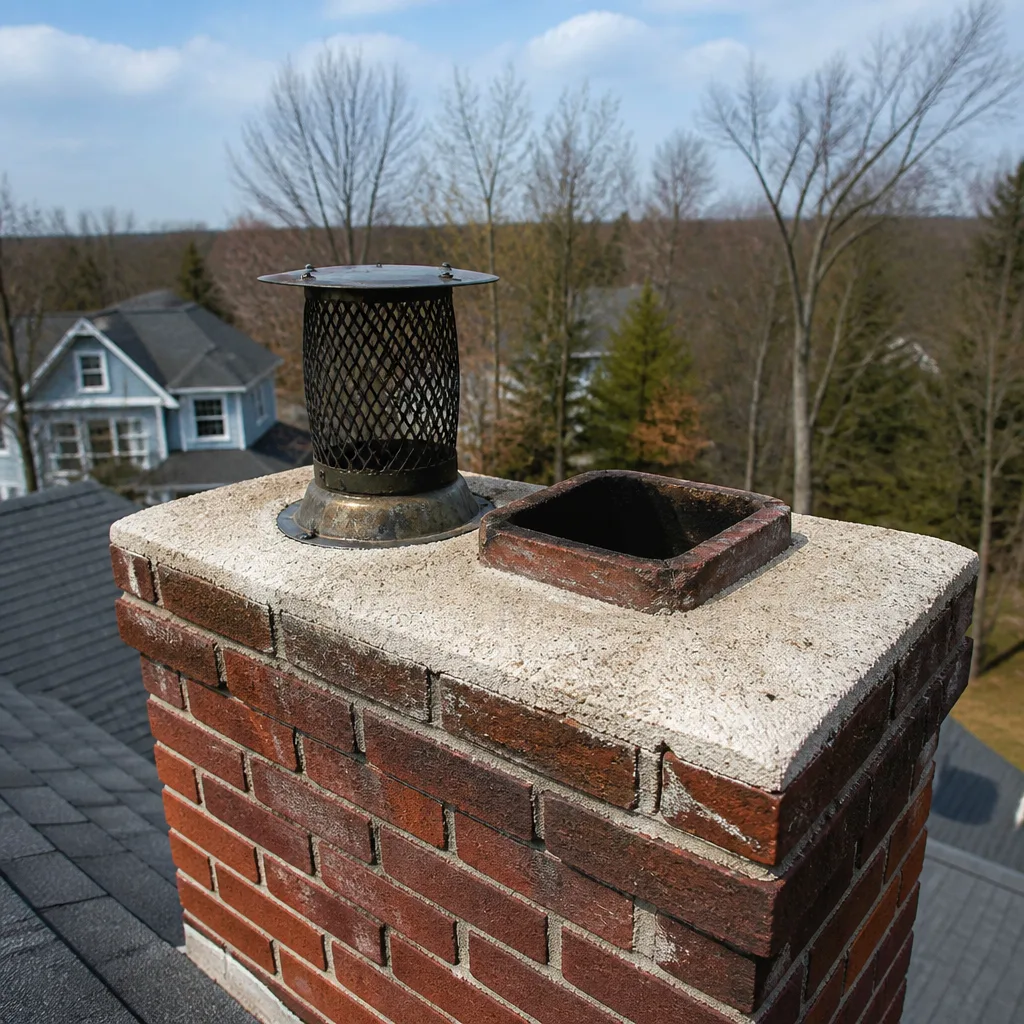
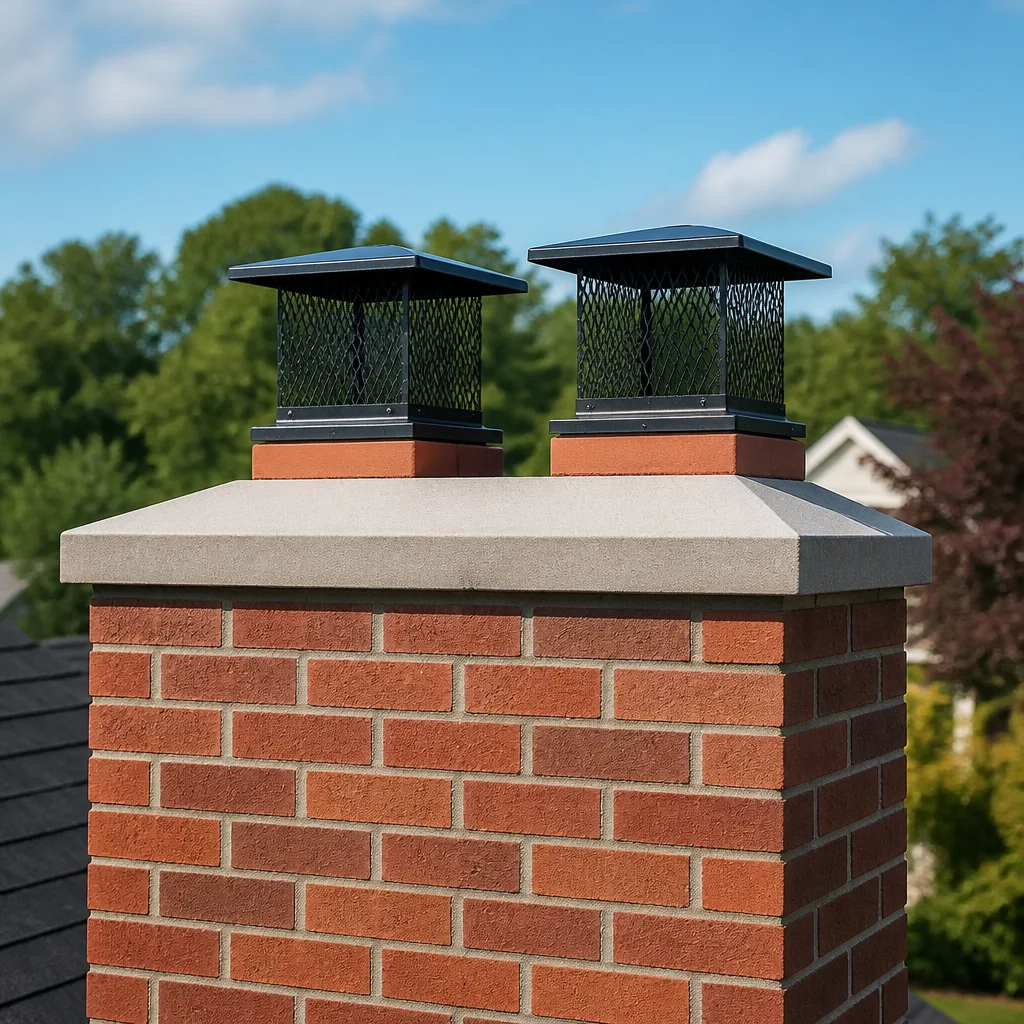
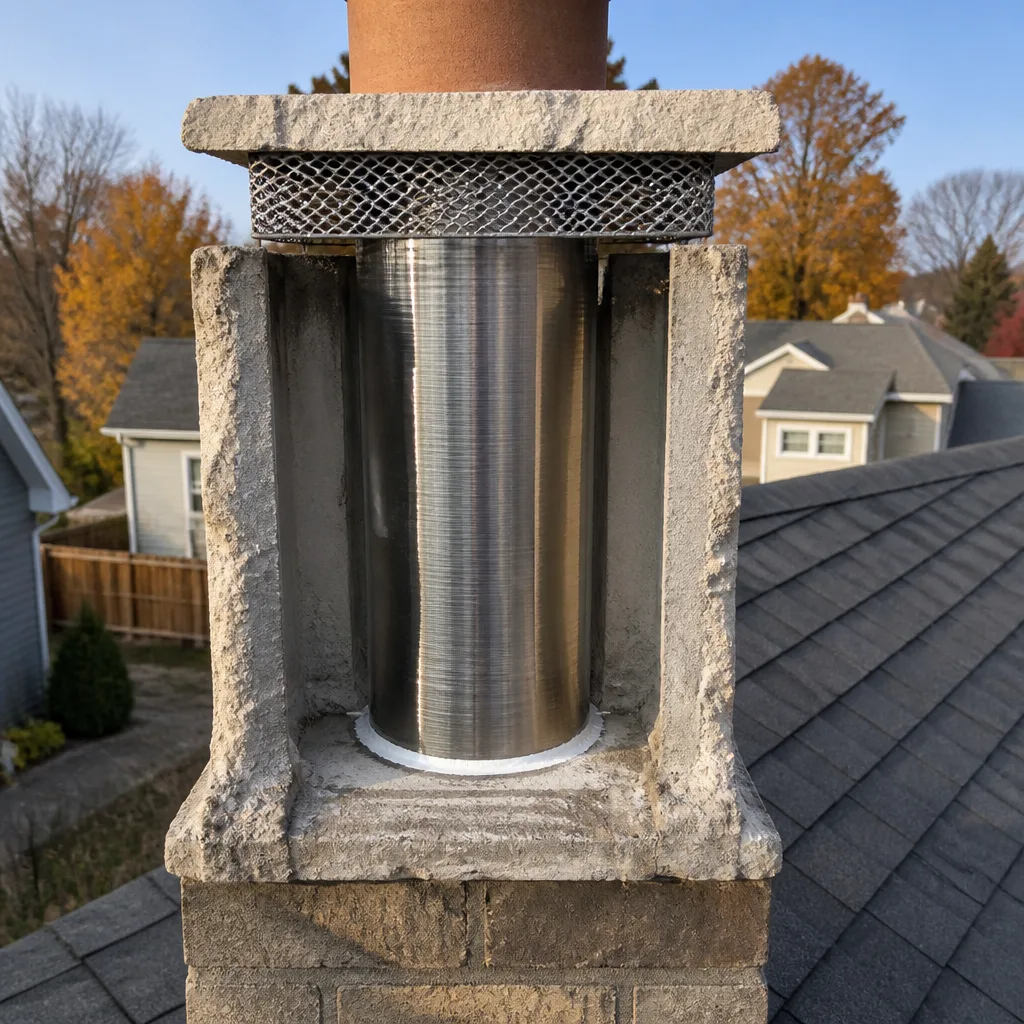
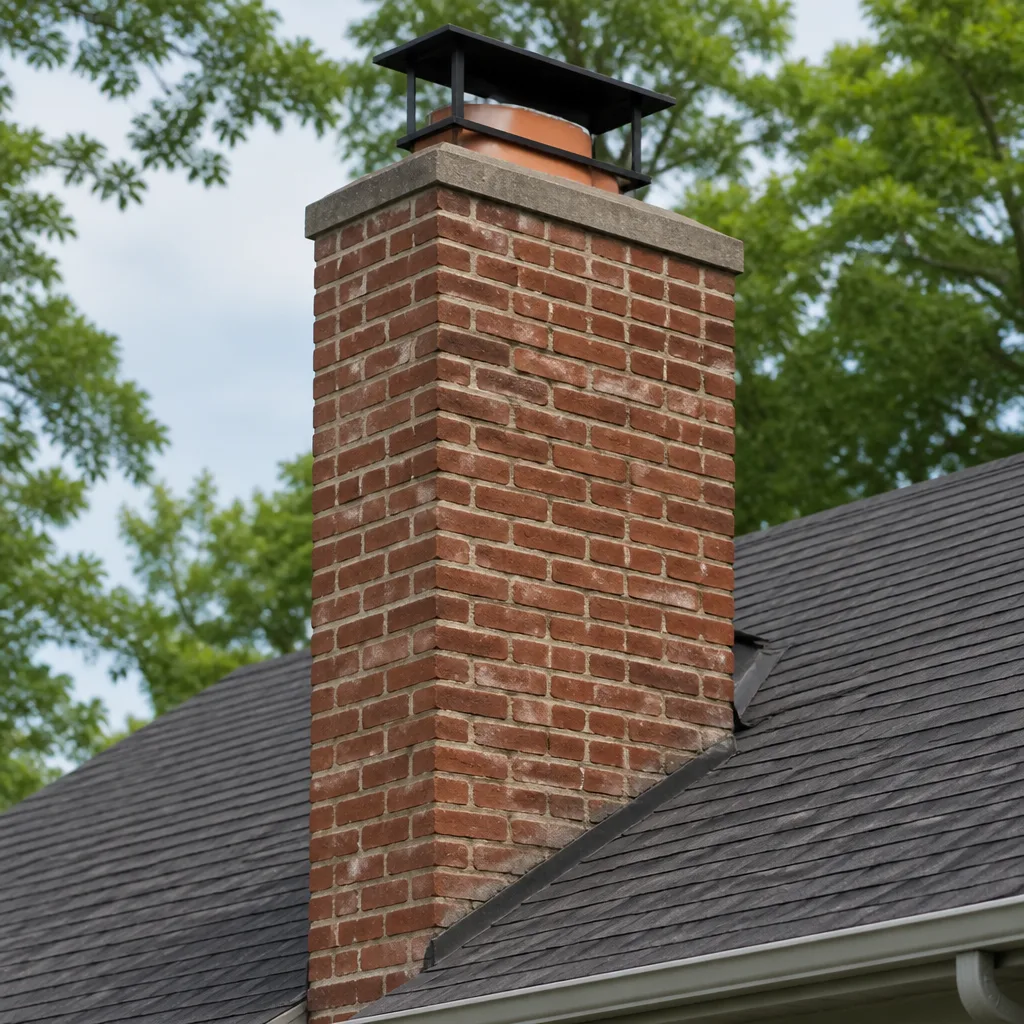
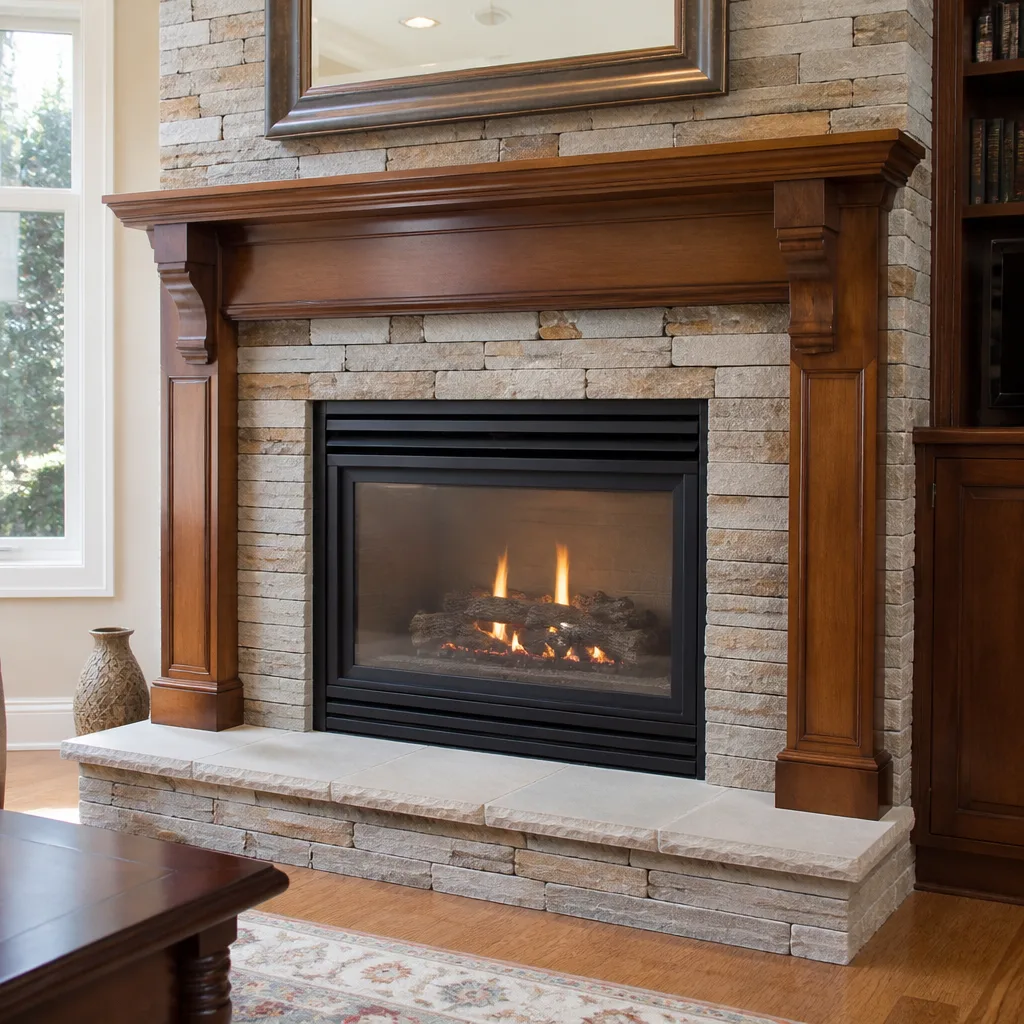
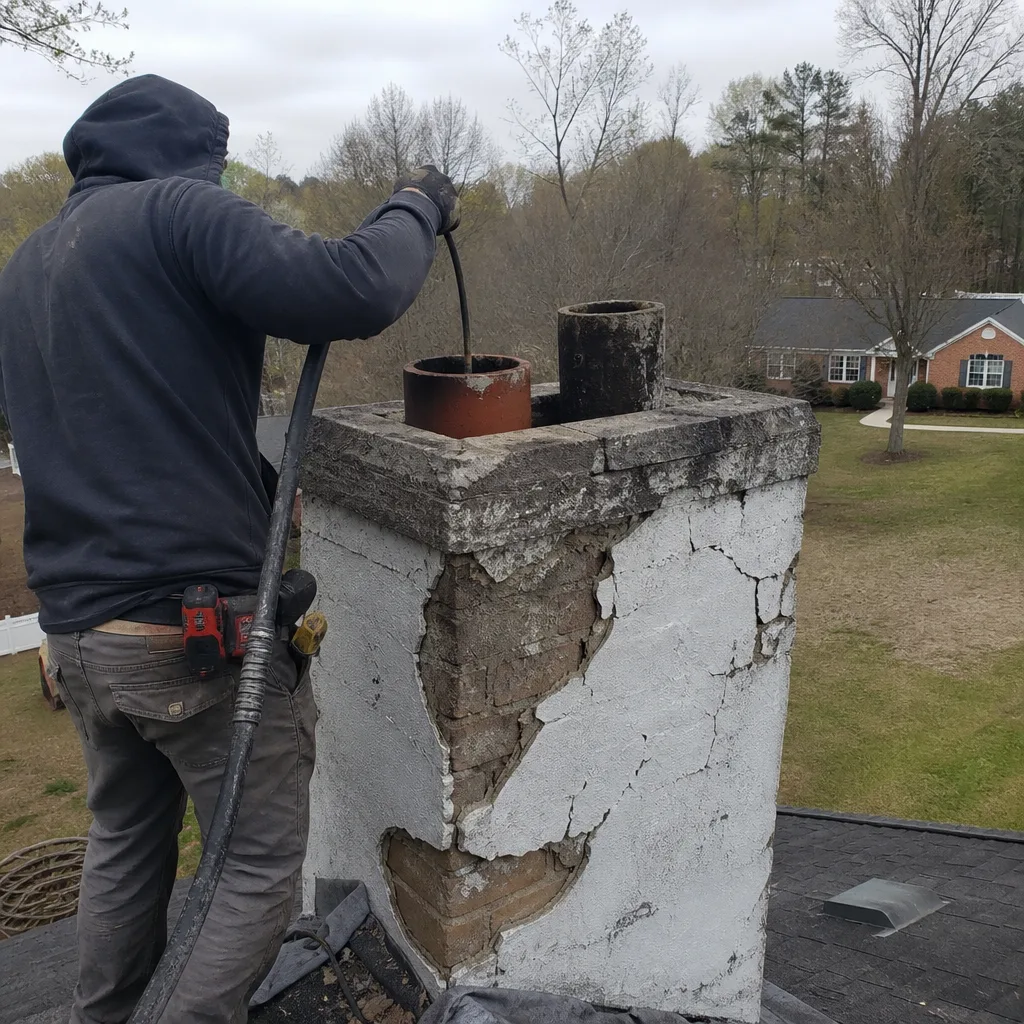 Before
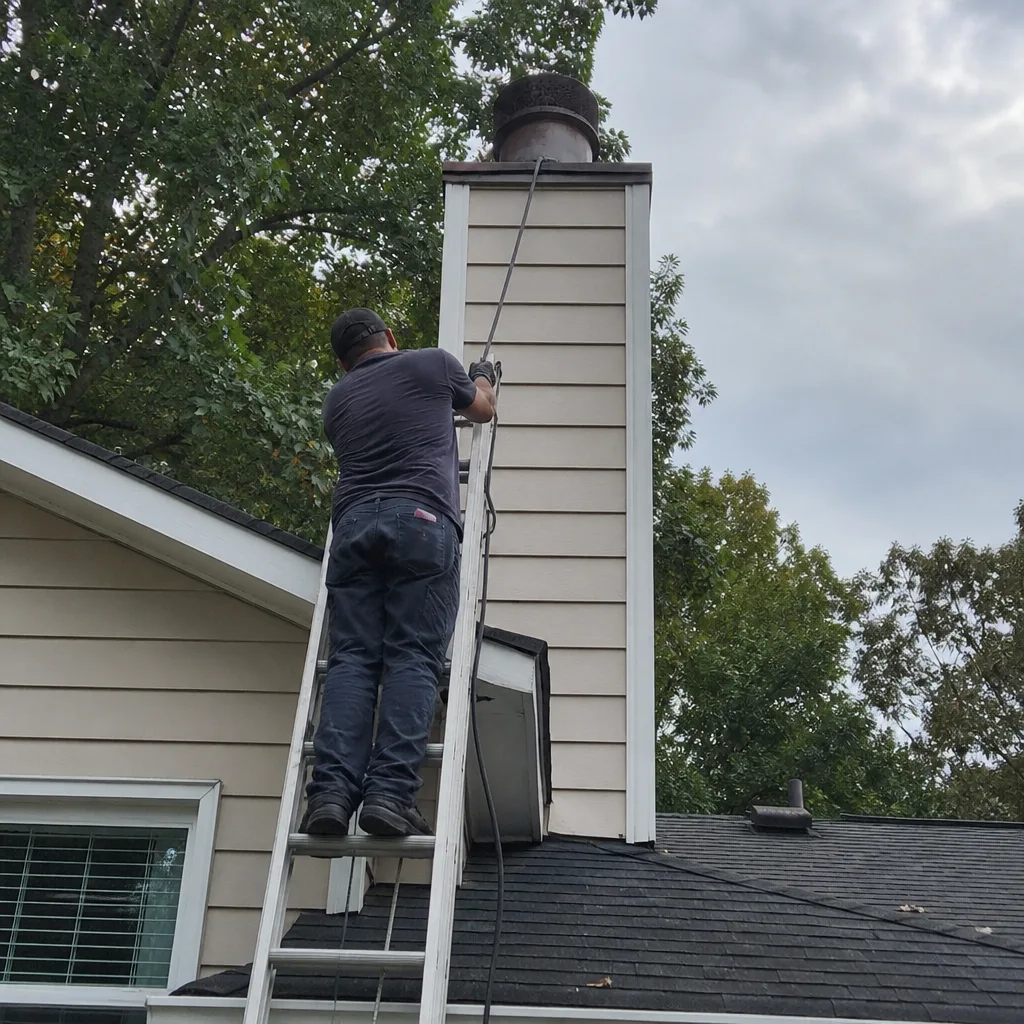 After
After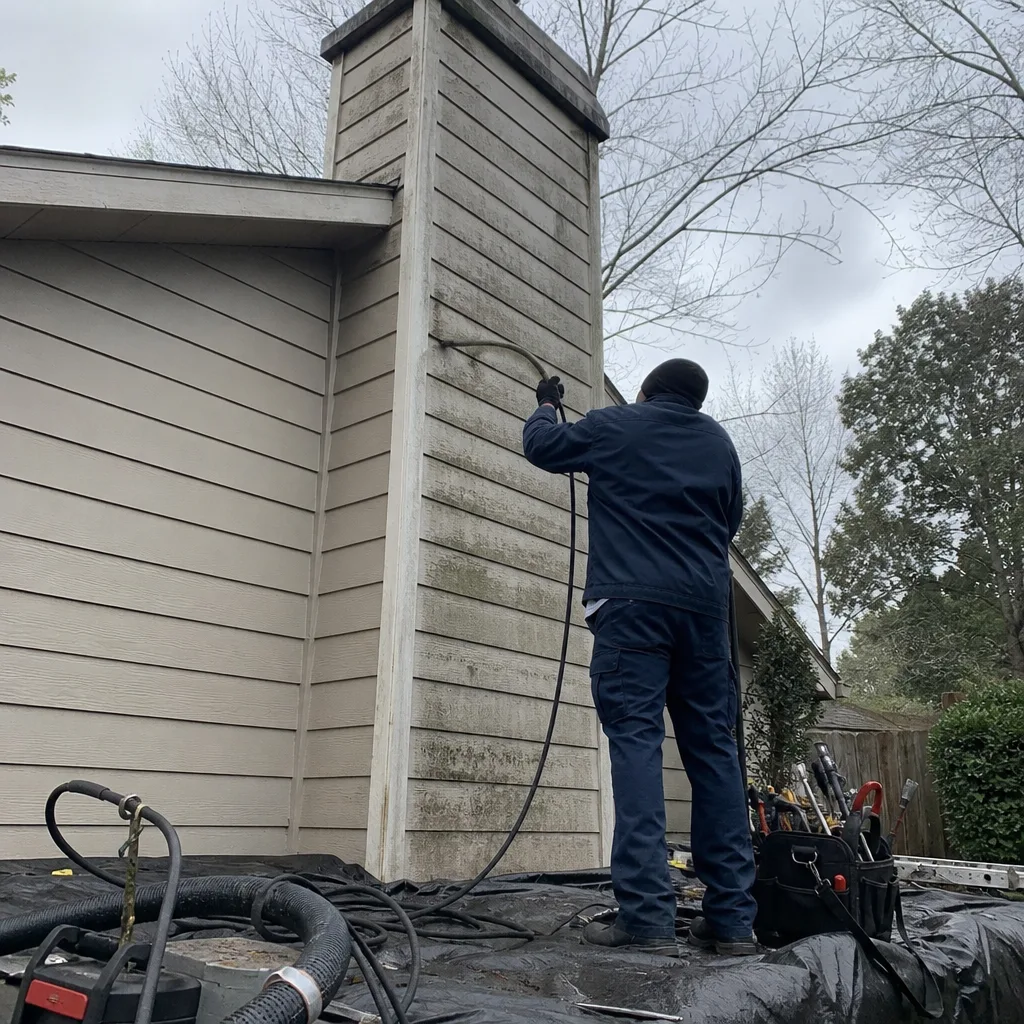 Before
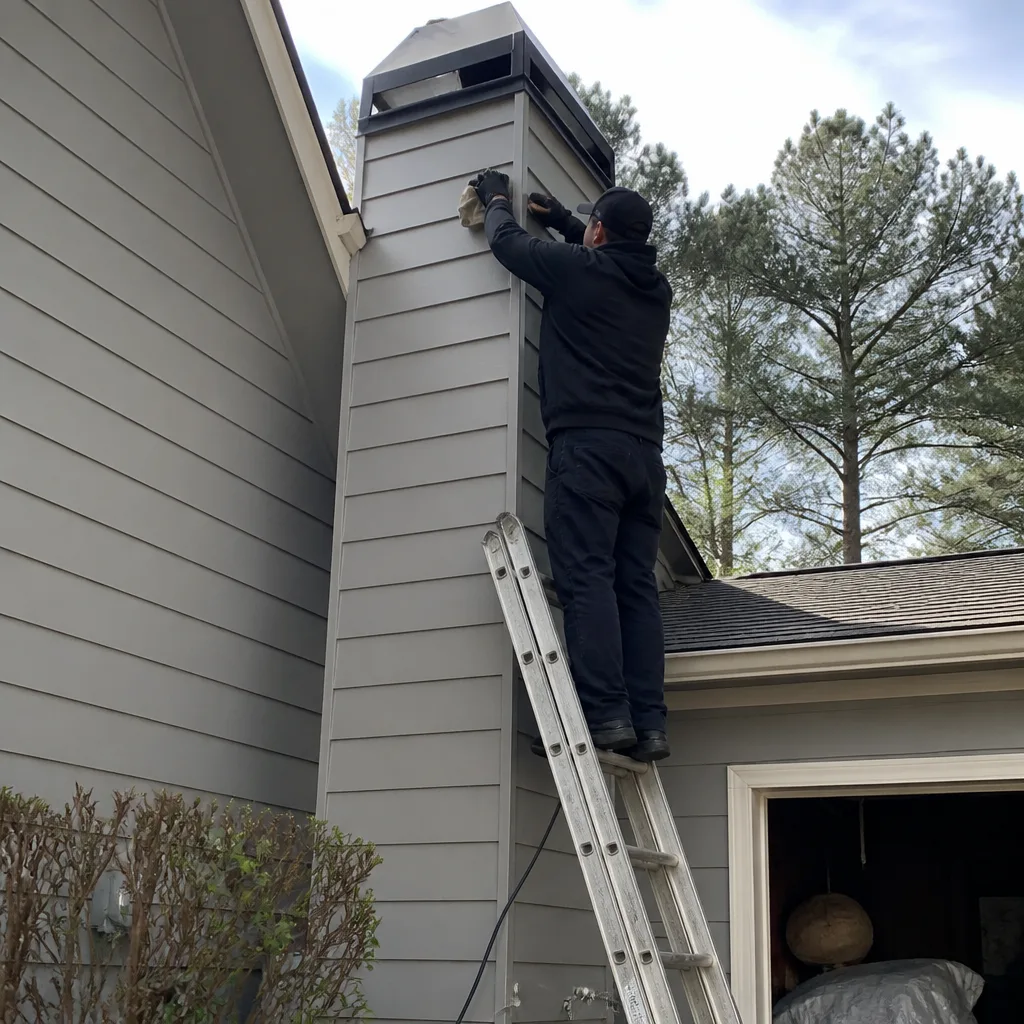 After
After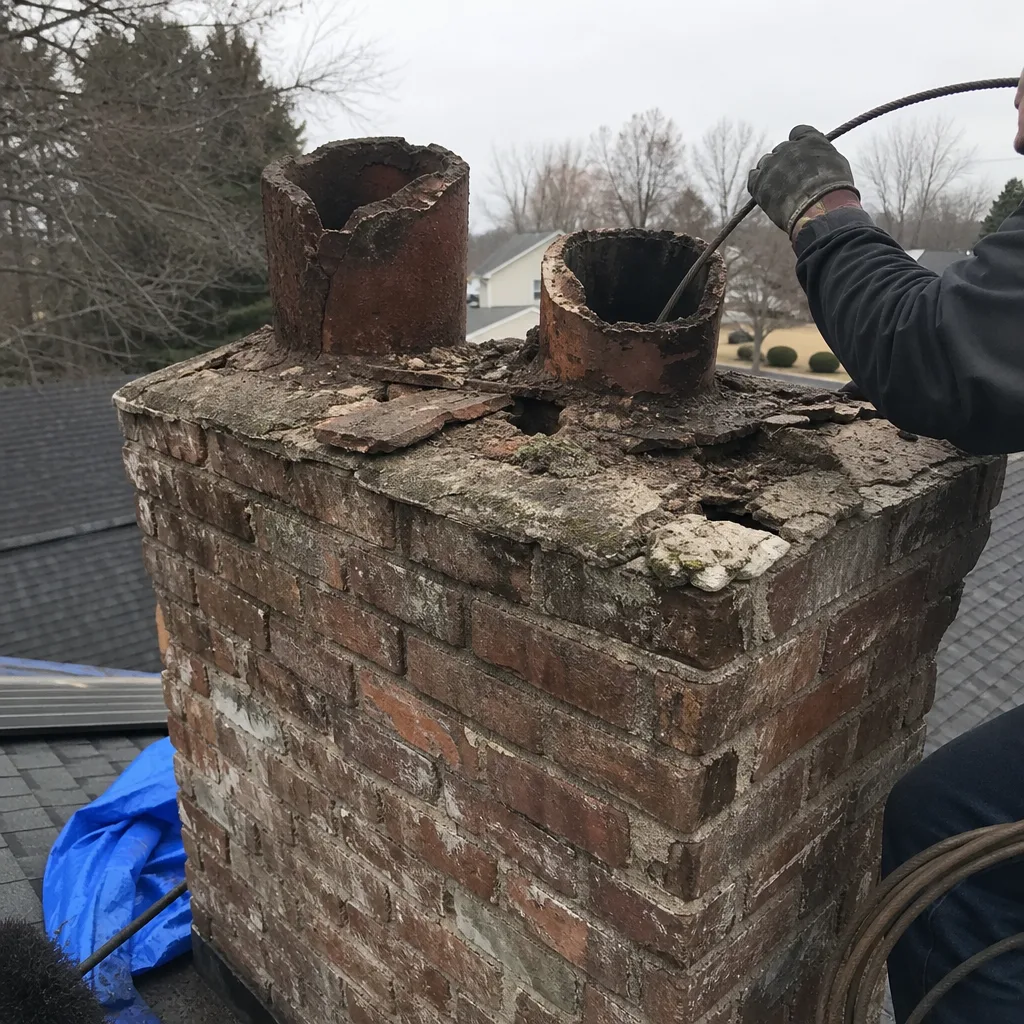 Before
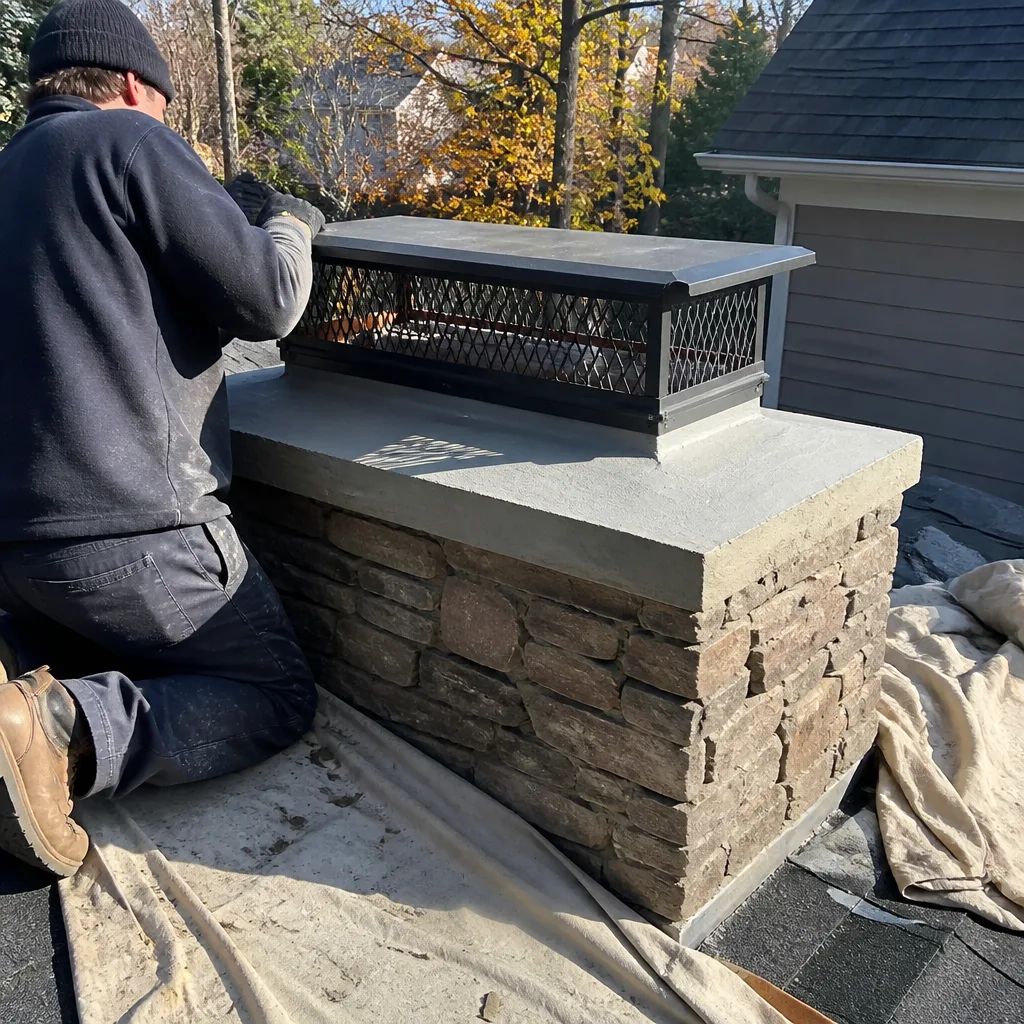 After
AfterCreosote Removal in Kennesaw, GA
Creosote removal in Kennesaw typically costs between $150 and $450, depending on the class of buildup and how many flue sections need treatment. Most visits are completed in two to four hours, and every job at Level Two Chimney Kennesaw comes with a written price before the work starts and a documented photo record when it’s done.
If you’ve noticed a sharp, tar-like smell from your fireplace, a visible dark crust inside the firebox, or reduced draw when the fire is going, Fireplace Cleaning may be needed because creosote is the most likely cause. It forms every time wood burns incompletely – slow, smoldering fires in particular leave the heaviest deposits – and it does not go away on its own. Left alone, Class II and Class III creosote become the primary fuel source in a chimney fire, which burns at temperatures that can crack a flue liner in minutes.
Since 2009, our team has inspected and cleaned more than 38,000 chimneys across the metro Atlanta area, and Kennesaw homes see some of the worst late-season creosote accumulation we document – partly because of how many households run their fireplaces hard through December and January, then let fires smolder through February with green or partially seasoned wood. Corrine Halstead and the Level Two team built our process around Level 2 Inspection standards specifically so we find and document what’s actually there, not what a flashlight look might suggest.
Start with our full Chimney Cleaning & Sweep in Kennesaw page if you want context on everything we check during a visit. Or call us directly at (678) 535-2204 – a live person picks up, any time of day.
When You Need Creosote Removal
Some of these signs are obvious, some aren’t. Either way, the camera down the flue is the only way to know what class of buildup you’re dealing with and what it will take to clear it.
- A persistent smoke or tar smell in the living area, even when the fireplace isn’t in use. In Kennesaw homes built between the late 1980s and early 2000s – especially in areas like Cheatham Hill and Legacy Park – we frequently find dense Class II creosote coating the smoke chamber and damper throat that produces this odor when summer humidity draws moisture through the flue.
- Visible black or brown crust on the firebox walls or damper plate. A thin sooty film after a season of use is normal. A flaky, shiny, or tar-like layer that’s more than an eighth of an inch thick is not – that’s the transition from Class I to Class II, and it changes how we approach removal.
- Reduced draft or smoke that rolls back into the room. Heavy creosote deposits narrow the effective flue diameter, restrict airflow, and make your fireplace behave as though it’s undersized. If your fireplace worked fine last season and doesn’t now, buildup is among the first things to rule out.
- You haven’t had a documented inspection in more than 12 months. NFPA 211 recommends annual inspection and cleaning for any chimney that sees regular use. If the last “inspection” was a visual check without camera documentation, the previous technician may have missed Class II or higher buildup in the upper flue sections.
- You burned unseasoned or green wood during the past season. Wet wood produces significantly more creosote per fire than properly seasoned wood. In Kennesaw, where many households receive cord wood from local vendors without confirmed moisture readings, this is a consistent pattern we see in the documented records.
- You’ve had a chimney fire, even a small one. A rapid burn-off of creosote deposits – sometimes announced only by a low rumble or an unexpected spike in fireplace temperature – can leave behind glazed Class III residue and cracked liner sections. This combination requires chemical treatment and an NFPA 211 Level 2 camera inspection before the fireplace is used again. This is not a DIY situation; the structural risk from cracked liners is genuine and can allow flue gases and heat to migrate into wall cavities.
Our Creosote Removal Process
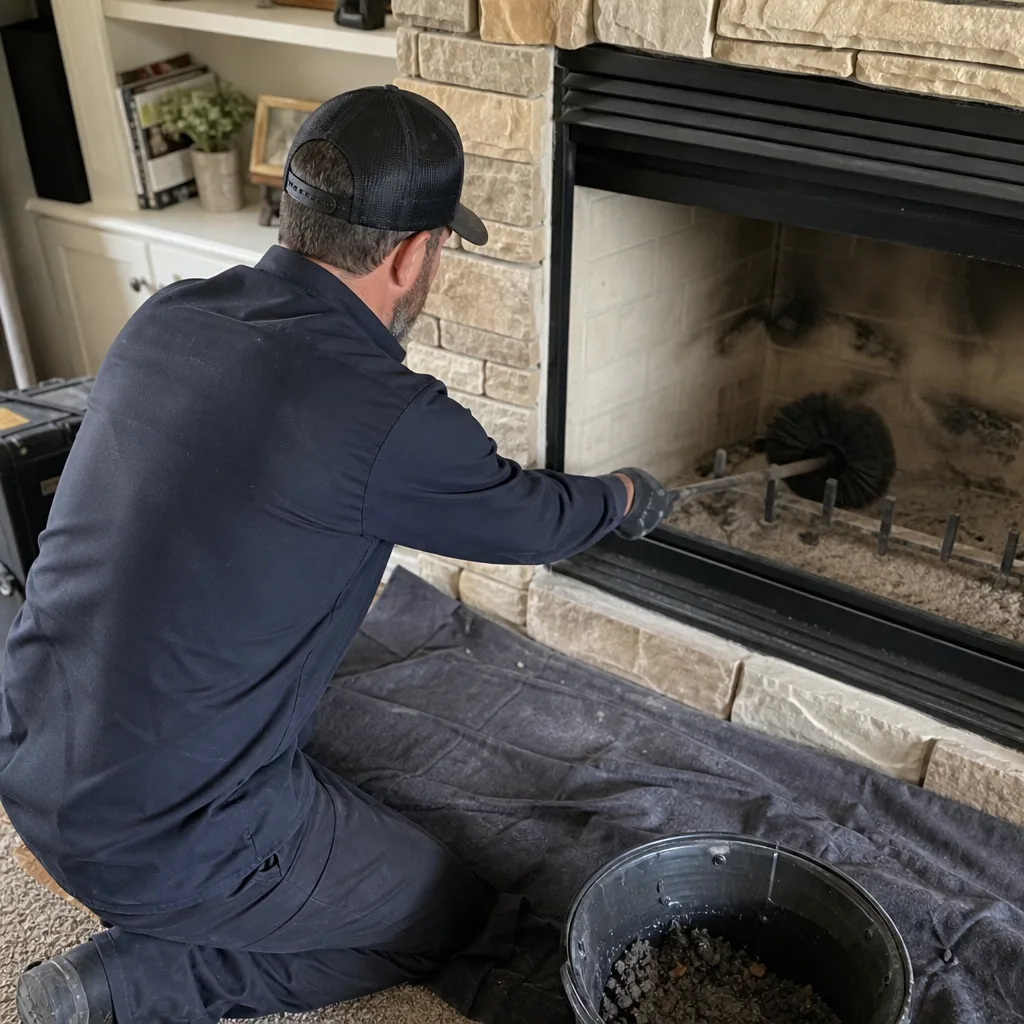
Every visit follows the same documented sequence. Nothing gets skipped because the job looks routine, and nothing gets added to the price after we’ve started.
- Written scope and price before we touch anything. Haven Standard Clause 1 – what the industry calls H.A.V.E.N. ‘Have it in writing’ – means you see the written price, the written scope, and the written warranty before a tool leaves the truck. If the camera finds something that changes the scope, we stop, document it, show you the footage, and get your sign-off before continuing. No surprises on the invoice.
- NFPA 211 Level 2 camera scan of the full flue system. Before any cleaning starts, the camera goes down. We document the liner condition, the smoke chamber, the damper, and the firebox in sequence. This establishes a baseline – what’s there, where it is, and what class it falls under – and it’s archived as your property record under Haven Standard Clause 4. That documentation matters if you ever make an insurance claim or sell the home.
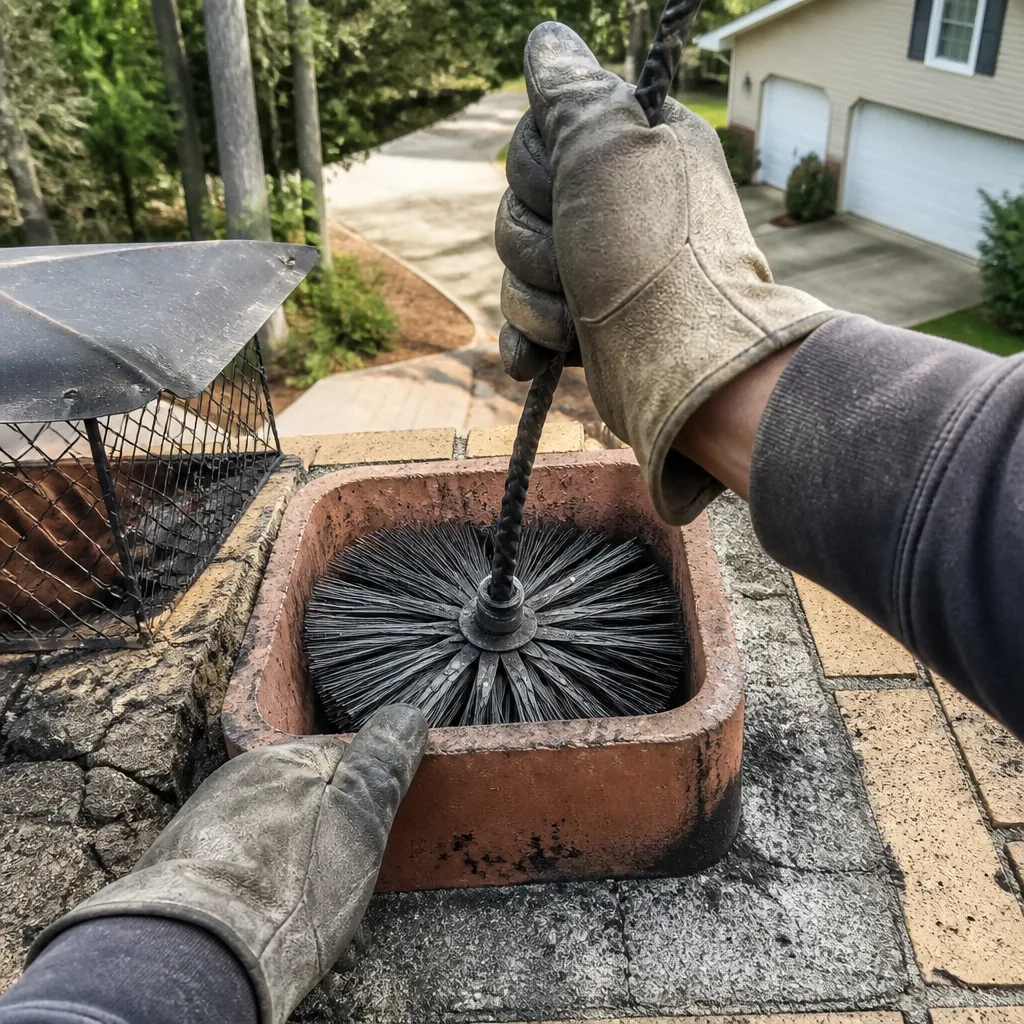
- Class-appropriate mechanical cleaning. Class I creosote – the dry, flaky kind – comes out with rotary brushes and a HEPA-filtered vacuum system. We use Copperfield-grade brushes sized to the specific flue diameter so the liner isn’t abraded. The firebox and smoke chamber are cleaned in the same pass, and all debris is contained and removed from your home.
- Chemical treatment for Class II and Class III deposits. Glazed or tar-like creosote doesn’t respond to brushes alone. For Class II buildup, we apply a chemical agent – sourced through Haven’s supply network, the same procurement path that keeps our materials pricing honest – that converts the deposit into a friable, removable form. A follow-up brush pass clears the treated material. Class III creosote, the densest and most hazardous stage, requires a more intensive chemical treatment protocol and in many cases a second visit 10 to 14 days later once the conversion is complete. We document both visits and include both in the photo record.
- Post-cleaning camera verification. After cleaning, the camera goes back down. We compare before-and-after footage in front of you so the result is visible and documented, not just described. If a liner crack or spall is now visible that wasn’t accessible through the buildup, we’ll note it in the written report and quote any repair separately – no pressure, no upsell bundled into the original invoice.
- Written summary, photo record, and warranty hand-off. You leave with a written summary of what was found, what was done, the before-and-after photo record, and the 365-Day Done Right Promise in writing. If anything related to this job isn’t right within a year, we come back and make it right. That’s not a marketing phrase – it’s documented on every job under the Haven Standard.
 Before
 After
AfterCreosote Removal Pricing in Kennesaw
Creosote removal in Kennesaw costs $150 to $450 for the majority of jobs. The range is wide because the class of creosote determines the method, the materials, and the time on site. A single-flue system with Class I buildup after one season of moderate use sits at the lower end. A two-flue system with glazed Class II creosote, or any system with Class III deposits, sits at the higher end and may require a return visit.
| Service | Typical Range (Kennesaw) | Notes |
|---|---|---|
| Class I Creosote Removal (single flue) | $150 – $229 | Dry, flaky buildup; mechanical brush cleaning; included in standard sweep |
| Class II Creosote Removal | $229 – $349 | Flaky to tar-like; chemical treatment + mechanical; one visit in most cases |
| Class III Creosote Removal | $349 – $450+ | Glazed/hardened; intensive chemical protocol; may require second visit |
| Additional Flue (same visit) | $75 – $150 | Price depends on flue length and access |
| NFPA 211 Level 2 Camera Inspection | Included | Before and after; documented photo record; Haven Standard Clause 4 |
What drives cost up: flue height beyond 25 feet, offset flues with bends that slow brush travel, chimneys that haven’t been cleaned in more than three seasons, and systems where a previous tech left chemical residue that has to be cleared before fresh treatment can work. What keeps cost down: regular annual cleaning, properly seasoned wood, and a damper that seals correctly between fires.
Every price on this page is a range, not a guarantee, because we haven’t put our camera in your flue yet. What we can guarantee is that the number you see on the written quote – delivered before any work starts – is the number on the invoice when we’re done. Call (678) 535-2204 to schedule an inspection and get a written estimate. There’s no charge for the second opinion if you already have a written quote from another company.
FAQs – Creosote Removal
How do I know what class of creosote I have?
You can’t confirm the class without a camera inspection – a visual check from the firebox opening doesn’t show the full flue or the smoke chamber. Class I is dry and flaky, Class II is denser and may look shiny or tar-streaked, and Class III is hardened and glazed, often with a sheen that reflects light. The distinction matters because the wrong removal method applied to Class III won’t clear it and may actually compact it further. Our Level 1 Inspection and Level 2 camera scan documents what’s there before anything starts, so the class is confirmed on footage, not guessed. Call (678) 535-2204 to book an inspection and get a written price before any work begins.
Can I remove creosote myself with one of the chimney cleaning logs?
Chimney cleaning logs are formulated to treat Class I creosote only, and the effect is partial – they convert some deposits to a more friable form but don’t remove them. For Class II or Class III buildup, they are not an adequate solution and can create a false sense that the chimney is clear when it isn’t. More critically, any attempt to mechanically remove heavy glazed deposits without a camera inspection first risks dislodging material that could block the flue or crack an already-compromised liner. A cracked liner is a serious structural issue – flue gases and heat can migrate into wall cavities, which is a fire risk that a cleaning log won’t diagnose. We strongly recommend letting a trained technician handle anything beyond light Class I maintenance.
How often does creosote need to be removed in Kennesaw?
For most Kennesaw households that use the fireplace regularly from October through February, Chimney Cleaning & Sweep services on an annual schedule is the right fit – which aligns with NFPA 211’s recommendation. If you burn frequently, use unseasoned wood, or run slow smoldering fires, a mid-season check in January makes sense. Homes in areas like Bells Ferry or the older subdivisions near downtown Kennesaw that have pre-1990 masonry chimneys sometimes accumulate faster because of older damper designs that let cold air drop into the flue and cool combustion gases before they exit – that temperature drop accelerates creosote deposition. The camera record we provide on every visit gives you a year-over-year comparison so you can see exactly how fast buildup is occurring in your specific system.
Does creosote removal damage the flue liner?
Done correctly, no. Rotary brush cleaning on a sound liner causes no measurable wear when the brush diameter is matched to the flue size – which is why we size every brush to the specific flue before starting. Chemical treatments used for Class II and Class III deposits are formulated to react with the carbon deposits, not the liner material, whether that’s clay tile, cast-in-place, or a stainless steel insert from a manufacturer like Gelco or Olympia Chimney. The post-cleaning camera pass is specifically there to confirm the liner is intact after the process. If a liner shows wear or pre-existing damage – cracks, spalls, or separations between sections – we document it in the photo record and give you a separate written quote for repair. That repair quote is optional, never bundled into the cleaning invoice.
Why Kennesaw Homeowners Call Level Two First
Most chimney companies in the Kennesaw area offer a sweep and describe it as an inspection. What they hand you is a verbal summary, sometimes a one-page checklist. What we hand you is a photo record tied to your address, before-and-after camera footage, a written scope of what was done, and a 365-Day Done Right Promise that’s documented, not just stated.
Corrine Halstead built Level Two Chimney Kennesaw on the premise that documentation is the service, not an add-on. Every one of the more than 38,000 chimneys we’ve cleaned since 2009 got a written price before work started and a documented record when it was done. That’s not marketing language – it’s Haven Standard Clause 4, and it’s been our default since before insurers and home inspectors started asking for it.
If you’ve already received a written estimate from another company, bring it. Our Free Second Opinion is available on any written quote, no strings attached. We’ll put our camera down your flue, show you what’s there, and give you a written price to compare. If their quote is accurate and fair, we’ll say so.
The full scope of what we do in Kennesaw – from a standard annual sweep to full liner installation – is on our home page. For creosote removal specifically, call (678) 535-2204. A live person answers, the estimate is free, and the price is in writing before anyone touches your chimney.
Written by Corrine Halstead, Owner at Level Two Chimney Kennesaw, serving Kennesaw.