
Last updated September 22, 2026
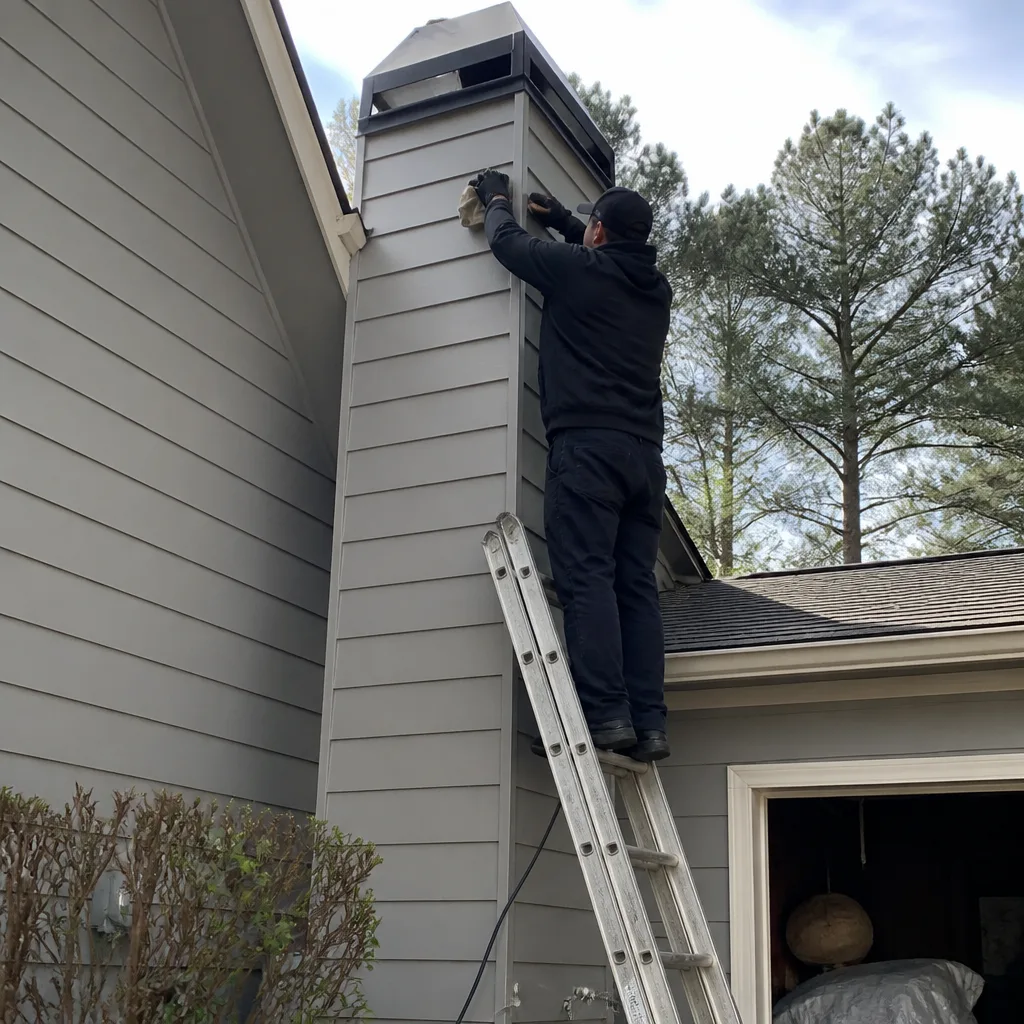
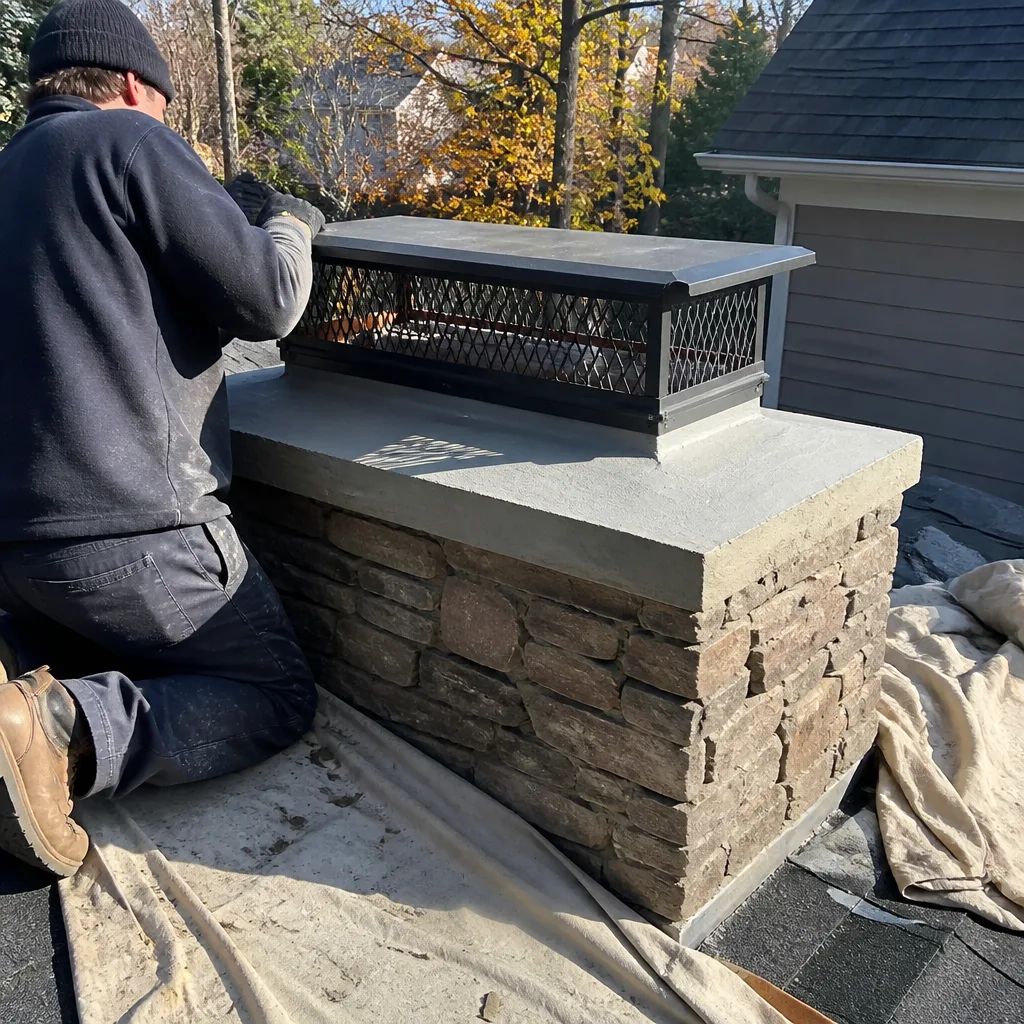
Level 1 sweep and inspection to the NFPA 211 annual standard - flue, crown, cap, and flashing checked and photographed
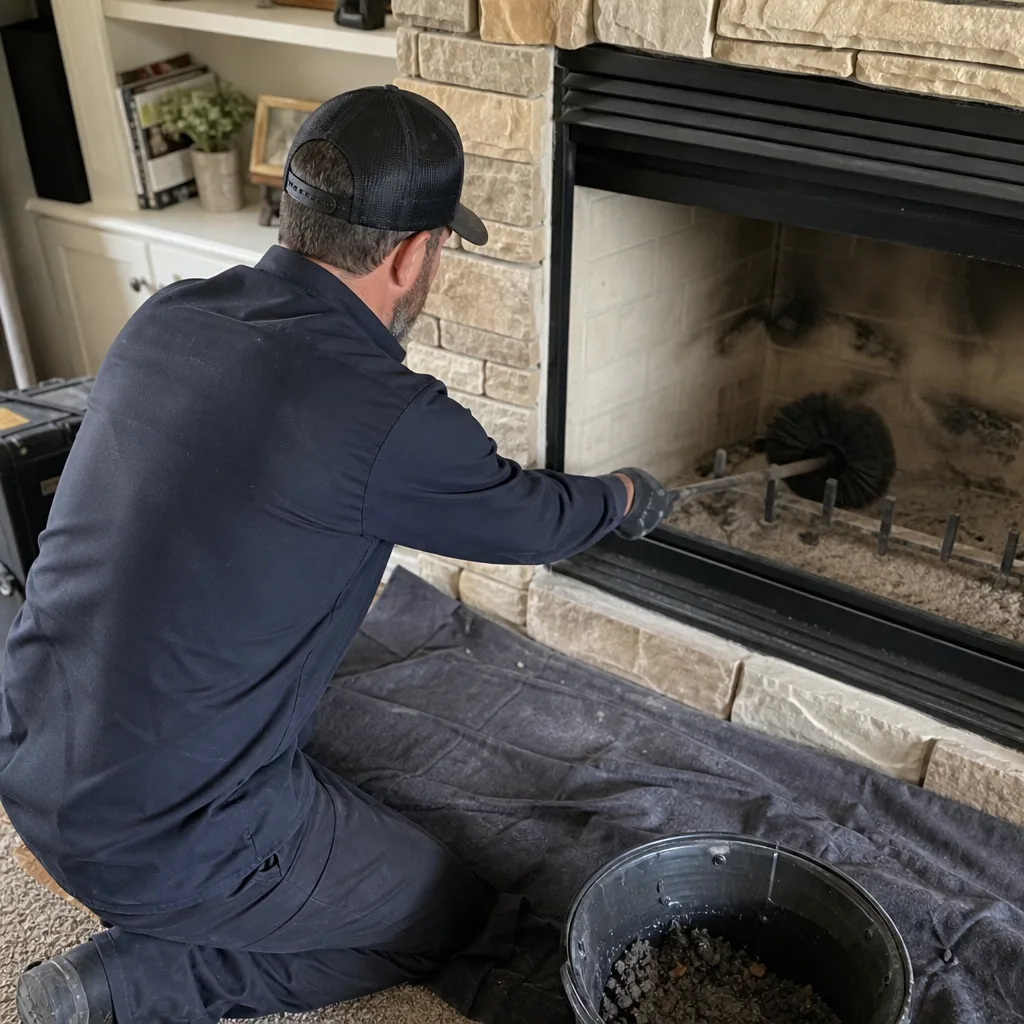
Chimney sweep logs do not sweep chimneys. They loosen some creosote - which then falls where a brush and vacuum still have to collect it.
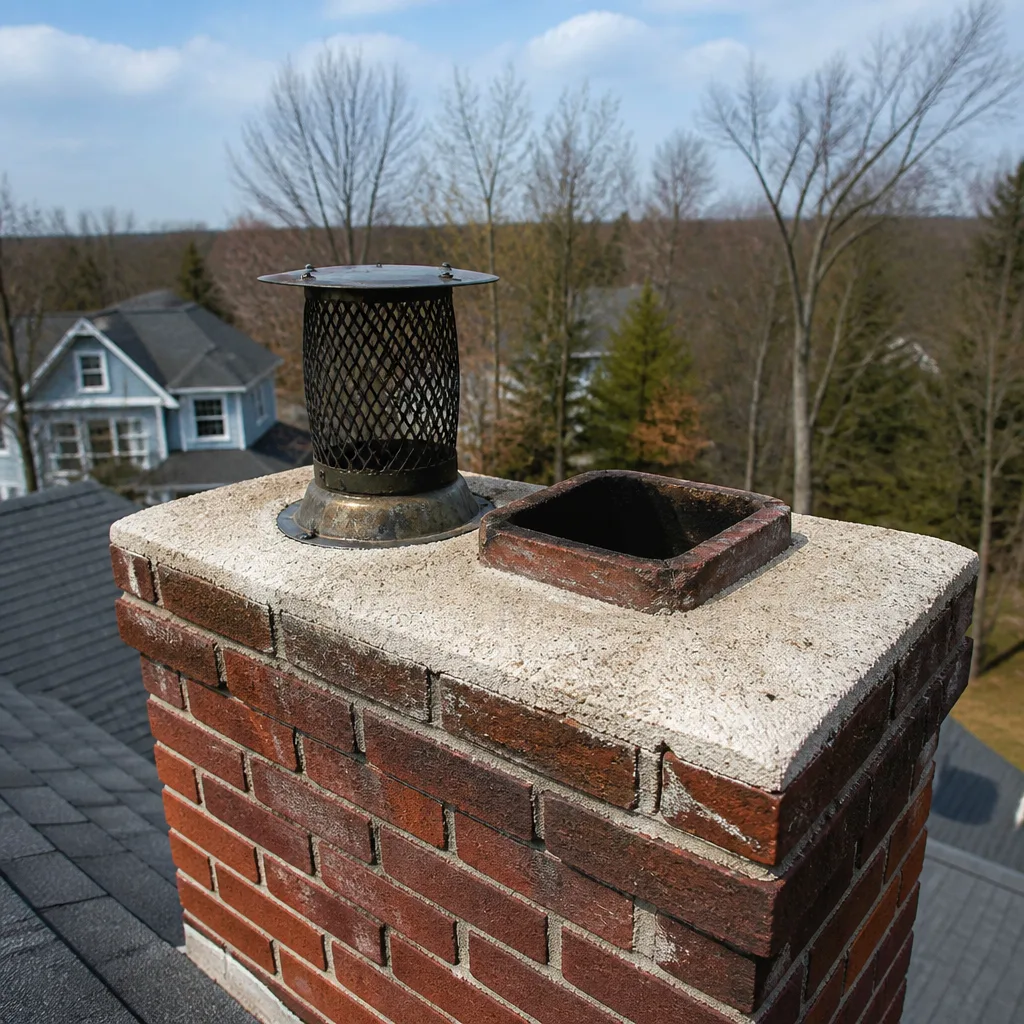
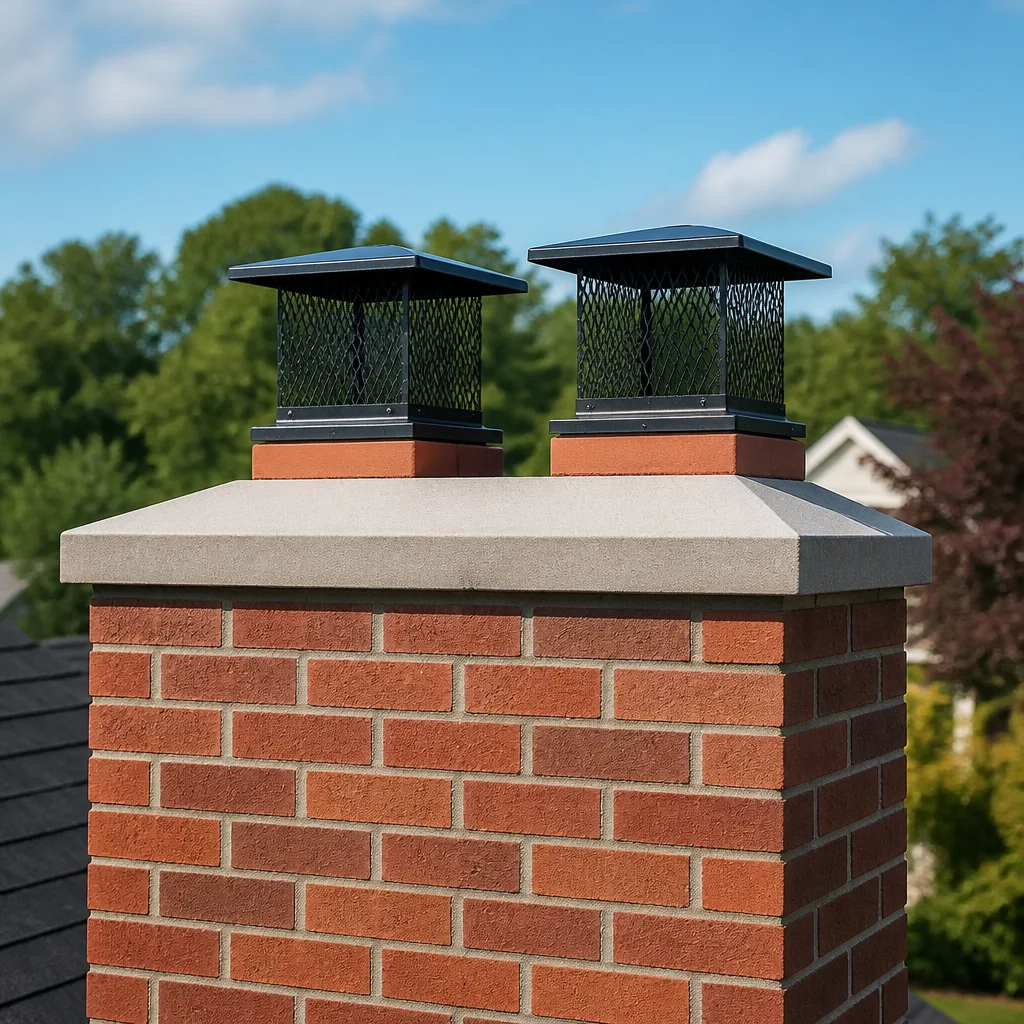
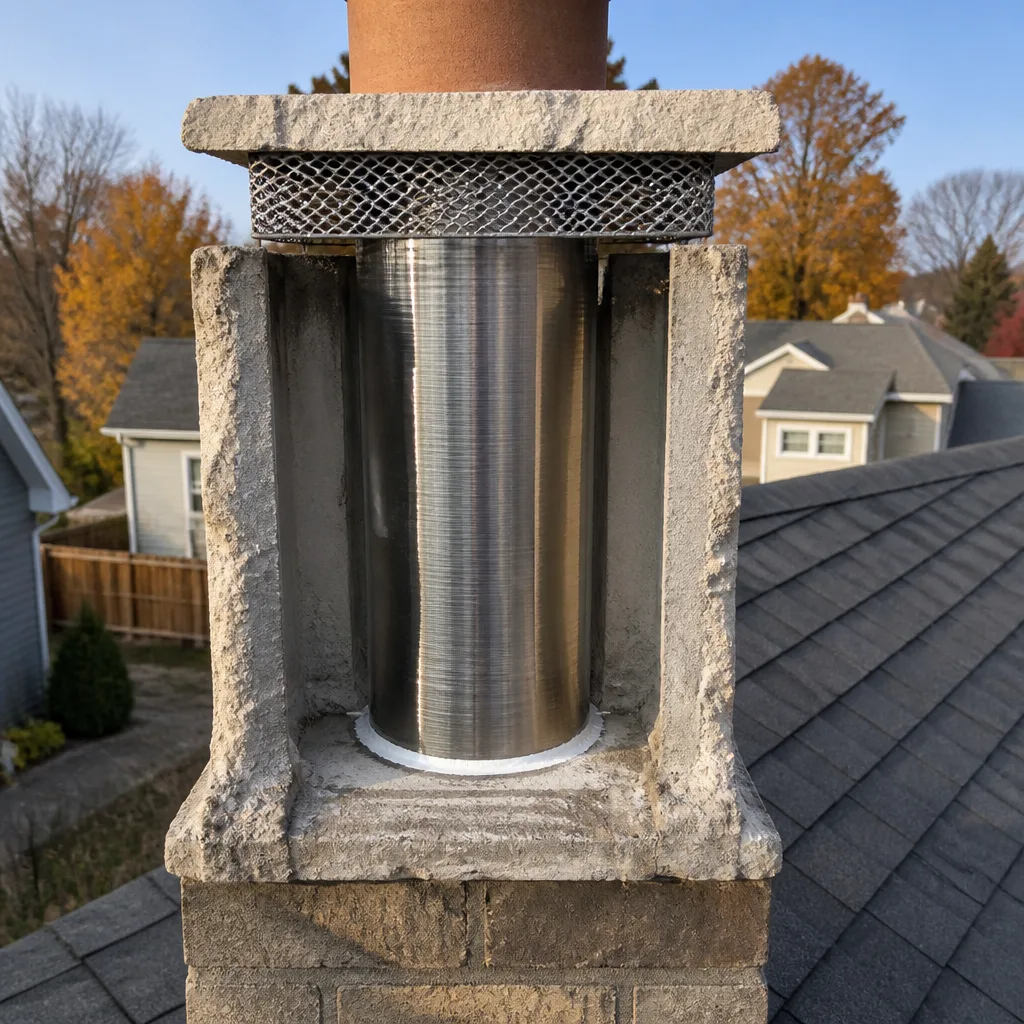
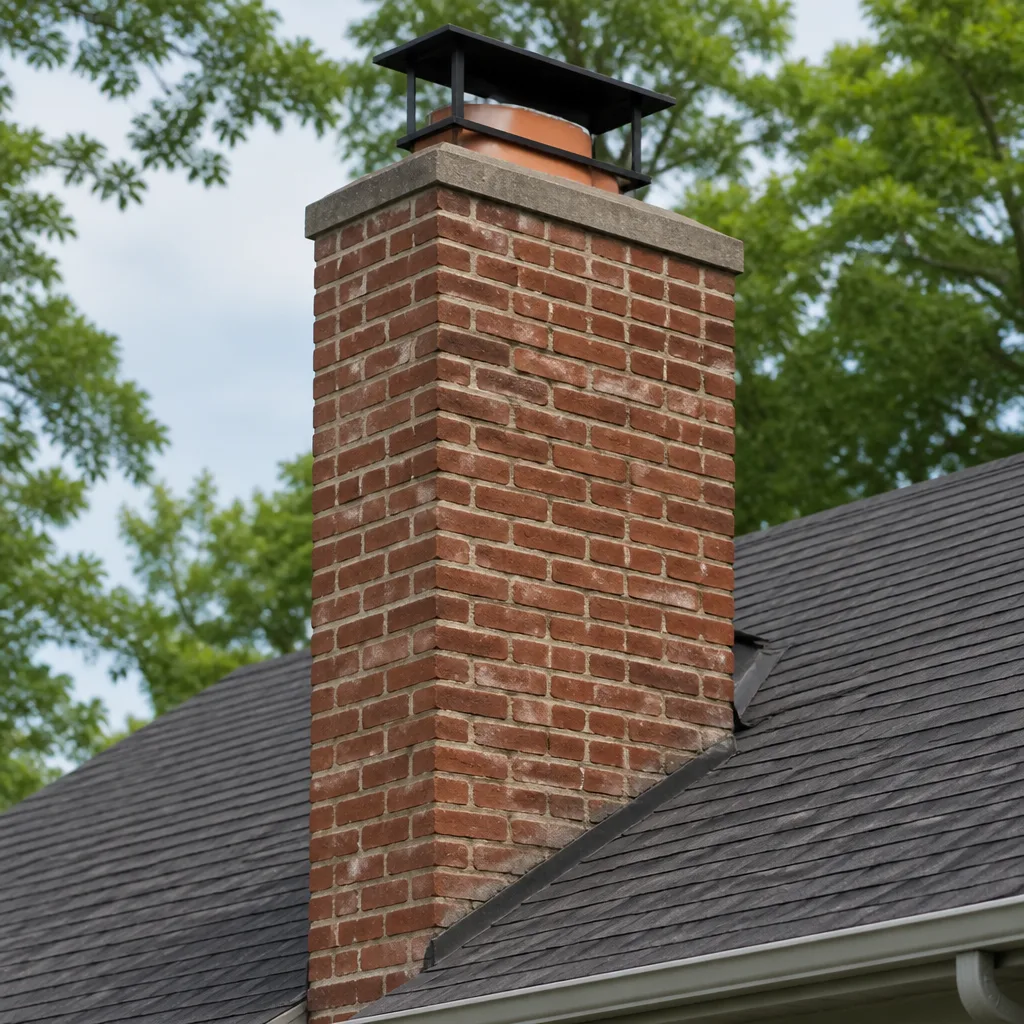
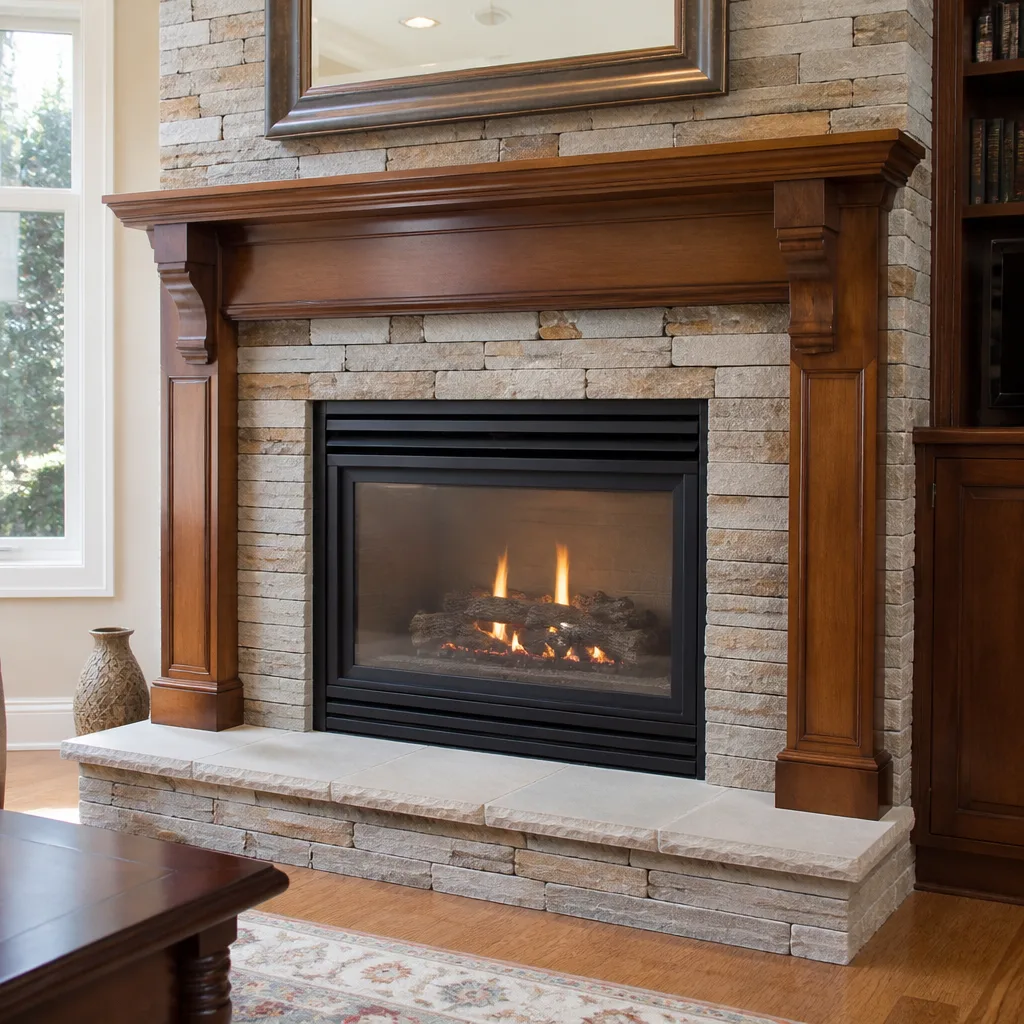
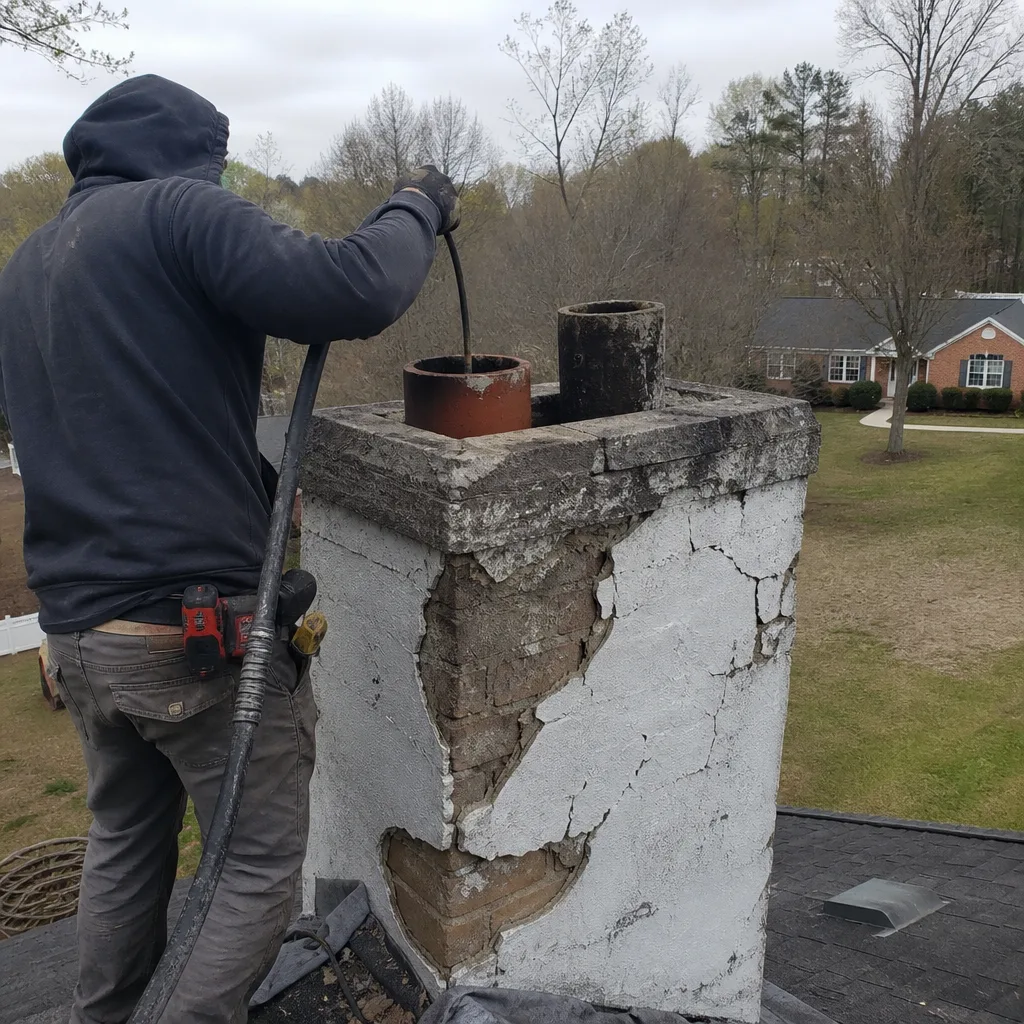 Before
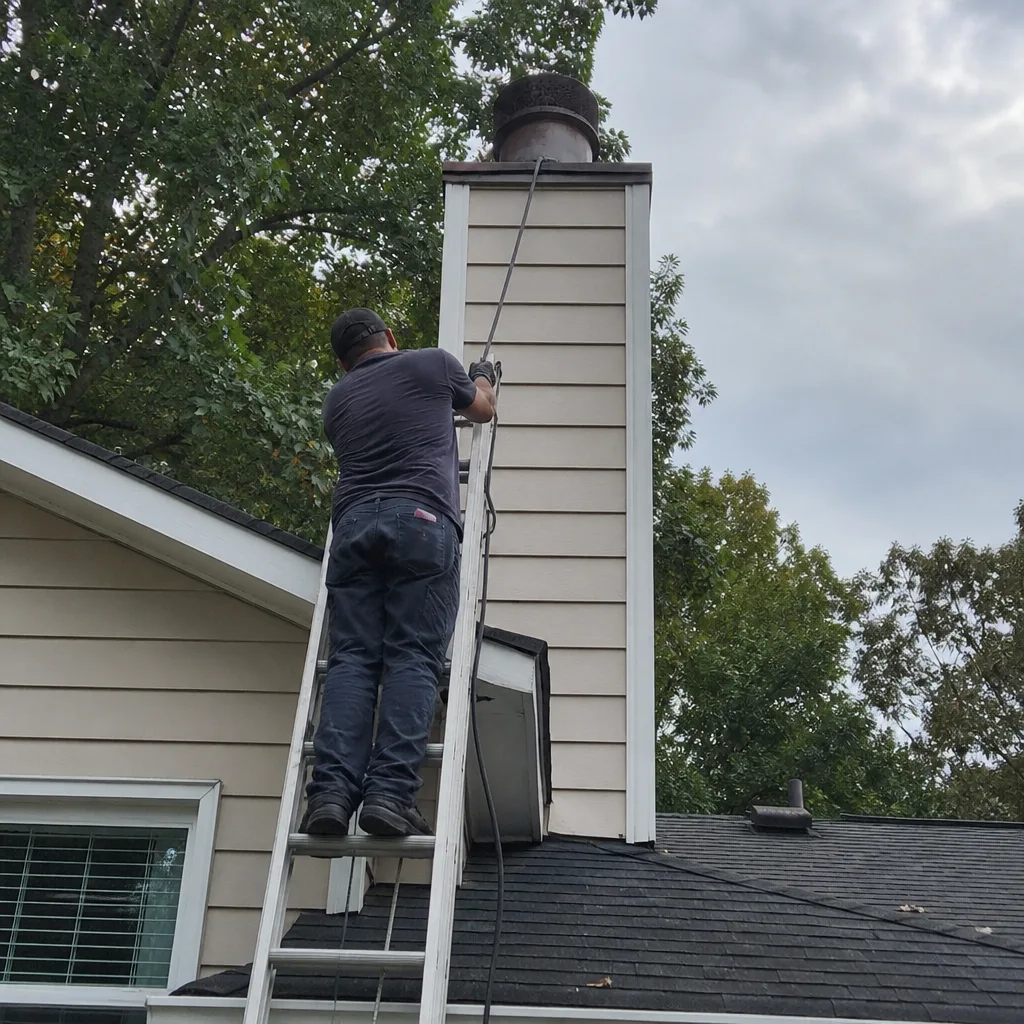 After
After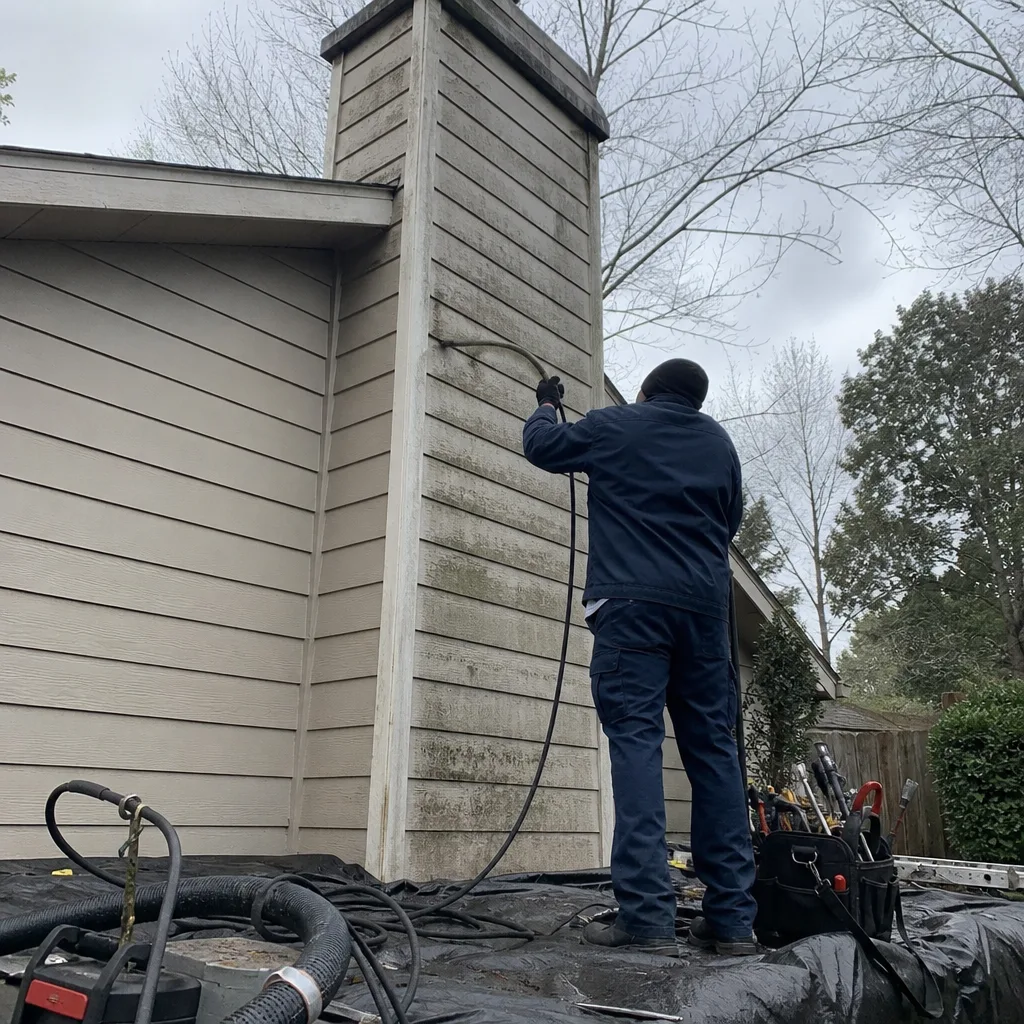 Before
 After
After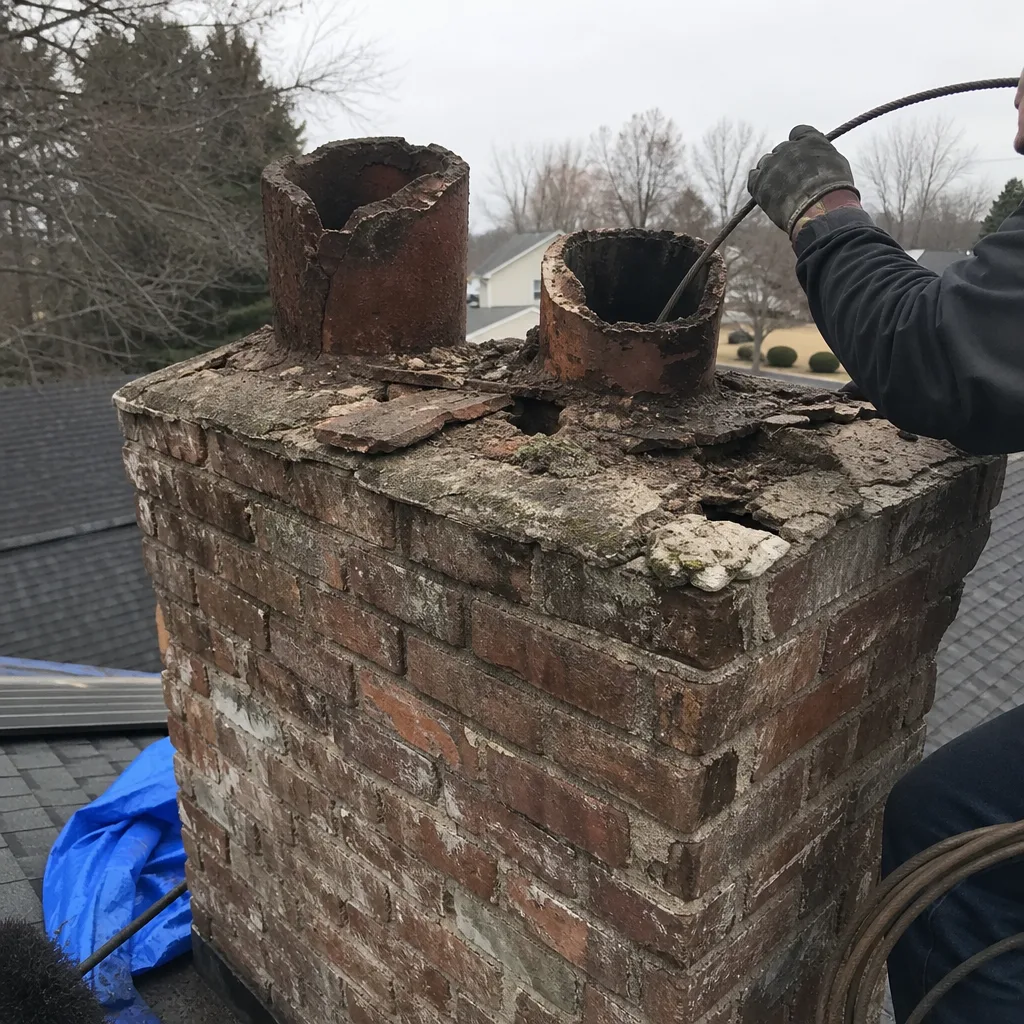 Before
 After
AfterChimney Cleaning & Sweep Maintenance Checklist for Kennesaw Homeowners
The smoke smell that shows up in a Kennesaw living room in October almost never starts in October. It’s the byproduct of a draft problem that’s been developing since spring, when pollen-clogged dampers and moisture-compromised flues first began their slow decline. Most maintenance checklists tell you to “schedule annual cleaning” and stop there. This one is different. We’ve built it around the physical evidence you can collect yourself between professional visits: what to see, smell, and measure without ever touching a ladder. You’ll learn to read your firebox like a logbook, test your damper like a technician, and catch the seasonal signals that predict problems before they become expensive repairs.
Quick Answer
A complete chimney maintenance checklist for Kennesaw homeowners includes monthly visual inspections of the firebox and damper, seasonal checks of the exterior crown and cap for moisture damage, and annual NFPA 211 Level 2 inspection with camera documentation. Between professional visits, homeowners should log odor changes, perform three simple damper tests, and photograph the firebox opening before and after each burning season to establish baseline comparisons. In Kennesaw’s climate, spring checks are critical: Georgia’s wet season and heavy pine pollen create unique conditions that accelerate mortar spalling and damper blockage.
Table of Contents
- Why Annual Sweeping Isn’t Enough in Kennesaw
- The Spring Checklist: What Wet Season Reveals
- The Summer Checklist: Odor Logging and Draft Monitoring
- The Fall Checklist: Pre-Burning Season Preparation
- The Winter Checklist: Active Burning Season Monitoring
- The Three Damper Tests Every Homeowner Can Perform
- Reading Firebox Deposits: What Color Tells You
- How to Photograph Your Firebox for Professional Comparison
- Common Mistakes to Avoid
- When to Call a Professional
- Frequently Asked Questions
- The Bottom Line
 Before
 After
AfterWhy Annual Sweeping Isn’t Enough in Kennesaw
Annual Chimney Cleaning & Sweep services are the floor, not the ceiling. The NFPA 211 standard recommends annual inspection and cleaning as needed, but that frequency assumes average conditions. Kennesaw doesn’t have average conditions.
Our wet season runs March through September, with average annual rainfall near 52 inches. That moisture doesn’t stay outside. It wicks into mortar joints, freezes in winter temperature swings, and accelerates spalling - the flaking or peeling of brick and mortar surfaces. Meanwhile, Georgia’s loblolly and shortleaf pines produce pollen that accumulates in damper throats and smoke chambers, creating a sticky, acidic residue that corrodes metal components and obstructs airflow.
We’ve inspected chimneys in Kennesaw neighborhoods from Legacy Park to Barrett Greene where the homeowner dutifully scheduled “annual” service every September, yet missed six months of visible crown damage that started with hairline cracks in April. By October, those cracks had propagated through the crown, allowing water to saturate the top course of brick. The repair escalated from a $400 crown seal to a $2,800 crown rebuild.
The checklist that follows is organized by season because your chimney experiences four distinct operating environments in Kennesaw, and we’ve drawn on The Complete Guide to Chimney Cleaning in Kennesaw to structure it. Each season produces specific evidence. Learning to read it saves money and prevents the safety failures that develop in the gaps between professional visits.
Key point: professional service remains essential. No homeowner can evaluate flue liner integrity, smoke chamber configuration, or Class III glazed creosote without proper equipment. This checklist bridges the gap between visits, not replaces them. Chimney Cleaning & Sweep in Kennesaw from Level Two includes NFPA 211 Level 2 camera inspection as standard - the documented photo record that lets you compare year over year.
The Spring Checklist: What Wet Season Reveals
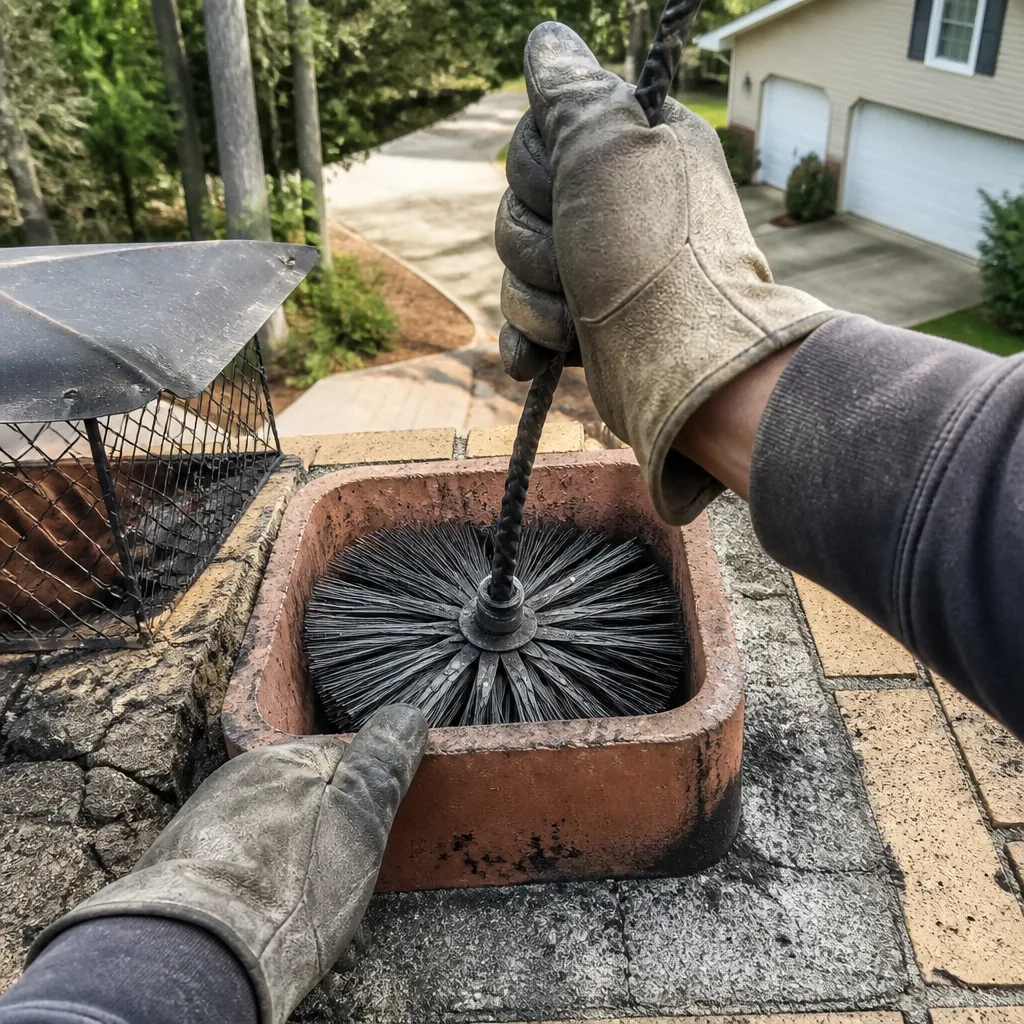
March through May in Kennesaw brings the heaviest rainfall and the thickest pollen load. This is when your chimney takes damage you won’t smell until October. Perform these checks in late April or early May, after the peak pollen period.
Exterior: Ground-Level Observation (No Ladder Needed)
- Check the crown for efflorescence. Look up from the ground with binoculars. Efflorescence is the white, powdery deposit that appears when moisture draws soluble salts out of masonry. In Kennesaw’s clay-heavy soils, we see this frequently on crowns that have lost their seal coat. It means water is migrating through the crown matrix. If you see it, photograph it with date stamp. The crown needs resealing before fall.
- Inspect mortar joints for spalling. Spalling appears as flaking, crumbling, or missing mortar between bricks, or as the face of the brick itself peeling away. Kennesaw’s freeze-thaw cycles are milder than northern climates, but our wet-dry cycles are aggressive. A joint that looks sound in March may show significant material loss by May. Focus on the top third of the chimney, where exposure is greatest.
- Verify cap and spark arrestor integrity. The cap should sit level, with no visible gaps between its base and the flue tile or crown. Check for dents from winter storms, corrosion at the seams, and screen mesh that isn’t clogged with pollen debris. A cap that collected pine needles all winter is a cap that will collect rainwater all spring.
- Look for vegetation at the base. Weeds or grass growing against the chimney foundation indicate moisture retention and poor drainage. In Kennesaw’s red clay, this often signals that downspout discharge is pooling near the foundation, accelerating freeze-thaw damage to the chimney base.
Interior: Firebox and Hearth
- Photograph the firebox opening. See the photography section below for technique. This spring photo establishes your pre-pollen baseline.
- Operate the damper fully open and fully closed. Note any grinding, catching, or incomplete closure. Spring pollen is sticky; if the damper plate is dragging, it’s already accumulating residue.
- Smell-check with the damper closed. A musty, earthy odor in May is normal after a humid spring. A sharp, acrid smell is not - it suggests animal intrusion or creosote activation from an early warm spell. Log it.
Documentation
Record your findings in a simple log: date, weather conditions, what you observed, and any photos taken. This becomes evidence your sweep can use to distinguish new damage from existing conditions. Under Clause 4 of the Haven Standard, we archive every photo record from every visit since 2009. Your spring log extends that archive into the intervals between our visits.
The Summer Checklist: Odor Logging and Draft Monitoring
June through August in Kennesaw is when most homeowners forget their chimney exists. This is a mistake. Summer produces the most diagnostically useful odor information of the entire year.
The Odor Log: What to Record and When
Different smells indicate different problems. Learning to distinguish them prevents misdiagnosis and unnecessary service calls.
- Musty, earthy, basement-like: Normal in July and August when humidity peaks and the flue is cooler than ambient air. Condensation on the flue walls activates residual soot. Not urgent unless it persists into September with the damper closed.
- Sharp, acrid, like burned plastic or asphalt: Indicates active creosote off-gassing, usually from a flue that didn’t fully dry after last season’s final fire, or from a draft reversal pulling attic heat down the flue. Log the date, time of day, and outdoor temperature. If this occurs when outdoor temperature exceeds 85°F, call for inspection - it suggests a significant draft imbalance.
- Sulfur or rotten-egg: Rare but critical. Natural gas odorants can migrate through shared wall cavities if a gas fireplace valve is leaking. Evacuate and call your gas utility immediately. Do not operate the fireplace.
- Ammonia or urine: Animal intrusion, typically raccoons or squirrels in Kennesaw’s mature neighborhoods. The smell intensifies after rain when the animal is trapped inside. Do not attempt removal yourself - rabies vector species are common in Cobb County. Call a wildlife professional, then call us for cap repair.
Draft Monitoring Without Tools
On a still summer morning, hold a lit incense stick or thin ribbon near the firebox opening with the damper open. Note the direction of airflow.
- Air draws upward: Normal draft. The flue is warmer than ambient air.
- Air pushes downward or stalls: Reverse draft or neutral pressure. Common in Kennesaw’s tightly sealed modern homes, especially in Legacy Park and similar developments with spray-foam insulation. Not immediately dangerous in summer, but predicts smoking problems in fall. Document it.
- Air draws strongly, then reverses: Indicates a chimney height deficiency or nearby obstruction (new construction, tree growth). Requires professional evaluation.
Summer is also the ideal time for Chimney Repair in Kennesaw. Moisture damage identified in spring can be addressed before fall demand peaks, and materials from Olympia Chimney and Famco are readily available without seasonal backorders.
The Fall Checklist: Pre-Burning Season Preparation
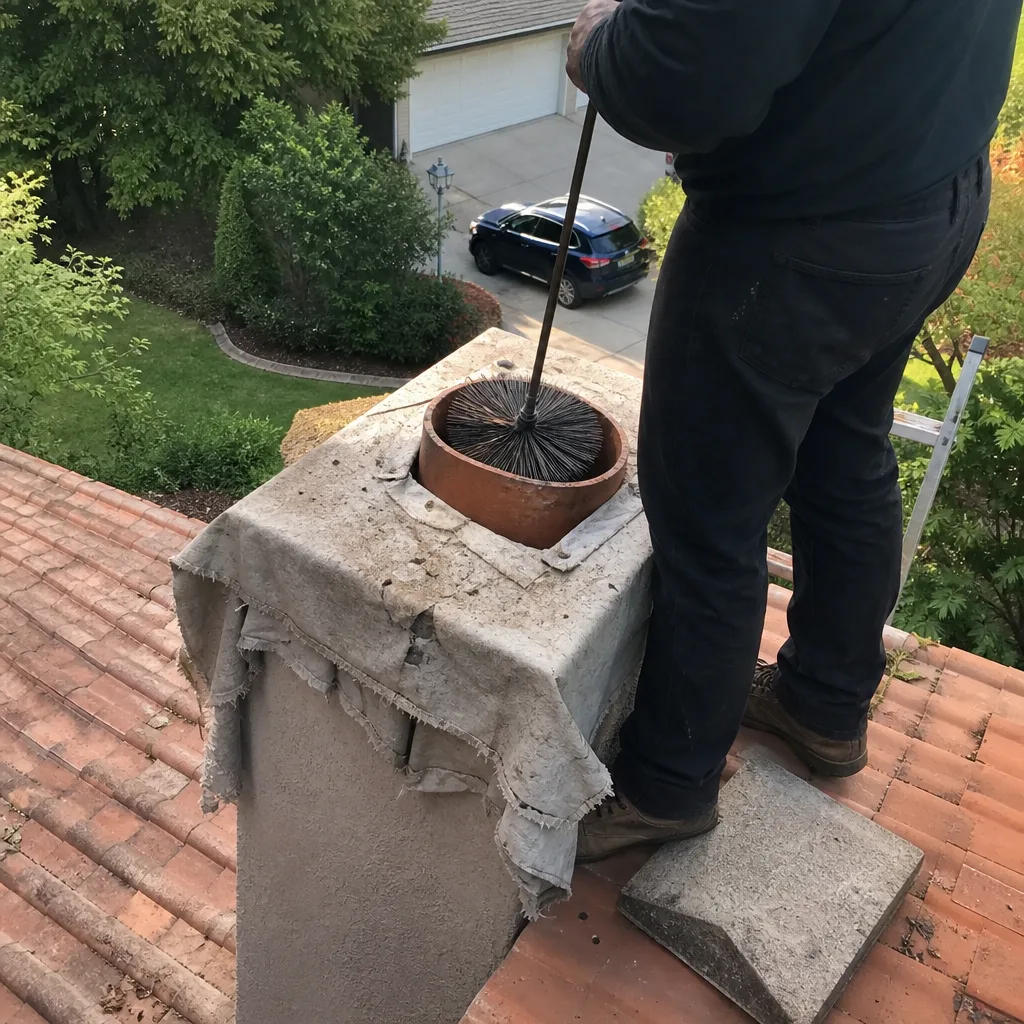
September and October are when most Kennesaw homeowners remember their chimney. By then, the predictive evidence from spring and summer has already accumulated. This checklist confirms you’re ready to burn safely and catches any last-minute issues before the first fire.
Pre-First-Fire Inspection
- Compare your spring firebox photo to current conditions. Look for new staining, shifted bricks, or increased deposit buildup. Significant change in six months justifies calling for inspection before lighting.
- Verify damper operation again. The pollen that caused drag in spring has now baked through a hot summer. Operate the damper ten full cycles. It should move smoothly throughout its range. Any catching or grinding means the pivot mechanism needs cleaning and lubrication.
- Check the smoke chamber (visible from below). Shine a flashlight up past the damper. The smoke chamber walls should be coated with light, fluffy soot, not glossy black glaze. Glazed creosote (Class III) is a professional-only removal - it’s highly flammable and requires chemical treatment or mechanical removal with specialized equipment.
- Inspect the hearth extension. The non-combustible surface in front of the firebox should be intact, with no cracks or gaps. In Kennesaw’s older homes near downtown, we’ve seen hearth extensions that don’t meet current clearances - a common finding in pre-1980 construction.
- Test smoke and CO detectors. Replace batteries. Test function. This is not chimney-specific, but it’s non-negotiable. Carbon monoxide is odorless and colorless; a failed detector is a failed safety system.
First Fire Protocol
Build a small, hot fire with seasoned hardwood (oak or hickory, not pine). Burn for 30 minutes. Then:
- Check for smoke spillage at the firebox opening - any smoke entering the room indicates draft failure.
- Walk the exterior and confirm no smoke is exiting from mortar joints or the chimney base - this indicates liner breach or chimney breach, both requiring immediate professional attention.
- Smell-check the attic and upper-floor rooms adjacent to the chimney chase - any smoke odor indicates chase leakage, a fire hazard.
If any of these checks fail, extinguish the fire and call for inspection. Do not attempt to “burn through” the problem.
The Winter Checklist: Active Burning Season Monitoring
November through February is when Kennesaw homeowners burn most frequently. The checklist shifts from preparation to monitoring - catching performance degradation before it becomes hazardous.
Weekly Checks During Heavy Use
- Firebox deposit color: See the detailed section below. Log the dominant color weekly.
- Smoke behavior: Smoke should draw crisply up the flue. Any laziness, spillage, or back-puffing when opening the loading door indicates creosote buildup or draft degradation.
- Exterior chimney temperature: After 45 minutes of active burning, the exterior masonry above the roofline should be warm but not hot to touch. Significant heat indicates missing or deteriorated flue liner - a serious fire hazard as heat transfers directly to combustible framing.
Monthly Checks
- Ash accumulation: Remove ashes when they approach the bottom of the firebox grate, typically 1-2 inches. Excess ash insulates the fire, reducing combustion efficiency and increasing creosote production.
- Glass door or screen condition: Clean with proper fireplace glass cleaner. Heavy, rapid soot buildup on glass indicates poor combustion - typically burning unseasoned wood, insufficient air supply, or a cold firebox start.
- Chase top inspection from ground: After storms, verify cap position and check for ice damming at the crown edge. Kennesaw’s occasional ice events are brief but damaging when they occur.
Mid-season is also when many homeowners discover their fireplace isn’t performing as expected. Fireplace Services in Kennesaw from Level Two includes combustion analysis, damper adjustment, and smoke chamber parging to restore proper draft and reduce creosote formation.
The Three Damper Tests Every Homeowner Can Perform
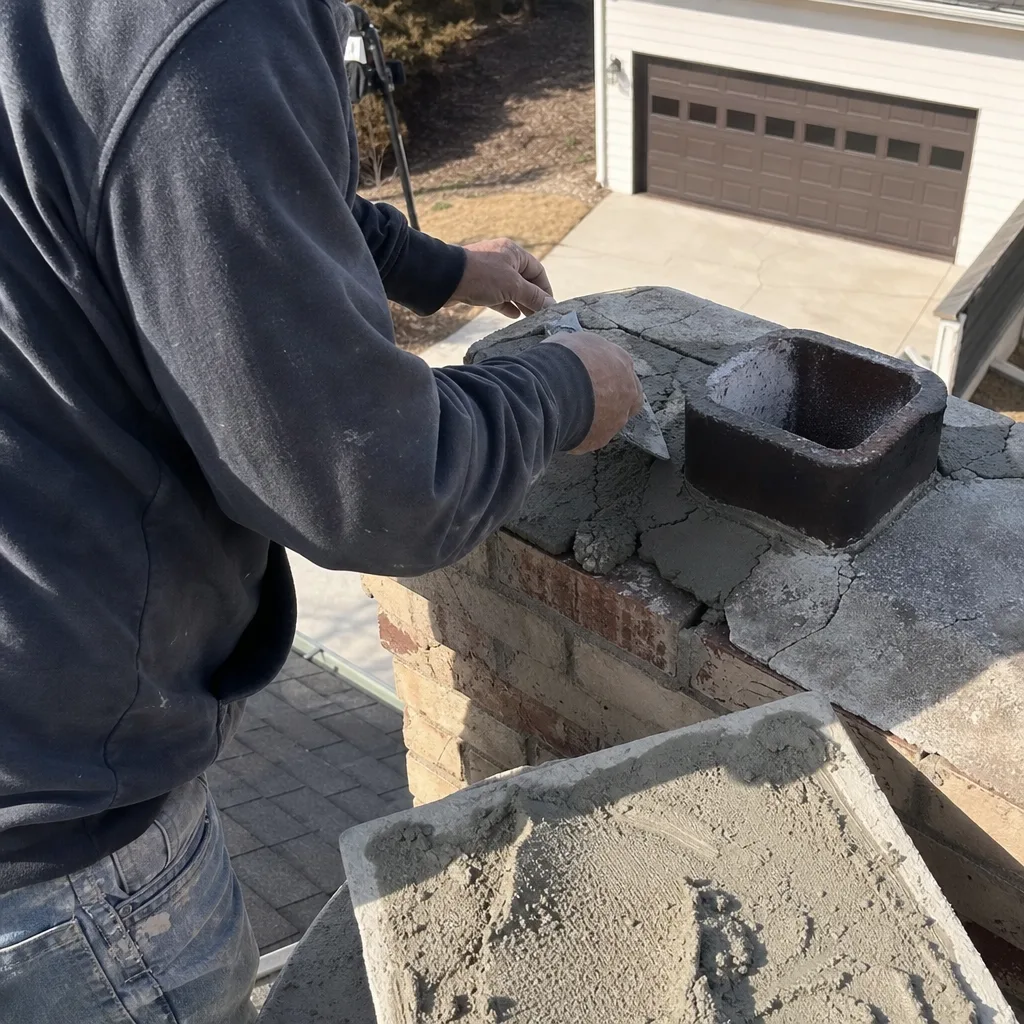
The damper is the most frequently operated and most frequently neglected component in the system. These three tests require no tools and take under five minutes. Perform them monthly during burning season and quarterly otherwise.
Test 1: The Full-Range Movement Test
Open the damper fully. Close it fully. Repeat ten times. The plate or frame should move smoothly throughout its entire range. Any catching, grinding, or dead spots indicates corrosion, creosote buildup on the pivot, or mechanical wear. In Kennesaw’s humid climate, we’ve seen damper frames rust through in as little as seven years if not maintained.
What the result means: Smooth operation confirms the mechanism is clean and aligned. Intermittent catching suggests localized buildup that will worsen. Complete seizure requires immediate attention - you cannot safely operate the fireplace with a failed damper.
Test 2: The Light-Leak Test
Close the damper fully in daylight. Look up from the firebox with a flashlight. No daylight should be visible around the damper plate or frame. Any light leak indicates incomplete closure, which allows conditioned air escape in summer and downdraft entry in winter.
What the result means: Small, uniform gaps around a warped plate reduce efficiency but aren’t immediately hazardous. Asymmetric gaps or gaps larger than 1/8 inch indicate frame distortion or plate damage, often from over-firing or chimney fire damage. This requires professional evaluation - the damper may need replacement with a component from our buying network, which includes Copperfield and DuraFlex hardware.
Test 3: The Draft-Hold Test
With the damper closed, hold a thin strip of paper or ribbon at the firebox opening. Release it. It should fall straight down. If it draws toward the flue or pushes away, the damper is leaking significantly.
What the result means: Slight movement in high wind is normal. Consistent draw indicates a failed seal - you’re losing heated air up the flue. Consistent push indicates positive pressure in the home exceeding chimney draft, a common condition in Kennesaw’s tight new construction. Both conditions increase heating costs and can cause smoking problems when the damper is opened for use.
Document your test results with dates. When you call for service, this history lets us distinguish progressive wear from sudden failure.
Reading Firebox Deposits: What Color Tells You
The deposits in your firebox are a chemical logbook. Learning to read them lets you estimate creosote stage and combustion quality before calling for cleaning.
Deposit Color Guide
- Light gray or white ash: Excellent combustion. Your wood is properly seasoned, your air supply is adequate, and your flue temperature is in the optimal range. Minimal creosote formation.
- Tan or light brown, fluffy: Stage 1 creosote. Normal accumulation from clean burning. Sweeps easily with standard brushes. Schedule routine cleaning at season end.
- Dark brown to black, flaky or crunchy: Stage 2 creosote. Indicates cooler flue temperatures, often from burning smaller, cooler fires or slightly green wood. Requires standard cleaning; don’t delay beyond season end.
- Black, glossy, tar-like, or hardened: Stage 3 (glazed) creosote. This is the dangerous form. It forms when flue temperatures are too low for complete combustion of volatile gases, or when burning unseasoned wood regularly. Class III glazed creosote cannot be removed with standard brushing. It requires chemical treatment to soften, followed by mechanical removal with chains, whips, or rotary equipment. This is professional-only work. Operating the fireplace with significant glazed creosote presents acute chimney fire risk.
- Reddish or rust-colored: Indicates moisture intrusion activating rust from the damper or fire grate. Not a creosote issue, but signals water entry that will accelerate all other deterioration.
Location Matters
Deposits at the firebox top and smoke chamber entrance are most significant - this is where the flue gases are hottest and where creosote formation is most active. Heavy accumulation here with light deposits below suggests a drafting problem, not a fuel problem. We’ve seen this pattern repeatedly in Kennesaw homes with negative pressure issues from powerful range hoods or dryer vents.
Photograph your deposits monthly during burning season. The color progression is more useful than any single observation.
How to Photograph Your Firebox for Professional Comparison
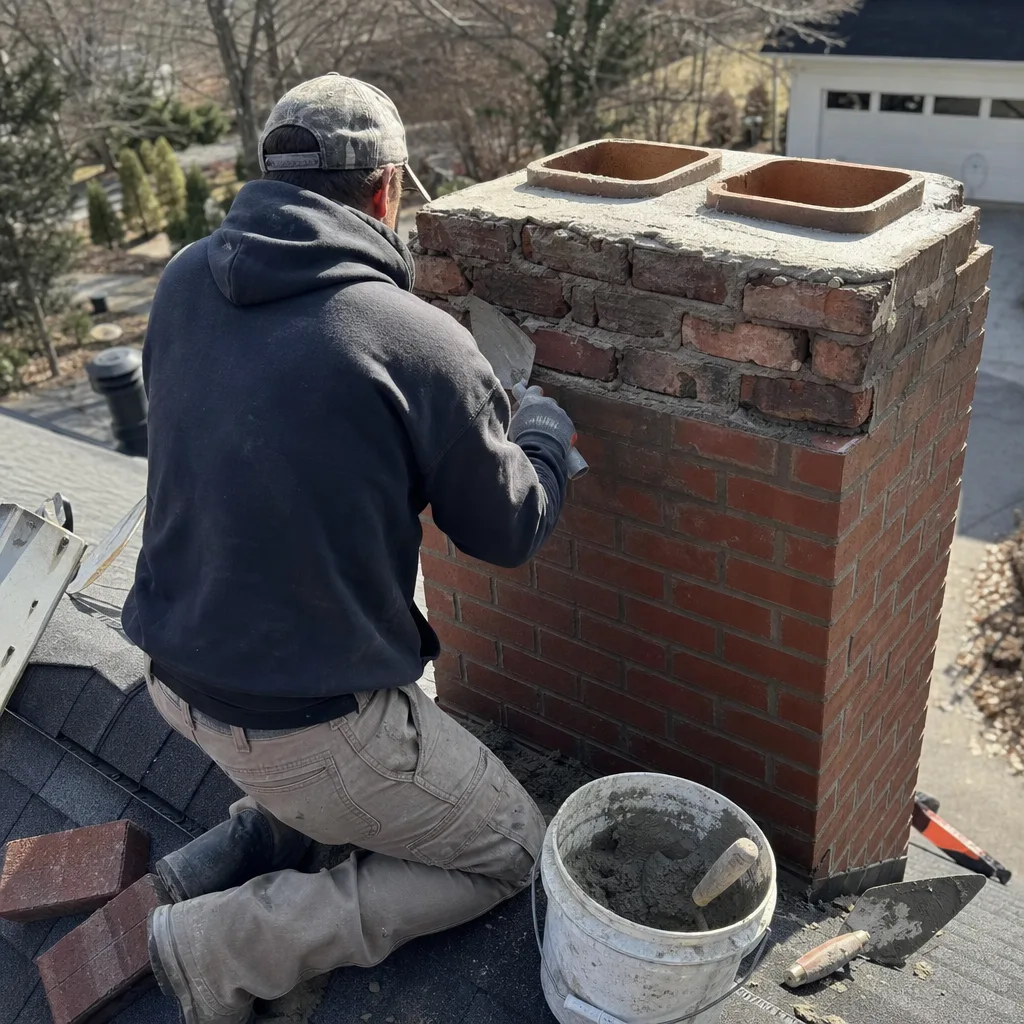
A good photo record transforms “it looks worse than last year” into verifiable evidence. Here’s how to take useful baseline photographs that your sweep can compare to our camera-scan documentation.
Equipment and Setup
Use your smartphone. Enable date stamp in settings. Clean the lens. Remove all ashes and debris from the firebox before photographing - ash obscures detail and reflects light unpredictably.
The Four Required Angles
- Wide shot from hearth level: Kneel at the hearth extension. Frame the entire firebox opening, including the lintel (the horizontal support above the opening) and both side cheeks. This shows overall condition, crack patterns, and hearth extension alignment. Take with room lights on and flash off.
- Close-up of the firebox floor: Show the refractory panel or brick floor, the grate position, and the ash dump (if present). This reveals spalling, cracking, and ash pit condition.
- Looking up at the damper and smoke chamber throat: This is the most technically difficult shot. Lie on your back at the firebox opening, camera aimed straight up. Use flash. You want to capture the damper plate position, the smoke chamber walls above it, and any visible creosote accumulation. Take multiple shots at different exposures if your phone allows.
- Detail of the left and right side walls: These show the most deposit accumulation because gases swirl clockwise (viewed from above) in most flues. Compare left-to-right deposit asymmetry - significant difference indicates draft imbalance.
Storage and Sharing
Store photos in a dedicated album with dates. When you schedule service, mention that you have a photo history. Under Clause 4 of the Haven Standard, we include your homeowner photographs in our job documentation when provided, creating a multi-source record that strengthens insurance claims and real estate disclosures.
We’ve found that homeowners who maintain photo baselines catch developing problems 6-12 months earlier than those who don’t. In Kennesaw’s climate, that interval often means the difference between crown sealing and crown rebuild, between liner repair and liner replacement.
Common Mistakes to Avoid
- Waiting for the smell to call. By the time you smell smoke in your living room, the problem has been developing for months. In Kennesaw’s pollen-heavy environment, damper blockage and moisture intrusion compound silently through spring and summer. Schedule based on calendar and checklist, not odor alone.
- Assuming new construction means no problems. We’ve found code-deficient chimney installations in Kennesaw subdivisions built as recently as 2022. Missing chimney caps, improperly sloped crowns, and unlined flues are not exclusive to older homes. The 2015-2025 homebuyers we serve often inherit problems from builders who prioritized speed over proper chimney construction.
- Burning pine because it’s plentiful. Georgia pines are convenient but problematic. High resin content produces abundant creosote even when properly seasoned. If you burn pine, increase your inspection frequency and never mix it with unseasoned hardwood. The combination accelerates glazed creosote formation dramatically.
- Using the fireplace as a furnace substitute during power outages. Extended, continuous burning at high output overheats components not designed for sustained operation. We’ve replaced warped dampers and cracked refractory panels in Kennesaw homes after ice storm events where the fireplace ran for 48+ hours straight. Use fireplaces for supplementary heat, not primary heat.
- Ignoring the attic. Chimney chases pass through attics where roof leaks, insulation contact, and framing modifications create hidden hazards. Annual attic inspection of the chimney chase is essential, especially in Kennesaw’s older homes near downtown where original construction may not meet current clearances.
- Accepting “it looks fine” without documentation. Any sweep who won’t show you camera footage, provide a written scope, or deliver a written price before starting work is not performing to professional standards. The Haven Standard exists because this practice was once common. We established Clause 1 (written price before work) and Clause 4 (documented photo record) in 2009 precisely to eliminate this ambiguity.
- DIY creosote removal with hardware store tools. Standard wire brushes from home improvement stores can damage clay flue liners, leave gaps in cleaning coverage, and fail to address glazed creosote entirely. More critically, they provide false confidence - the homeowner believes the flue is clean when significant hazardous deposits remain. Professional cleaning uses properly sized poly or wire brushes, rotary equipment when indicated, and camera verification that the flue is actually clear.
When to Call a Professional
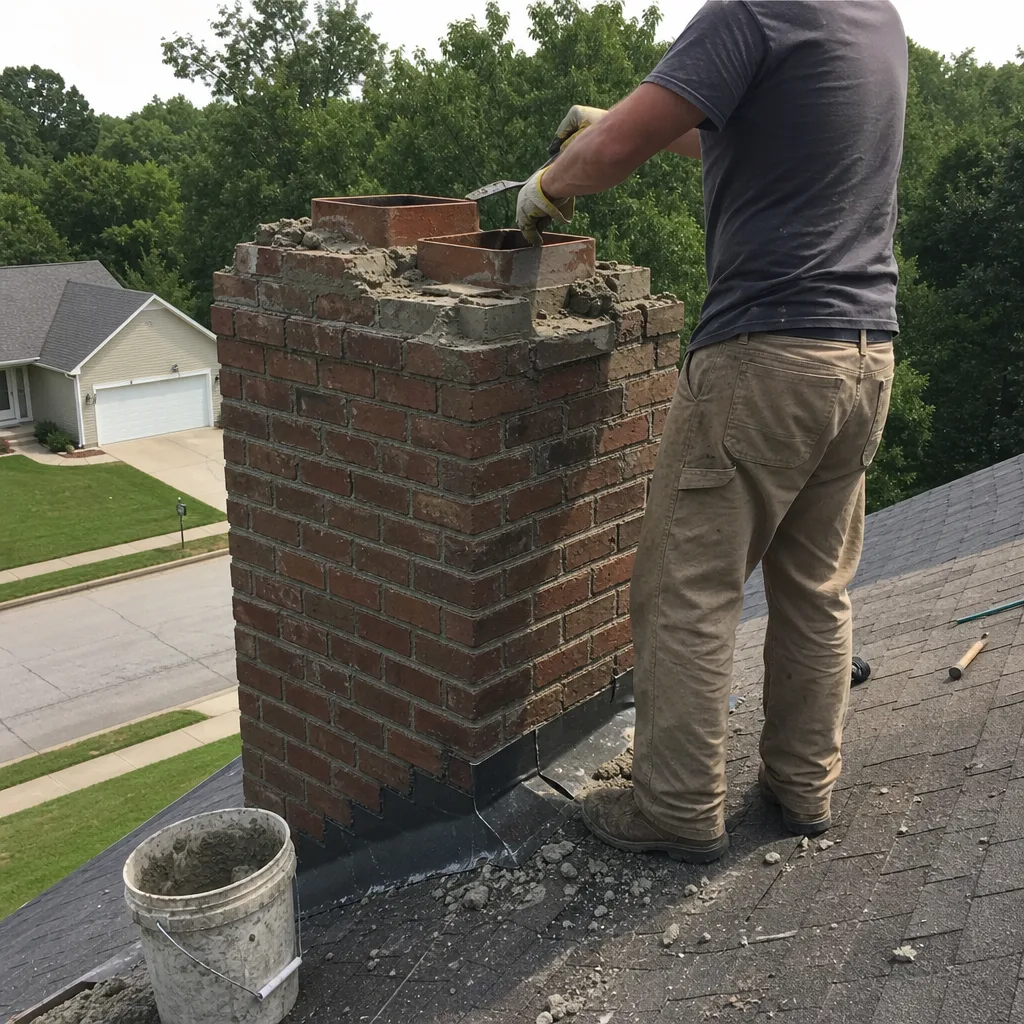
Some conditions require immediate professional evaluation regardless of your maintenance diligence. Call for inspection if you observe any of the following:
- Smoke entering the room during normal operation
- Visible cracks in the flue liner (seen during flashlight inspection from below)
- Heat detectable on exterior masonry or adjacent walls during burning
- White efflorescence that reappears within weeks of cleaning
- Damper seizure or significant mechanical failure
- Animal sounds or odors from the chimney
- Any event you suspect may have been a chimney fire (loud cracking, dense smoke, unusual odor)
Chimney fires can occur without obvious external signs. The internal temperature spike can crack liners and damage masonry while producing only moderate smoke. If you suspect a chimney fire has occurred, do not use the fireplace until inspected.
Carbon monoxide presents a special case. CO is odorless, colorless, and potentially fatal. Symptoms of CO exposure include headache, dizziness, nausea, and confusion - often mistaken for flu. If your CO detector alarms, evacuate immediately and call emergency services. After the source is identified, professional chimney inspection is required before resuming use.
Level Two Chimney Kennesaw offers free estimates in Kennesaw, and our blog has more guides & resources for homeowners. Every estimate includes a written scope, written price, and explanation of findings - no work begins without your explicit approval. Call (678) 535-2204 to schedule. We serve neighborhoods throughout Kennesaw including Legacy Park, Barrett Greene, and the historic district, with background-checked, uniformed technicians and live phone support 24 hours a day.
Frequently Asked Questions
Chimney cleaning and inspection in Kennesaw typically ranges from $199 to $349 for a standard NFPA 211 Level 1 service with basic cleaning. A Level 2 inspection with camera-scan documentation, which we include as standard on every visit, runs $289 to $459 depending on flue configuration and accessibility. We deliver a written price before any work starts - Clause 1 of the Haven Standard - and our Free Second Opinion policy applies to any competitor’s written estimate. Call (678) 535-2204 for an exact quote; estimates are free.
The NFPA 211 standard recommends annual inspection and cleaning as needed. In Kennesaw’s climate, with heavy pollen, significant rainfall, and frequent pine burning, we advise annual inspection for all systems and cleaning whenever inspection reveals 1/8 inch or more of creosote accumulation. Heavy-use fireplaces (more than three fires weekly during season) may need mid-season cleaning. Systems that see only occasional use still require annual inspection because moisture intrusion and animal intrusion occur regardless of burn frequency.
An unlined chimney or a chimney with a deteriorated liner cannot be used safely. The flue liner contains combustion gases, protects combustible framing from heat transfer, and provides proper draft sizing for your appliance. Clay tile liners crack from thermal shock and settle over time; stainless steel liners corrode; both conditions allow heat and gases to reach surrounding structure. We document liner condition with camera footage under Clause 4 of the Haven Standard. If replacement is recommended, you’ll see the damage yourself before any decision is made. In some cases, HeatShield cerfractory flue sealant can restore a sound but gapped clay liner without full replacement.
Skipped maintenance produces progressive, predictable damage. Moisture intrusion without repair leads to spalling, liner deterioration, and eventual structural compromise. Creosote accumulation without cleaning progresses from Stage 1 to Stage 3 glazed deposits, increasing chimney fire risk exponentially. A chimney fire can reach 2,000°F, cracking liners and igniting adjacent framing. Carbon monoxide infiltration from liner breaches or blockages causes injury or death without warning signs. The cost of prevention is always lower than the cost of remediation - we’ve documented this across 38,000+ inspections since 2009.
Physical cleaning of accessible firebox and hearth areas is appropriate homeowner maintenance. Flue cleaning requires proper equipment, sizing knowledge, and camera verification that the flue is actually clear. More importantly, cleaning without inspection misses the conditions that make chimneys dangerous: liner cracks, crown deterioration, and hidden blockages. We do not provide step-by-step flue cleaning instructions because improper technique can damage liners, create hazardous debris falls, and produce false confidence in a still-dangerous system. Professional service includes the documented photo record that protects your safety and your insurance position.
Summer odor in Kennesaw chimneys has three common causes. First, humidity activates residual soot and creosote deposits, producing a musty, smoky smell - normal and not hazardous if the damper seals properly. Second, negative pressure in tightly sealed, air-conditioned homes draws air down the flue, bringing odors with it - common in newer construction and solvable with a top-sealing damper or makeup air adjustment. Third, animal intrusion produces sharp, persistent ammonia or decomposition odors. Distinguishing these requires understanding your home’s pressure dynamics and your chimney’s condition. We evaluate both during inspection.
A Level 1 inspection is visual, accessible-surface examination without specialized equipment - appropriate for chimneys with no changes in use or condition. A Level 2 inspection, required by NFPA 211 for real estate transactions, new appliance installation, or suspected damage, includes examination of all accessible portions of the chimney exterior and interior, including attics, crawl spaces, and basements, plus video scanning of the flue interior. Level Two Chimney Kennesaw includes Level 2 camera inspection on every visit, not as an upgrade - this practice, established in 2009, became Clause 4 of the Haven Standard. The photo record is archived and provided to you for insurance, real estate, and maintenance history purposes.
The Bottom Line
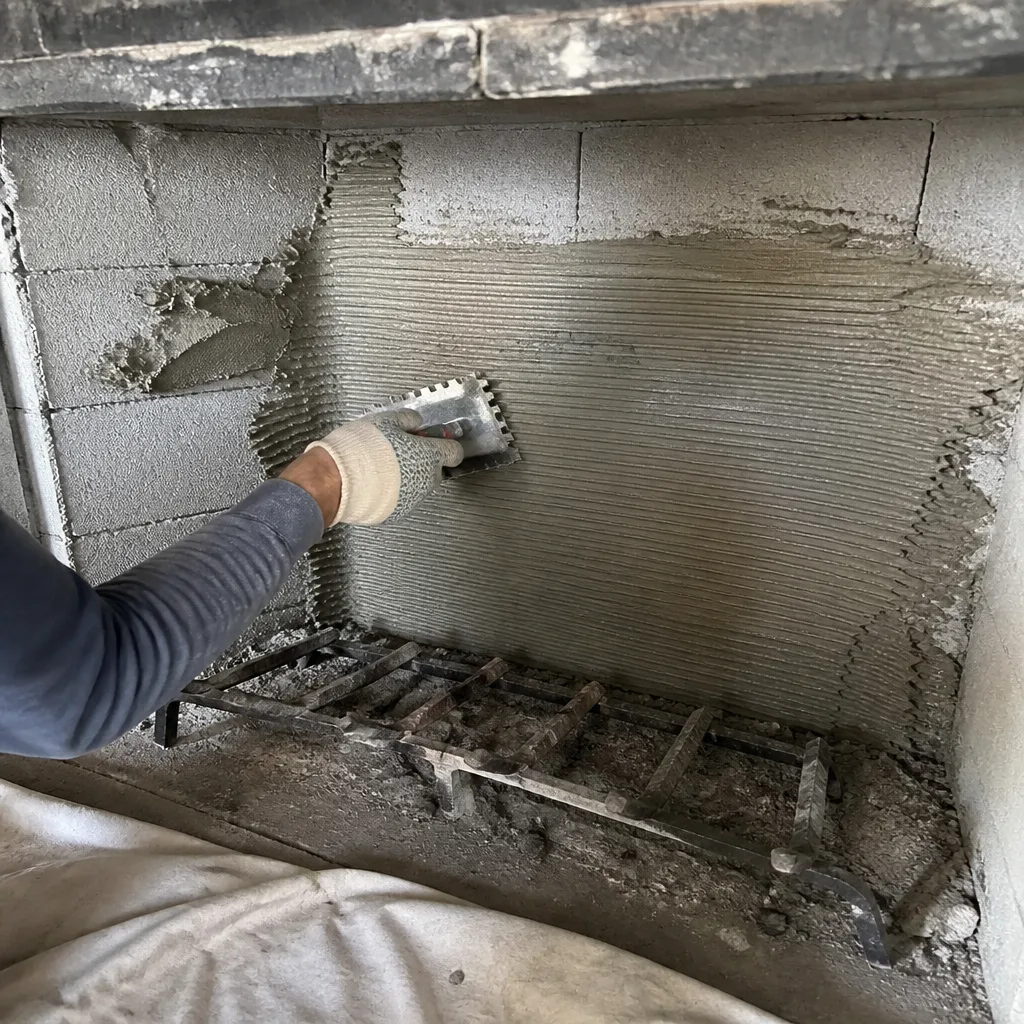
Effective chimney maintenance in Kennesaw requires year-round attention, not a single fall appointment. The evidence that predicts expensive repairs - crown cracks, damper drag, odor changes, deposit color shifts - accumulates across seasons. This checklist gives you the framework to collect that evidence systematically, without equipment or expertise you don’t have.
The core principles are simple: photograph before and after each burning season, perform monthly damper tests, log odors by type and season, and understand what firebox deposits tell you about combustion quality. Between these self-directed checks, professional inspection with camera documentation provides the evaluation you cannot perform yourself.
We’ve completed more than 38,000 chimney inspections and cleanings since 2009, every one with a written price before work started and a documented record when done. The 365-Day Done Right Promise backs every job. Materials from DuraFlex, HeatShield, Olympia Chimney, Famco, and Copperfield - sourced through our buying network - keep pricing honest and quality consistent.
Questions about your chimney’s condition? Call (678) 535-2204 for a free estimate. Written scope, written price, written warranty - always, before any work begins.
Written by Corrine Halstead, Owner at Level Two Chimney Kennesaw, serving Kennesaw since 2009.