
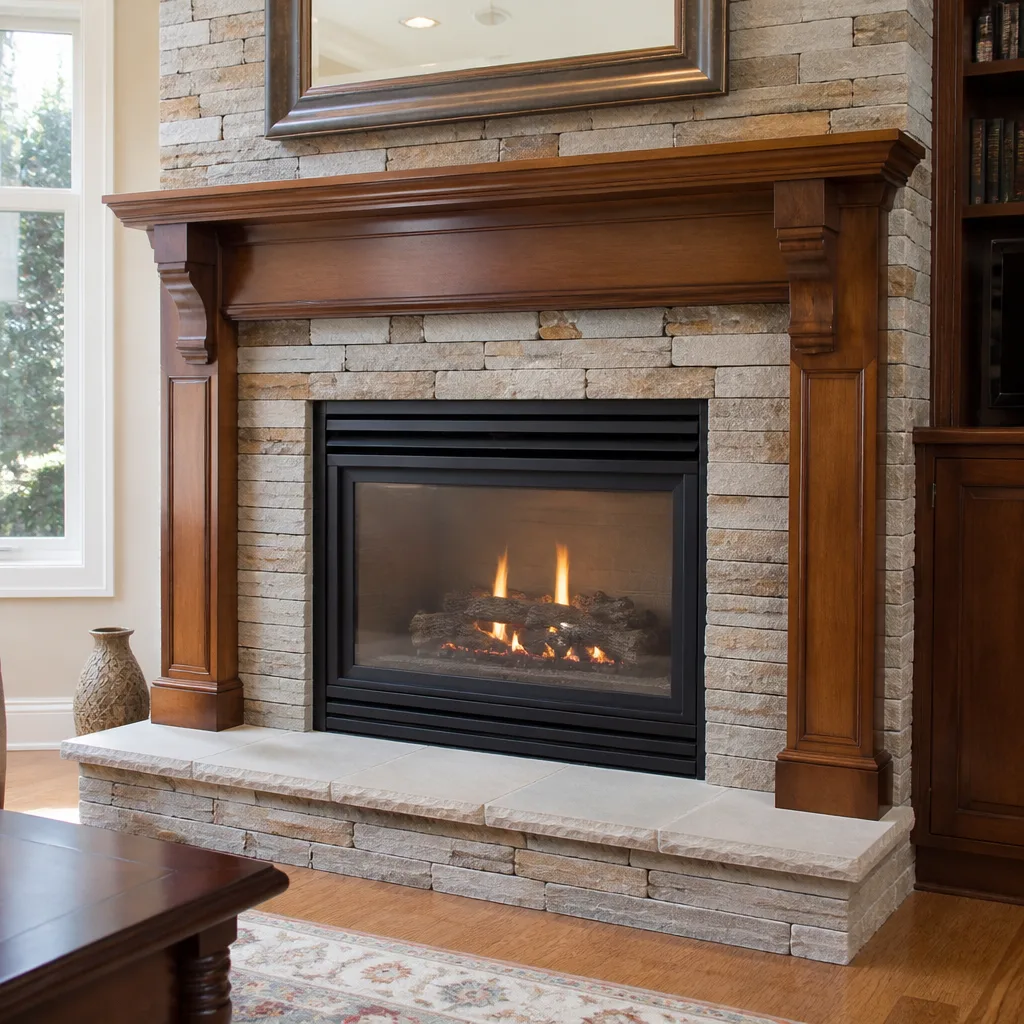
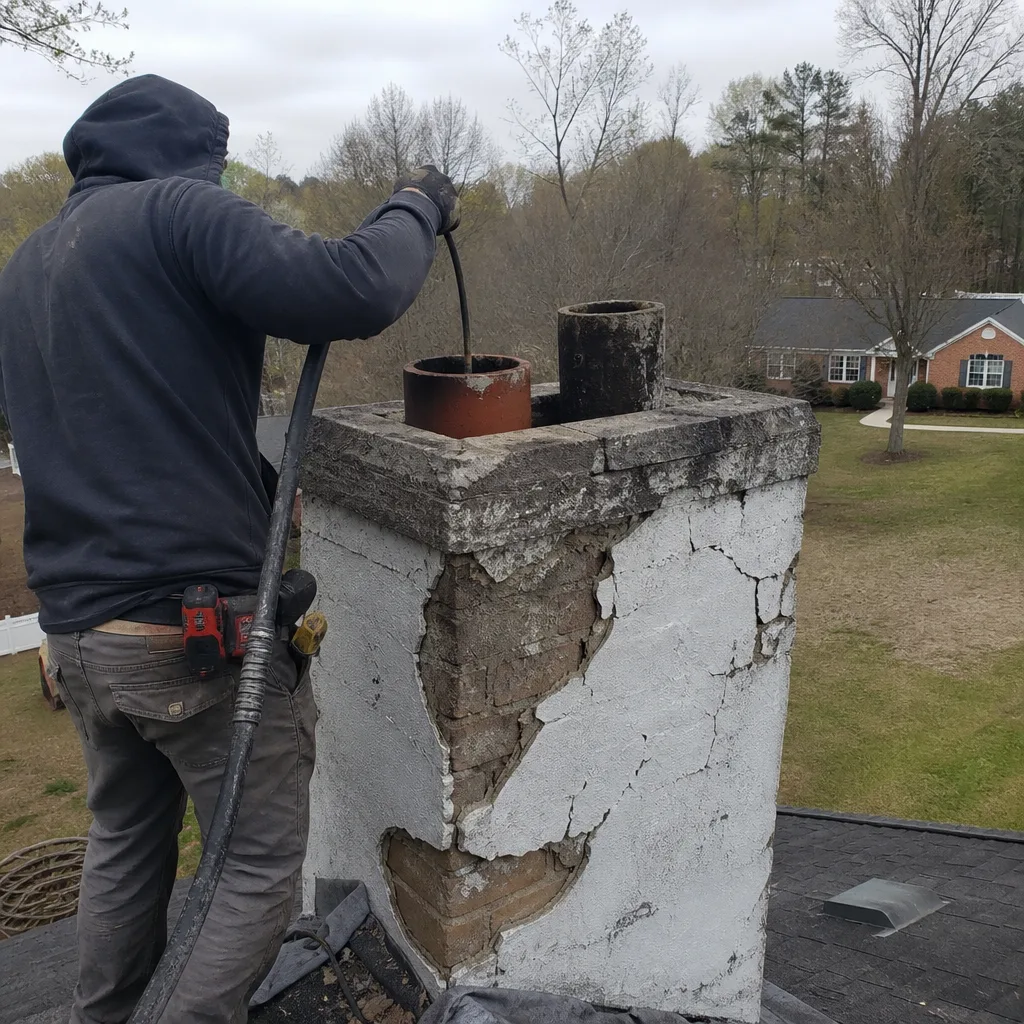
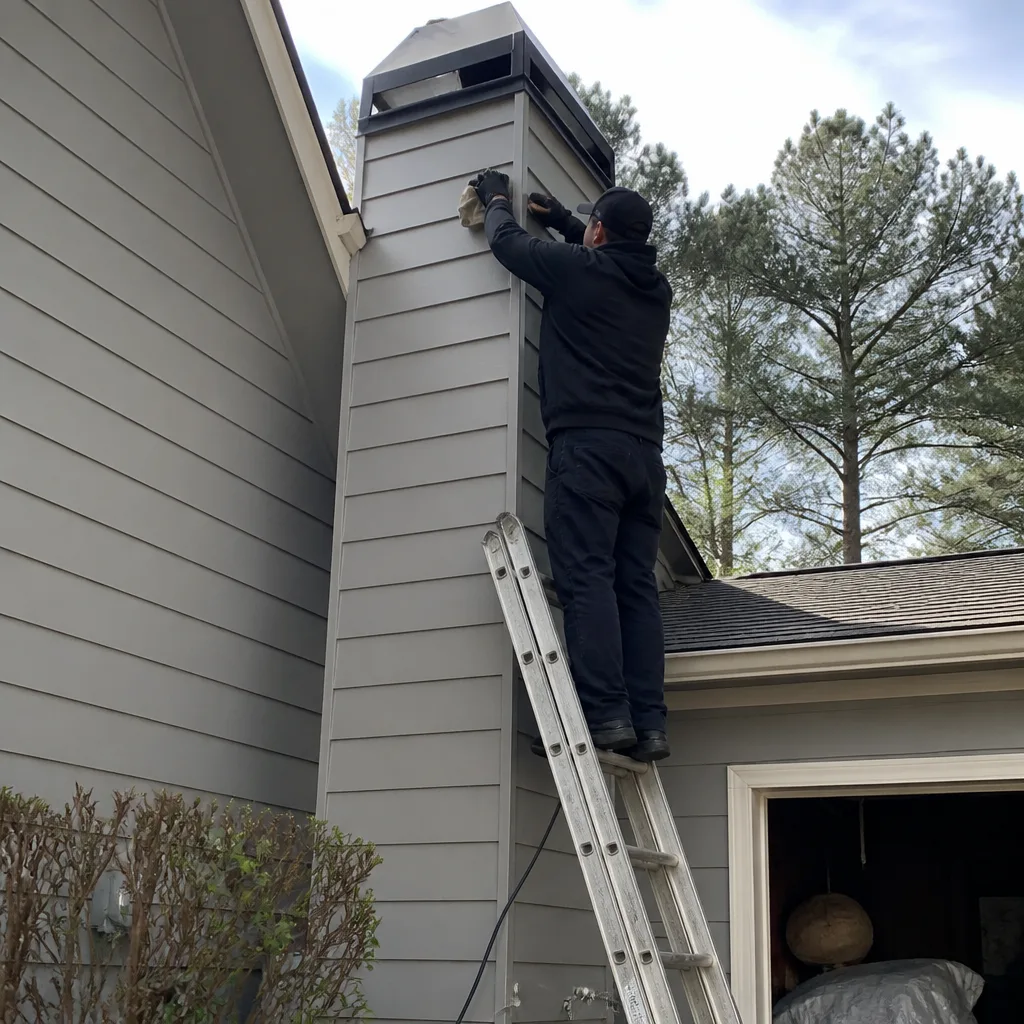
Level 1 sweep and inspection to the NFPA 211 annual standard - flue, crown, cap, and flashing checked and photographed
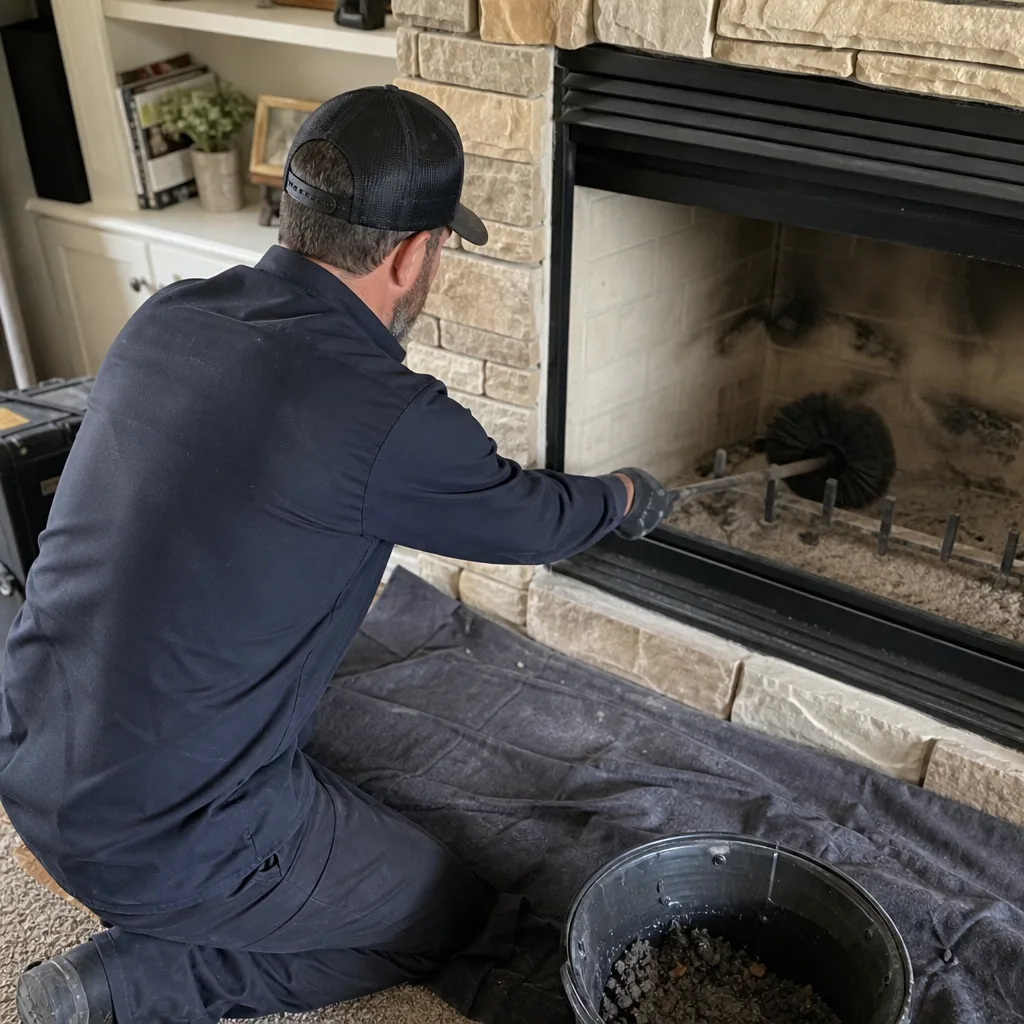
Chimney sweep logs do not sweep chimneys. They loosen some creosote - which then falls where a brush and vacuum still have to collect it.
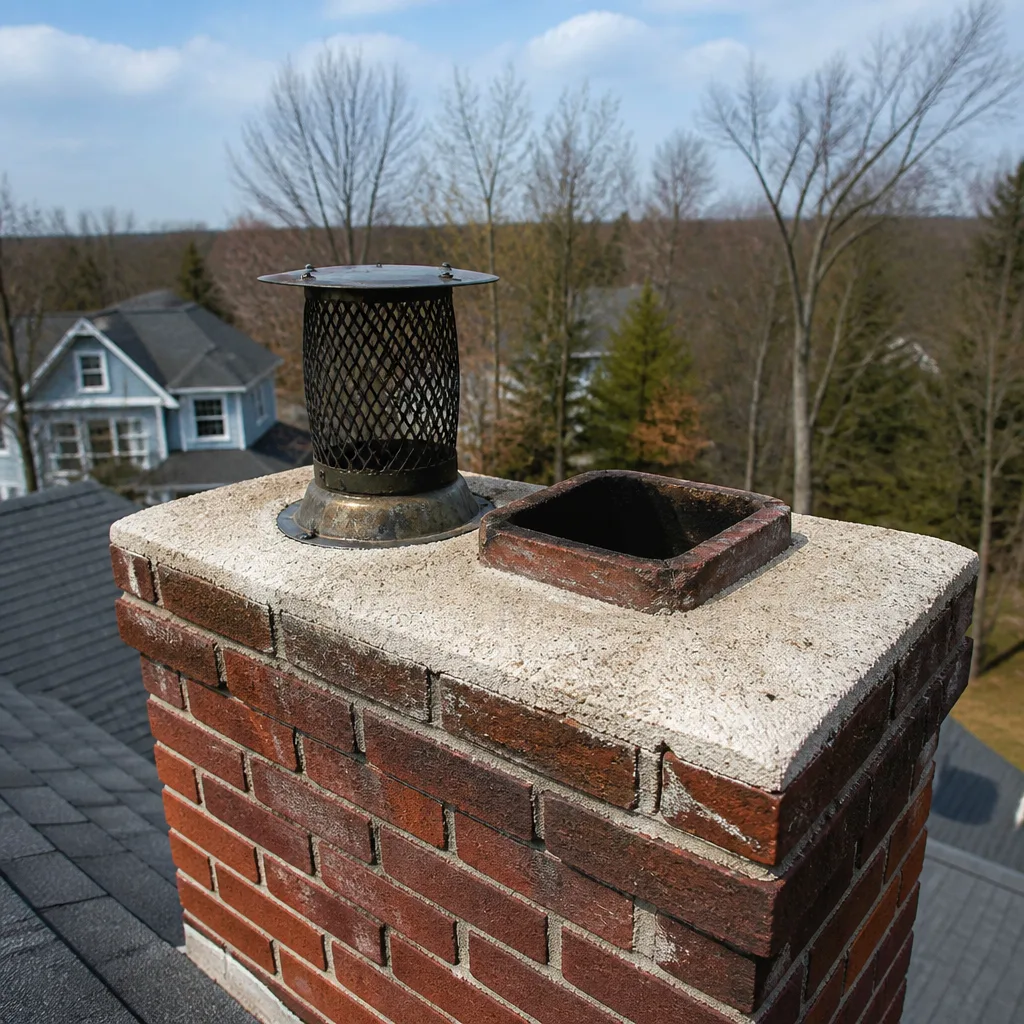
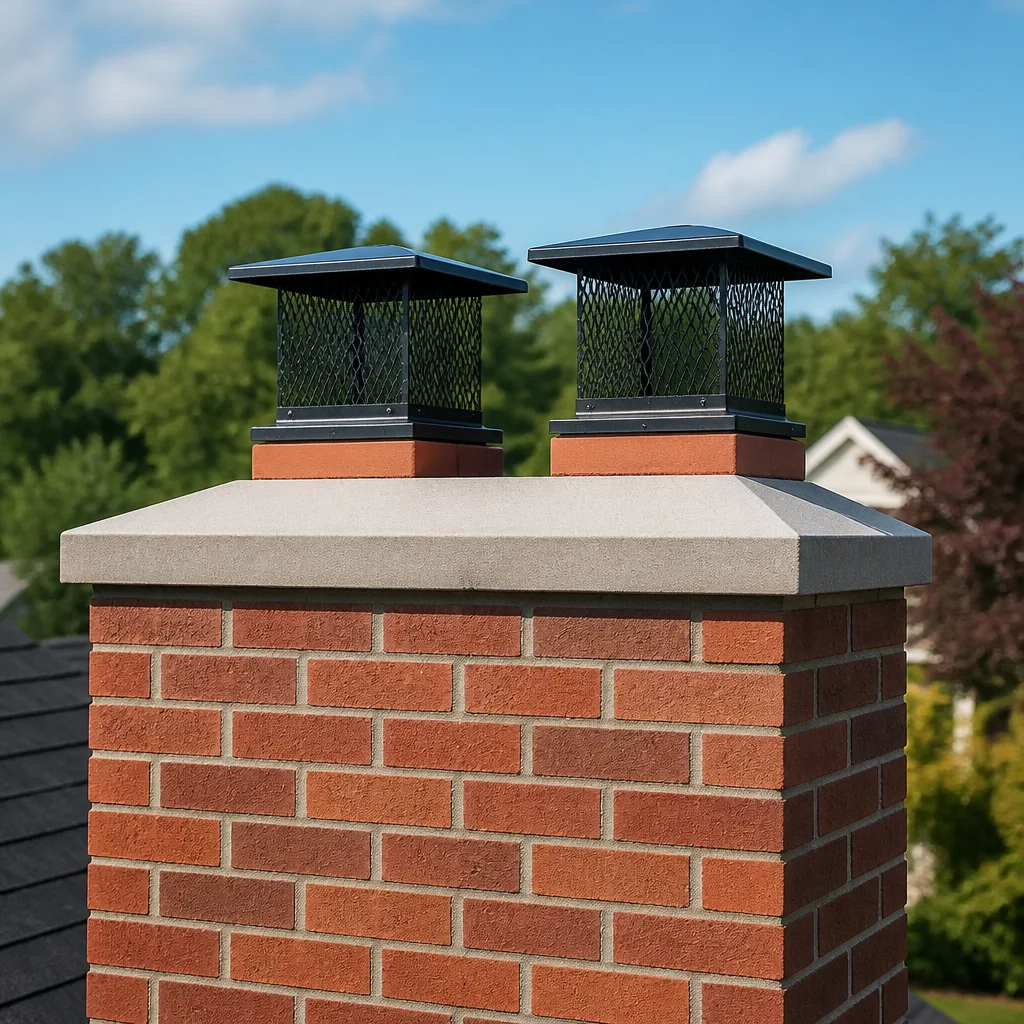
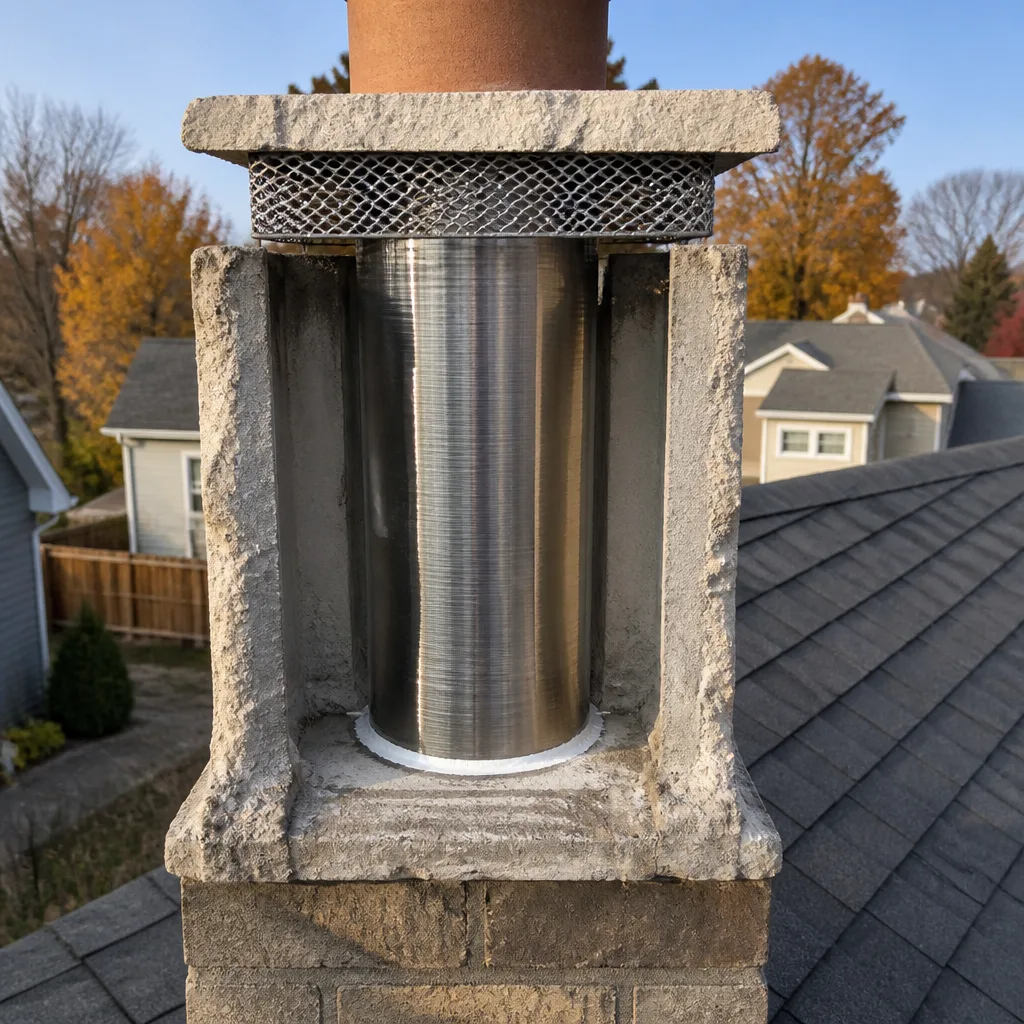
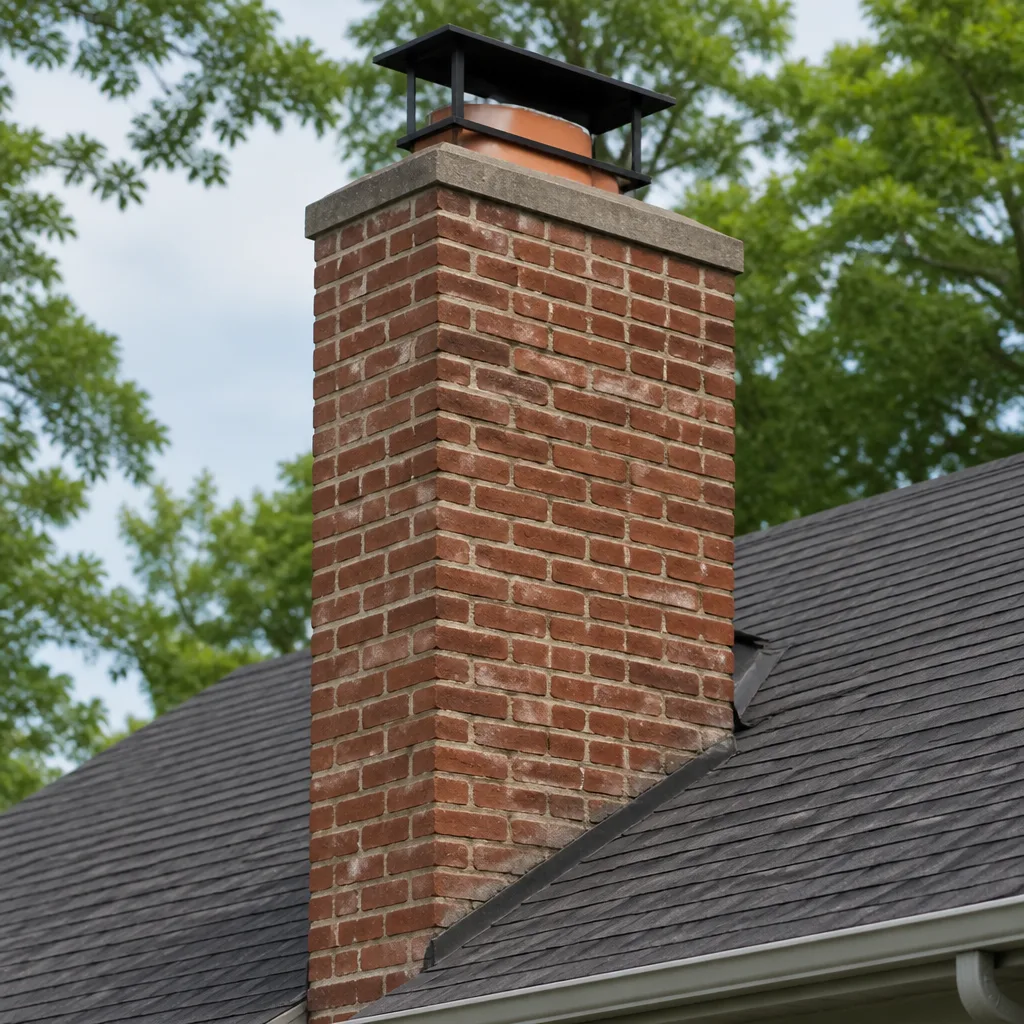
 Before
 After
After Before
 After
After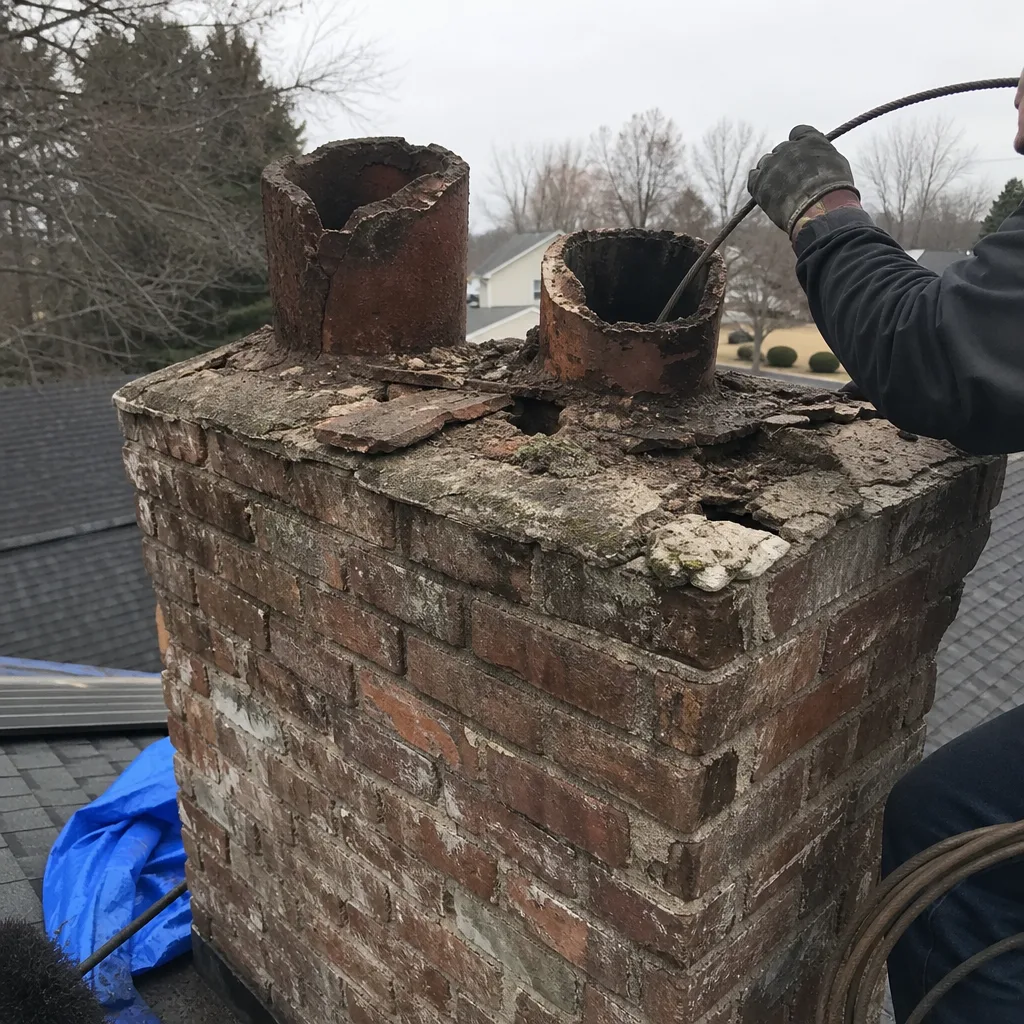 Before
 After
AfterMortar Repointing in Kennesaw, GA
Mortar repointing in Kennesaw typically costs between $300 and $1,200 depending on how many joints need work and how far the deterioration has progressed. Most jobs on a standard single-flue chimney are completed in one visit, with a written price delivered before anyone picks up a grinder or mixing bucket.
If the mortar between your chimney’s brick courses is crumbling, recessed, or washing out in chunks after a hard rain, you’re looking at a repointing job – not a full rebuild. That’s good news. Repointing replaces only the deteriorated mortar in the joints while the brick itself stays in place. Done at the right time, it stops water from reaching the brick faces and the liner below. Ignored long enough, it turns a $400 repair into a $4,000 structural conversation.
At Level Two Chimney Kennesaw, we’ve handled mortar repointing on everything from 1980s ranch-house chimneys in Kennesaw’s Barrett Parkway corridor to older masonry stacks in the Historic Downtown district. Before we quote anything, a camera goes down the flue – because deteriorating mortar at the exterior joints often signals moisture that’s already reached the liner. You get the full picture, in writing, before you decide anything. If you’d like to talk through what you’re seeing, call us at (678) 535-2204 – a live person picks up, any hour of the day.
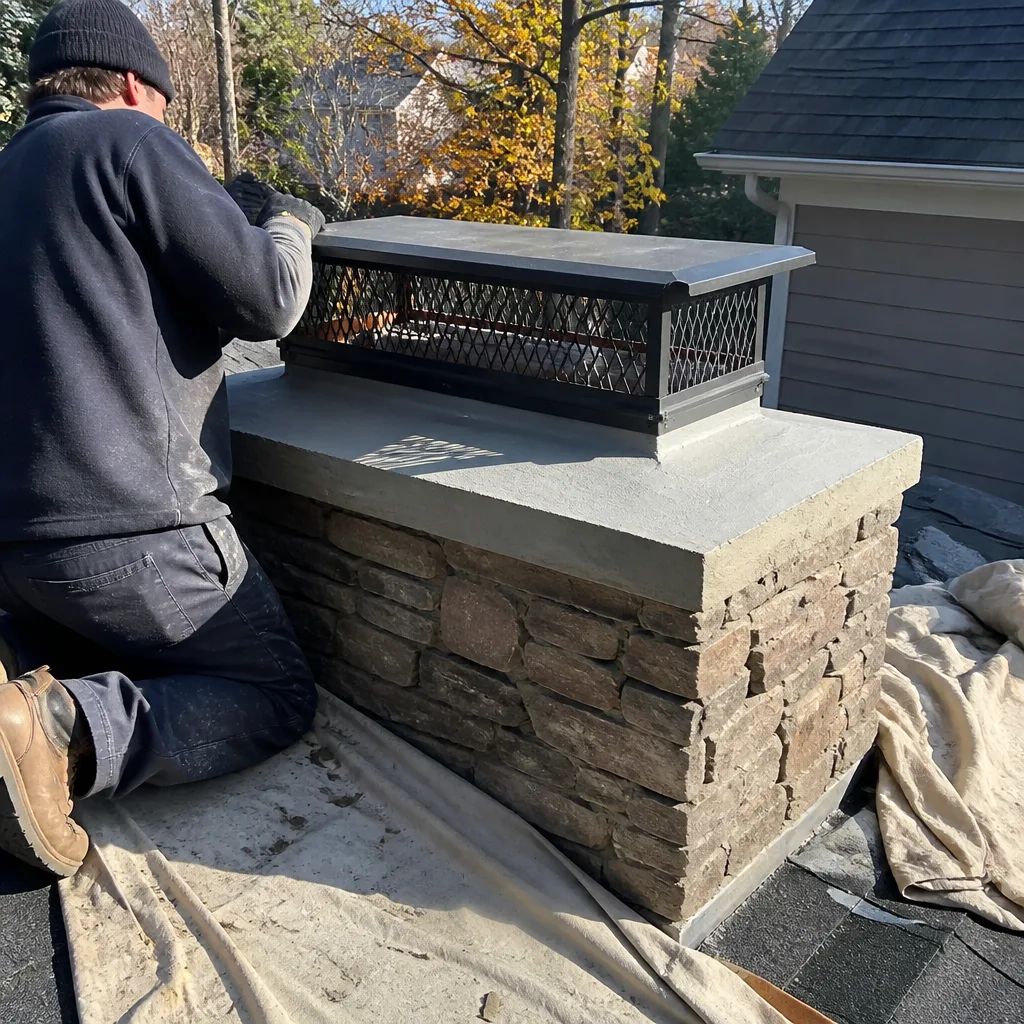
Mortar repointing is one part of the broader Chimney Repair in Kennesaw work we do, which covers crowns, caps, spalling brick, and full liner replacement. This page focuses on the joints specifically – what deterioration looks like, what the repair involves, and what it costs here in Kennesaw.
When You Need Mortar Repointing
The joints between chimney bricks are not the same mortar that holds the bricks themselves together. They’re a sacrificial layer – softer by design – meant to absorb movement and shed water before damage reaches the brick face. When the joints fail, water does the next most convenient thing: it goes sideways. Here’s what that looks like in practice.
- Visible gaps or recession in the joints. Mortar that sits more than a quarter-inch below the brick face is no longer shedding water effectively. In Kennesaw, where freeze-thaw cycles run from late November through February, a recessed joint fills with water that expands on freezing and pops the surrounding brick face in spring – a process called spalling.
- Crumbling or powdering mortar that comes out by hand. If you can scratch mortar out of a joint with a key or a fingernail, it has lost its structural integrity. This is the most common finding on chimneys built between 1975 and 1995 in the Kennesaw area – a period when some contractors used higher sand ratios that weather faster.
- White staining (efflorescence) on the brick face. Those chalky white streaks are salt deposits left behind as water moves through the mortar. Efflorescence tells you water is actively migrating through the joints – and has been for a while.
- Water stains on the ceiling or firebox interior after rain. Kennesaw gets roughly 52 inches of rain per year, which is well above the national average. If your firebox smells musty after a storm or you’re seeing ceiling discoloration near the chimney chase, the joints are a logical first suspect.
- Brick faces starting to flake or pit. Once spalling starts, it accelerates. The exposed interior of a brick absorbs water far faster than the dense fired face. Repointing at this stage stops the cycle; waiting another season usually means replacing the affected bricks as well.
- A previous inspection flagged joint deterioration. If a Level 2 inspection – camera down the flue, not just a flashlight look at the crown – noted joint erosion, repointing is the follow-through. We photograph the joints as part of every inspection under Clause 4 of the Haven Standard, so you have a before-record to compare against.
Our Mortar Repointing Process
There’s no shortcut worth taking on mortar repointing. Packing new mortar over failing old mortar looks fine for about one winter, then fails faster than the original. The correct method removes the deteriorated material to a minimum depth of three-quarters of an inch before anything new goes in. Here’s how we do it.
- Camera inspection and joint mapping. Before the repair starts, we run an NFPA 211 Level 2 camera inspection of the flue liner and document the exterior joints with photos. This tells us whether moisture has already reached the liner (which changes the repair scope) and gives you a photo record of conditions before work begins – Haven Standard Clause 4, on every job, no exceptions.
- Written price and scope delivered before any work. Once we know exactly which joints need attention and to what depth, we write the price down. You see the scope, the material spec, and the warranty before anyone picks up a tool. This is Haven Standard Clause 1 – the “Have it in writing” clause. No surprises after the tech is already on your roof.
- Joint removal to proper depth. We use angle grinders with diamond blades or oscillating tools depending on joint width and access, removing deteriorated mortar to a minimum three-quarter-inch depth. On tighter joints common in older Kennesaw masonry, hand chisels finish the work to avoid vibrating adjacent brick loose. Dust and debris are managed at the point of removal and cleaned from the firebox if any falls into the flue.
- Mortar matching and mixing. This step matters more than most homeowners expect. New mortar that’s harder than the surrounding brick will cause the brick face to spall instead of the joint – which is the opposite of the goal. We match mortar type (typically Type S for exterior chimney work in our climate), color, and texture to the existing masonry. Materials are sourced through our supply network, which includes Gelco and Olympia Chimney products, specifically to keep specifications consistent and pricing honest.
- Packing and tooling the joints. Mortar is packed in lifts to avoid shrinkage voids, then tooled to match the original joint profile – usually a concave or weathered strike on Kennesaw-area chimneys. Tooling compresses the surface layer, which improves water shedding. This is done in stages as each lift reaches the right set point, not rushed to a single application.
- Post-repair inspection and photo documentation. When the joints are done, we photograph the completed work and add it to the job record alongside the before photos. You leave the visit with a written warranty, a documented photo archive, and a clear picture of what was done and why. That record matters if you ever sell the home or file an insurance claim.
 Before
 After
AfterMortar Repointing Pricing in Kennesaw
Mortar repointing in Kennesaw runs between $300 and $1,200 for most standard residential chimneys. Here’s what drives cost up or down within that range, and you can read more in our guide on How Much Does Chimney Repair Cost? (2026 Price Guide) - Kennesaw, GA.
| Scope | Typical Price Range |
|---|---|
| Spot repointing – isolated joint failure, 1 to 2 linear feet | $300 – $450 |
| Partial repointing – one or two sides of a standard chimney | $450 – $750 |
| Full repointing – all four sides, single-flue chimney | $700 – $1,200 |
| Full repointing – double-flue or oversized chimney | $1,000 – $1,800 |
| Repointing combined with crown repair | $900 – $1,600 |
A few things affect where a specific job lands in those ranges:
- Height and roof pitch. A two-story home with a steep roof in the Stilesboro Road area requires more setup time and safety equipment than a single-story ranch. That’s reflected in the quote, not hidden in it.
- Depth of deterioration. Joints that have failed to an inch or more take longer to clear and require additional mortar. On chimneys we inspect where surface neglect has been masking deeper erosion for several seasons, the grinding phase alone can add an hour to the job.
- Mortar type and color matching complexity. Older brick – particularly the common clay brick used in Kennesaw subdivisions built in the late 1980s – sometimes requires custom blending to avoid visible patches that stand out when the mortar cures.
- Combined work scope. If the camera inspection turns up a crown with hairline cracks at the same visit, addressing both together costs less than two separate mobilizations. We’ll lay out the combined scope in a single written quote so you can see exactly what you’re choosing.
Every quote we write is a fixed price for the documented scope – not an estimate that grows once work starts. If something unexpected turns up mid-job (say, a section of brick that’s more compromised than the surface showed), we stop, photograph it, and hand you a written change order before continuing. And if you’ve already received a written quote from another company, our Free Second Opinion is available at no charge – bring the document and we’ll tell you exactly how it compares.
Call (678) 535-2204 to schedule your inspection and get a written quote. There’s no fee for the estimate.
FAQs – Mortar Repointing
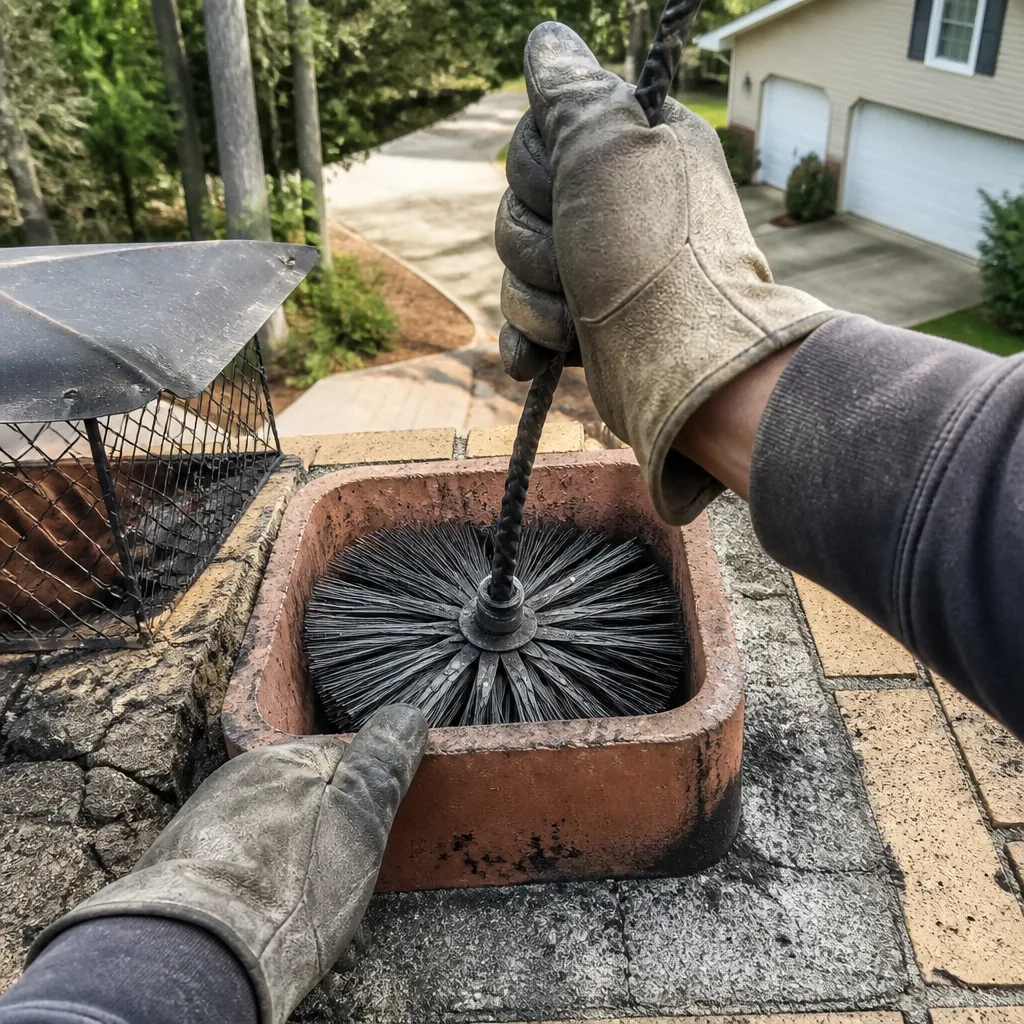
How long does mortar repointing last on a Kennesaw chimney?
A properly executed repointing job on a Kennesaw chimney typically lasts 20 to 30 years, sometimes longer if the chimney has a functioning cap and crown keeping direct water off the joints. The variable is mortar type selection – mortar that’s harder than the surrounding brick will cause the brick faces to spall before the joints erode again, which is a more expensive problem that may require Spalling Brick Repair. We specify mortar hardness to match the existing masonry on every job, and that specification is written into your quote so there’s a record of what was used. Call (678) 535-2204 if you want to talk through what material was used on a previous repair before we start.
Can I repoint chimney mortar joints myself?
The grinding and packing steps are within reach for a capable DIYer on easily accessible ground-level or first-story sections, but chimney repointing on a typical Kennesaw home means working at roof height with adequate eye and respiratory protection for silica dust – and making mortar hardness decisions that, if wrong, damage the brick faces over the following winters. The repair work itself isn’t inherently dangerous in the way that spring or liner work is, but the height and the dust exposure make professional execution the safer call for most homeowners. If you’ve already started and want a second set of eyes on the mix or the joint prep, we’re glad to look.
Is repointing the same as tuckpointing?
Repointing and tuckpointing are often used interchangeably, but they’re technically different processes. Repointing is the straightforward removal and replacement of deteriorated mortar with new mortar of a matching type and color. Tuckpointing – used more often in restoration work – involves filling the joint with mortar that matches the brick color and then cutting a thin line of contrasting putty down the center to create the visual impression of fine, tight joints. On standard residential chimneys in Kennesaw, repointing is almost always what’s needed. If you’ve received a quote that specifies tuckpointing on a functional (non-historic) chimney, it’s worth asking why.
Will repointing fix the water leak in my firebox?
It depends on where the water is entering. If the leak is coming through deteriorated mortar joints on the exterior chimney stack, repointing will stop it – that’s exactly what the repair is designed to do. But Kennesaw chimneys leak from several sources: a cracked crown, a missing or damaged cap, flashing that’s lifted at the roofline, or a liner breach inside the flue. A Level 2 camera inspection tells us which source (or combination of sources) is responsible before any repair starts, so you’re not paying to repoint joints when the actual problem is a cracked crown. Every mortar repointing quote from us includes that inspection finding in writing. Call (678) 535-2204 and we’ll get a technician out to document what’s happening.
Key Takeaways
- Mortar repointing in Kennesaw costs between $300 and $1,200 for most residential chimneys, written in advance, no surprises.
- Recessed joints, crumbling mortar, and efflorescence on brick faces are the clearest signs repointing is needed – especially after a wet Kennesaw winter.
- Mortar hardness must match the existing brick; using the wrong type causes spalling that costs more to fix than the original deterioration.
- A camera inspection is included with every quote – because failing exterior joints and moisture inside the flue often go together.
- Every job is backed by the 365-Day Done Right Promise: if it’s not right, we make it right.
- A Free Second Opinion on any written competitor estimate is available – bring the document.
Schedule Your Mortar Repointing Assessment in Kennesaw
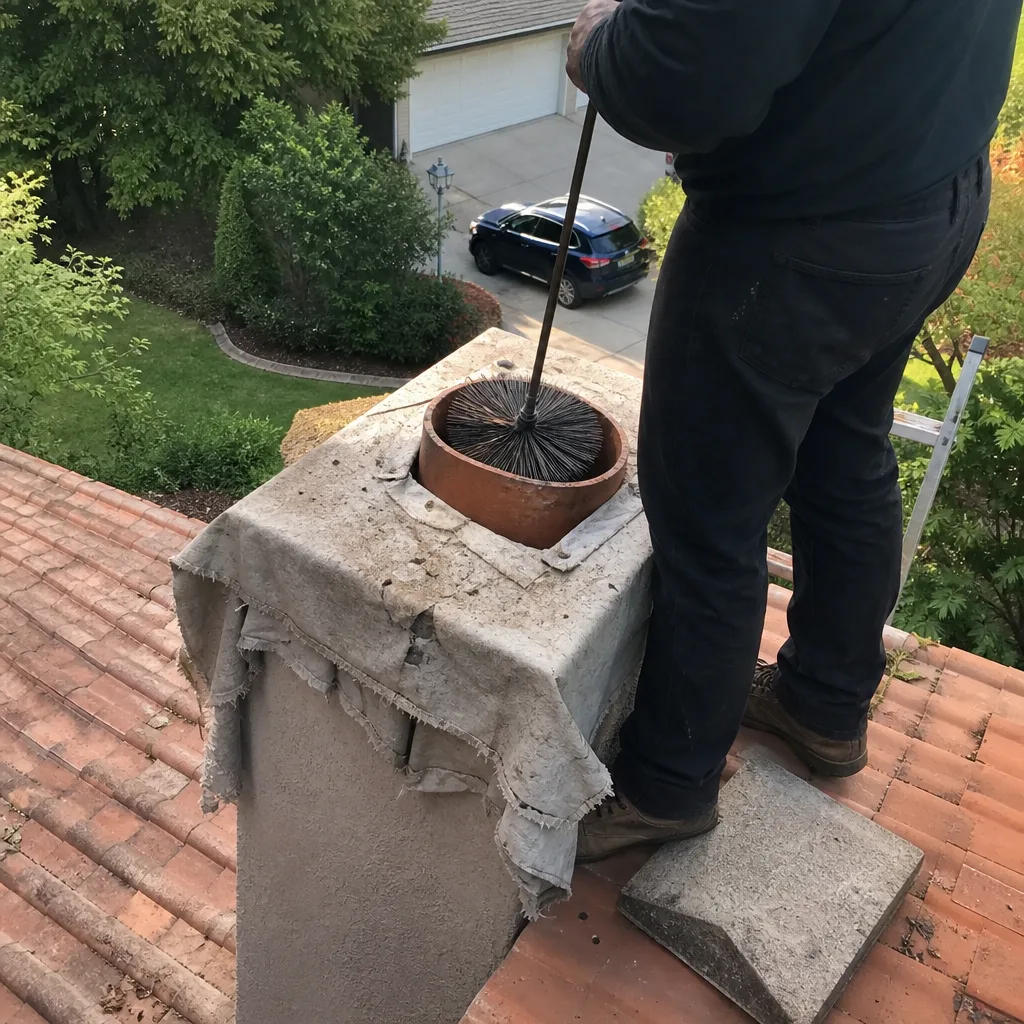
If you’re seeing deteriorated joints on your chimney – or if a previous inspection flagged joint erosion without telling you what it would cost to fix – our Chimney Repair services can help. Call us at (678) 535-2204. We’ll send a background-checked, uniformed technician to your Kennesaw home, run the Level 2 camera inspection, document what’s there, and hand you a written price before any work starts. That’s not a pitch; it’s how we’ve operated since 2009, on every one of the 38,000-plus chimneys we’ve inspected and cleaned.
For the full scope of masonry and structural chimney work we handle, visit our home page or explore everything included under Chimney Repair in Kennesaw.
Written by Corrine Halstead, Owner at Level Two Chimney Kennesaw, serving Kennesaw.